 Sudden Valley Siding
 Window Replacement Built for Life on Lake Whatcom
Geneva sits along the north end of Lake Whatcom, close enough to Sudden Valley that homes here deal with the same weather patterns we see across this part of Whatcom County — just with the added exposure that comes from being right on the water. Marine air off the Salish Sea pushes inland and settles over the lake, driving rain comes in sideways off the water during fall and winter storms, and the tree cover that makes this area beautiful also means shade, dampness, and a long moss season that lasts most of the year. Windows take the brunt of all of it. A window that would hold up fine in a drier inland climate can fail early here if it wasn't built, sealed, or installed with this specific exposure in mind.
We install windows across Whatcom County, and Geneva homes get particular attention because of the lake-effect moisture and the amount of shaded, north-facing exposure common in this neighborhood. This page covers what actually matters for a correct window replacement here — not a generic rundown of window types, but what we've learned works, and doesn't, on homes exactly like the ones in this area.
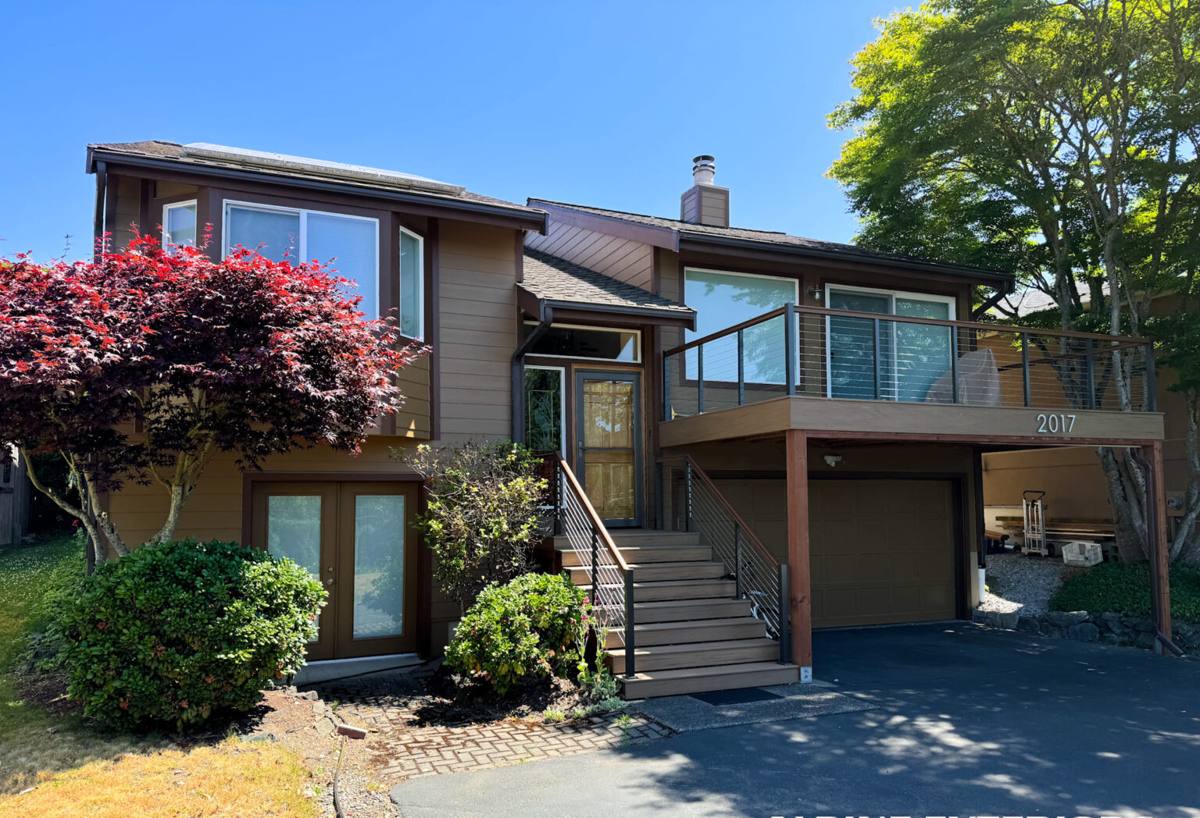
What This Climate Does to Windows Over Time
Whatcom County doesn't get brutal cold the way inland regions do, but it makes up for it with sustained moisture. That's a different — and in some ways harder — kind of stress on a window assembly.
Moisture intrusion at the frame and sill
Driving rain doesn't just hit glass — it drives into the gap between the window frame and the rough opening. If flashing and sealant were done poorly (or not at all) during the original install, water works its way behind the trim and into the wall cavity. On older Geneva homes, especially those with wood-frame windows original to the house, this shows up as soft or discolored trim, sills that feel spongy underfoot when you press on them, and dark staining on interior sills or drywall below the window.
Moss, algae, and constant shade
The tree canopy around the lake keeps a lot of siding and window trim in shade for most of the day, which means surfaces stay damp far longer after a rain than they would in full sun. That's ideal growing conditions for moss and algae, and it's hard on wood trim, older vinyl finishes, and any caulk joint that isn't holding up its end of the job. Green or black growth on window trim isn't just cosmetic — it's a sign the surface is staying wet, and wet surfaces are where rot and seal failure start.
Condensation and fogged glass
Cool, damp lake air combined with warm indoor air is a recipe for condensation, both on the glass surface and — if the seal has failed — between the panes of an insulated glass unit. Fogging or a milky haze between the panes means the argon fill (if there was any) is gone and the insulating value of that unit has dropped. It's not repairable; the sash or the whole unit needs replacing.
Signs a Geneva Home Needs Window Replacement
Not every window problem means a full replacement, but these are the signs we take seriously on lake-area homes:
- Fogging, haze, or visible moisture between the glass panes
- Soft, spongy, or visibly rotted wood at the sill or frame
- Windows that are difficult to open, close, or lock — often a sign the frame has shifted or swollen
- Persistent moss or algae growth on trim that keeps coming back after cleaning
- Visible daylight or a noticeable draft around the frame when it's windy off the lake
- Interior paint bubbling, peeling, or staining near the window
- A cold spot or noticeable temperature difference near the window in winter
- Single-pane glass original to an older home, with no insulating value to speak of
If you're seeing two or more of these on the same window, replacement is usually the more cost-effective call than continuing to patch and repaint around a frame that's already compromised.
Choosing Materials for a Lake-Effect Climate
Every window material has trade-offs, and in a high-moisture, shaded, lake-adjacent setting like Geneva, moisture behavior and maintenance burden matter more than they would in a drier climate.
| Material | Moisture Resistance | Maintenance | Typical Lifespan | Notes for This Climate |
|---|---|---|---|---|
| Vinyl | Very good — won't rot, doesn't need repainting | Low — occasional cleaning | 20–30+ years | Our standard recommendation for most Geneva homes; performs well in sustained damp conditions |
| Fiberglass | Excellent — dimensionally stable, resists moisture-driven expansion | Low | 30–40+ years | Strong option for larger openings or higher-exposure walls facing the lake |
| Wood (clad exterior) | Good on the exterior face, but interior wood remains moisture-sensitive | Higher — finish upkeep, seal checks | 20–30 years with upkeep | Best where the interior look of real wood matters and upkeep is planned for |
| Aluminum | Fair — durable but conducts cold and can condense heavily | Moderate | 20–30 years | We generally steer homeowners away from bare aluminum here; the condensation issue is worse in a damp lake climate |
We don't push one brand or material on every job — the right call depends on the wall, the exposure, and the budget. But we will tell you plainly when a product isn't a good match for a shaded, damp, lake-facing wall, even if it's a fine choice somewhere drier.
What a Correct Installation Actually Involves
The window unit itself is only part of the job. In this climate, the installation details are what determine whether the window lasts 25 years or fails at year eight.
Flashing and drainage
Water needs a planned path out of the opening, not just a caulk bead to keep it out. That means a properly lapped flashing system — sill pan, jamb flashing, and head flashing installed in the right order — so that any water that does get past the exterior trim drains back out instead of sitting against the framing.
Sealing without trapping moisture
It's tempting to seal every gap solid, but a wall assembly needs to be able to dry out if it does get damp. We use sealants and backer rod at the right joints while leaving the assembly able to breathe where it needs to — sealing everything airtight in a high-moisture climate can trap water inside the wall instead of keeping it out.
Insulation and air sealing at the rough opening
The gap between the window frame and the rough opening gets properly insulated (not overpacked, which compresses insulation and reduces its value) and air-sealed. This is where a lot of the draft and cold-spot complaints on older installs actually originate — not the window itself, but a poorly filled gap around it.
Trim and finish work that sheds water
Exterior trim gets installed and sealed in a way that sheds water away from the joints, not one that creates a shelf where water and debris collect. On a shaded, moss-prone wall, that detail is the difference between trim that lasts and trim that's rotting again in five years.
Our Process, Start to Finish
- Free on-site assessment. We look at every window being considered, check for existing moisture damage at the sill and frame, and measure openings precisely — older homes are rarely perfectly square.
- Straightforward proposal. You get a clear breakdown of materials, scope, and cost — no pressure, no artificial deadlines.
- Scheduling around the weather. We plan installs with Whatcom County's rain patterns in mind so openings aren't left exposed longer than necessary.
- Removal and inspection. Once the old window is out, we inspect the rough opening and framing for hidden rot or damage before anything new goes in — this is often where a cheaper install cuts corners.
- Correct installation. Sill pan, flashing, insulation, and sealing done in the right order, not just the window set and caulked.
- Final check and cleanup. We test operation, check the seal, and clean up the site before we consider the job done.
What Affects the Cost
Exact pricing depends on the specifics of your home, but these are the factors that move the number most:
| Factor | Why It Matters |
|---|---|
| Window material and glass package | Fiberglass and higher-performance glass cost more upfront than standard vinyl but can mean less maintenance and better long-term performance |
| Number and size of openings | Larger lake-view windows and multiple openings on one project affect both material and labor cost |
| Condition of the existing opening | Hidden rot or framing damage found during removal adds repair scope before the new window can go in correctly |
| Access and wall height | Upper-story or hard-to-reach windows on sloped lake lots take more time and equipment |
| Trim and finish work | Matching existing trim profiles or upgrading exterior trim material adds to the scope |
We'd rather walk your home and give you real numbers than throw out a broad range that doesn't mean much until we've seen the actual openings.
Why Local Experience in Geneva and Sudden Valley Matters
A crew that's worked this specific stretch of Whatcom County already knows what to expect before they pull the old window out. They know which wall orientations around the lake take the worst of the driving rain, which older homes in this area are likely to have original single-pane wood windows hiding rot behind the trim, and how much shade and moss pressure to plan for on a given elevation. That's not something you learn from a spec sheet — it's from doing this work on homes like yours, in this exact climate, repeatedly.
It also matters for scheduling and follow-through. A local crew isn't driving in from out of the area for one job — we're available if a question comes up after the install, and we're not guessing at how Whatcom County's weather affects the timeline or the materials we recommend.
Energy Efficiency in a Damp, Shaded Climate
Geneva doesn't see extreme heat or extreme cold most years, so the energy case for new windows here is less about surviving a heat wave and more about comfort, condensation control, and steady heating costs through a long, damp winter. Double-pane windows with a low-E coating are the practical baseline for this climate — they cut down on the cold-glass effect that makes rooms feel drafty even when the thermostat says otherwise, and they reduce the interior condensation that's common on older single-pane glass in a humid lake environment. Triple-pane is worth discussing for north-facing or particularly exposed walls, but it's not a blanket necessity for every opening in this climate — we'll tell you honestly where it earns its cost and where it doesn't.
Ready for a No-Pressure Estimate
If you're dealing with fogged glass, soft trim, or windows that just aren't performing the way they should, we're happy to take a look. The estimate is free, there's no pressure to move forward, and you'll get a straight answer about what your windows actually need — use the form below to get started.