 Sudden Valley Siding
 Windows in Ferndale Take a Different Kind of Beating
Ferndale sits close enough to the water and the open flats along the Nooksack corridor that homes here deal with a specific combination of weather stress: salt-tinged air moving in off the Strait, driving rain that comes in sideways during winter storms, and a long stretch of gray, damp months where moss and mildew get a foothold on anything that stays wet too long. Windows are one of the first places that shows up. Old aluminum frames pit and corrode. Wood sashes swell, stick, and rot at the corners. Seals fail early and fog sets in between the panes. None of that is really about the windows being "bad" — it's about Whatcom County's climate being tough on any window that wasn't installed with real attention to flashing, drainage, and air sealing in the first place.
We install windows for homes throughout Ferndale and the surrounding Whatcom County area, and we've learned what this climate actually does to a window opening over ten or twenty years. That's different from installing windows in a dry inland climate, and it changes how we approach flashing, sealants, and material choice.
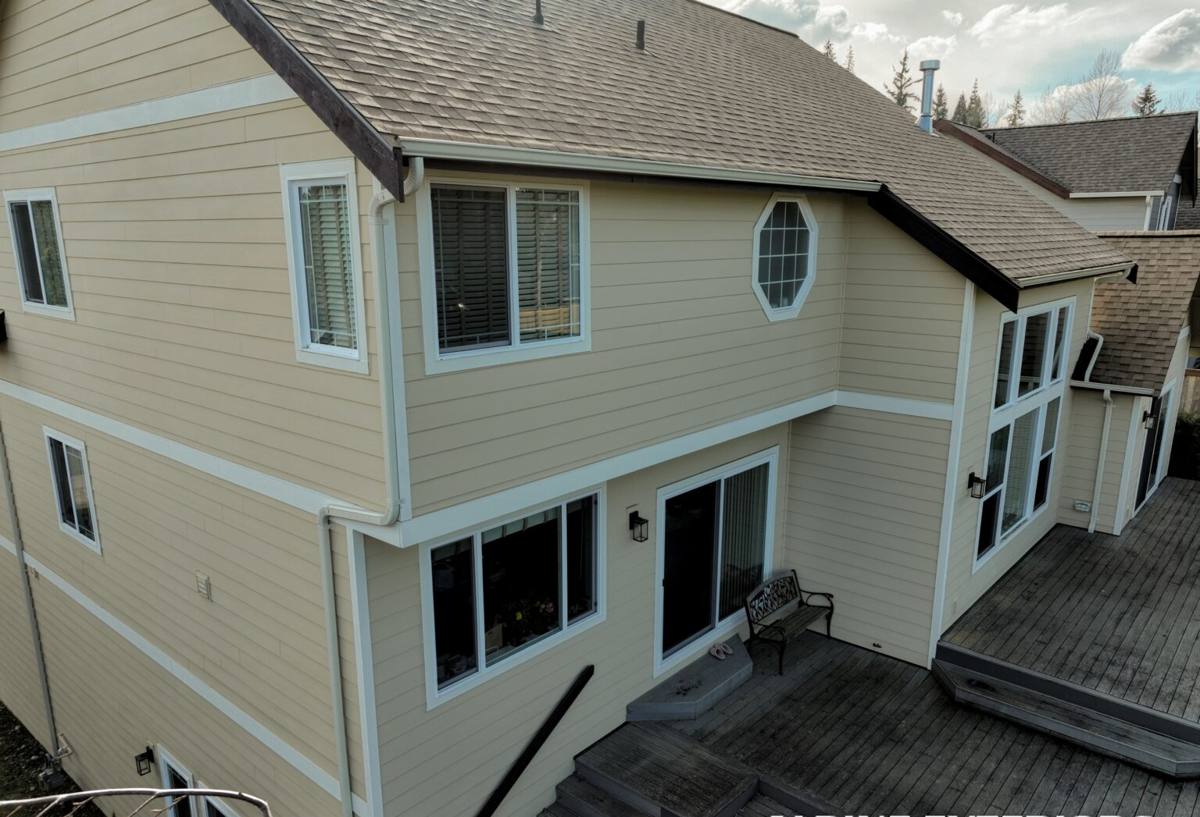
What a Correct Installation Actually Involves
Window installation gets treated like a simple swap — pull the old one, drop in the new one, caulk the edges. That approach works for a while in a mild climate. In Ferndale, with the amount of wind-driven rain this area sees, a rushed installation is exactly what causes rot and water intrusion five or ten years down the road. A correct installation is mostly about what you can't see once the trim is back on.
The Steps That Matter Most
- Opening inspection: Before anything goes in, we check the rough opening for existing water damage, soft sheathing, or rot from the old window's failed seals. Installing a new window over a compromised opening just hides the problem.
- Proper flashing sequence: Sill pan flashing, side flashing, and head flashing installed in the correct shingle-lap order so water is directed out and down, never trapped behind the siding.
- Weather-resistive barrier integration: The window's flashing has to tie into the house wrap or building paper correctly — lapped so water sheds over it, not behind it.
- Backer rod and sealant, not just caulk: Gaps get backer rod and a quality sealant rated for movement and UV exposure, not a bead of caulk smeared over a gap that's too wide.
- Shimming and squaring: A window that's out of square binds, doesn't seal properly, and stresses the frame over time.
- Interior air sealing: Low-expansion foam or sealant around the interior perimeter to stop drafts and moisture-laden interior air from reaching the wall cavity.
Skip any one of these steps and the window can look fine for years while water is quietly working its way into the wall framing. That's the failure mode we see most often on older Ferndale homes — not the glass, the flashing.
Signs Your Ferndale Home's Windows Need Attention
Homeowners often wait until a window is obviously broken before calling. A lot of the damage happens well before that point. Watch for:
- Fogging or a milky haze between the panes — a sign the seal has failed and the insulating gas has escaped
- Soft or discolored trim and sill boards around the window frame
- Drafts you can feel with your hand near the frame on a windy day
- Windows that are difficult to open, close, or lock — often a sign the frame has shifted or swollen
- Visible moss or algae staining on the exterior trim or sill, a common sign in this climate that water is sitting rather than draining
- Peeling paint or bubbling on interior sills, which usually points to moisture getting past the seal
Any of these on their own isn't an emergency. Several at once, or moss and soft wood together, usually means water has been getting behind the window for a while.
Choosing the Right Window for This Climate
Material choice matters more here than in a lot of the country, mostly because of the combination of moisture and mild-but-persistent salt air. We're honest with Ferndale homeowners about the trade-offs rather than pushing one product line.
| Material | How It Handles Local Climate | Maintenance |
|---|---|---|
| Vinyl | Doesn't rot or corrode; handles moisture well; good value | Low — occasional cleaning |
| Fiberglass | Very stable in temperature swings and moisture; strong long-term performer near the coast | Low |
| Wood-clad | Good look, but the interior wood core is vulnerable if any seal fails and moisture gets in | Higher — requires monitoring seals and finish |
| Bare aluminum | Prone to corrosion and pitting in salt-influenced air over time; poor insulator | Higher — we generally steer clients away from this for coastal Whatcom County homes |
For most Ferndale homes we recommend vinyl or fiberglass as the practical choice — both resist the moisture and salt exposure well and don't ask for much upkeep. Wood-clad windows can still make sense on a home where the look matters and the owner is willing to stay on top of exterior finish maintenance, but we always explain that trade-off up front rather than let a homeowner find out about it later.
Glass Packages Worth Considering
Double-pane, low-E glass is the baseline we'd recommend for any Ferndale home given how many gray, damp months this area gets — it helps with both heat retention and condensation resistance on interior glass during cold snaps. Argon-filled units add a modest efficiency boost. Triple-pane is available but is usually more upgrade than most single-family homes in this area need; it makes more sense on north-facing walls or homes right along more exposed stretches near the water.
Our Process, Start to Finish
- On-site assessment: We look at your existing windows, the condition of the openings, and talk through what's actually driving the need — drafts, fogged glass, appearance, or a full siding project that includes window replacement.
- Honest recommendation: We'll tell you if a window can be repaired instead of replaced, or if a full replacement is the better long-term move. We're not incentivized to upsell you on a job you don't need.
- Written estimate: Clear pricing, materials specified, and a realistic timeline — no vague allowances.
- Removal and opening prep: Old window removed carefully, opening inspected and repaired if needed before the new unit goes in.
- Installation with full flashing and sealing: Done to the standard described above, not shortcut.
- Interior and exterior finish work: Trim, caulking, and touch-up so the finished window looks right from both sides.
- Final walkthrough: We check operation, seals, and finish with you before we consider the job done.
Why Local Experience in Ferndale Matters
A window installer who mostly works drier inland climates can do fine work and still get flashing details wrong for this area, because the consequences of a cut corner take longer to show up somewhere without this much driving rain and salt exposure. Working regularly in Ferndale and around Whatcom County means we've seen how these homes age — where moss tends to build up on north-facing trim, which older neighborhoods still have original aluminum frames that are due for replacement, and how wind direction off the water affects which window elevations take the worst of the weather. That local pattern recognition is part of what you're paying for, not just the labor to set a window in an opening.
We also carry the same crew and standards over from window work into siding, trim, and general exterior work, which matters if your window project is part of a larger plan to address the exterior envelope of the house. Windows and siding meet at the flashing — having one crew responsible for both means there's no finger-pointing later about whose work caused a leak.
What Affects the Cost of Window Replacement
| Factor | Why It Matters |
|---|---|
| Number and size of windows | Larger openings and specialty shapes cost more in both material and labor |
| Material choice | Vinyl is typically the most economical; fiberglass and wood-clad cost more upfront |
| Condition of the existing opening | Rot or water damage found during removal adds repair time before the new window can go in |
| Glass package | Standard double-pane low-E vs. upgraded coatings or triple-pane |
| Access and site conditions | Second-story or hard-to-reach windows take more time and equipment |
| New construction vs. retrofit | Retrofit installs into an existing opening are typically less invasive than a full frame-out replacement |
Rather than quote a number that won't mean much without seeing your specific windows, we'll walk the job with you and give a written estimate that accounts for these factors directly.
A Few Things Worth Doing Before You Call Anyone
- Note which windows are drafty, foggy, or hard to operate, and whether that's year-round or just in certain weather
- Check trim and sills for soft spots or discoloration from the inside and outside
- Think about whether you're planning any siding or exterior work in the next few years — bundling can save on labor and disruption
- Ask any contractor you're considering how they handle flashing and sealing, not just what brand of window they sell
If your windows in Ferndale are drafty, fogged, or just getting old, we're glad to come take a look. It's a free, no-pressure estimate — we'll tell you honestly what we see and what your options are. Use the form below to get started.