 Sudden Valley Siding
 Siding Repair Built for the Sunnyland Corner of Sudden Valley
Not every siding repair is the same job with a different address. A cracked board on a wide-open lot in eastern Washington fails for different reasons than a cracked board on a tree-shaded lot near Lake Whatcom. In Sunnyland and the rest of Sudden Valley, siding lives under a heavy tree canopy, close to water, and under a long wet season that never really lets a wall dry out completely. A repair that ignores that reality is a repair that fails again in a year or two. One that accounts for it holds.
This page is about that one job — siding repair, done right, for homes in this part of Whatcom County. Not a full site replacement pitch, not a generic list of siding tips. What actually goes wrong here, what a correct fix looks like, and how we handle it when a homeowner in Sunnyland calls us out to take a look.
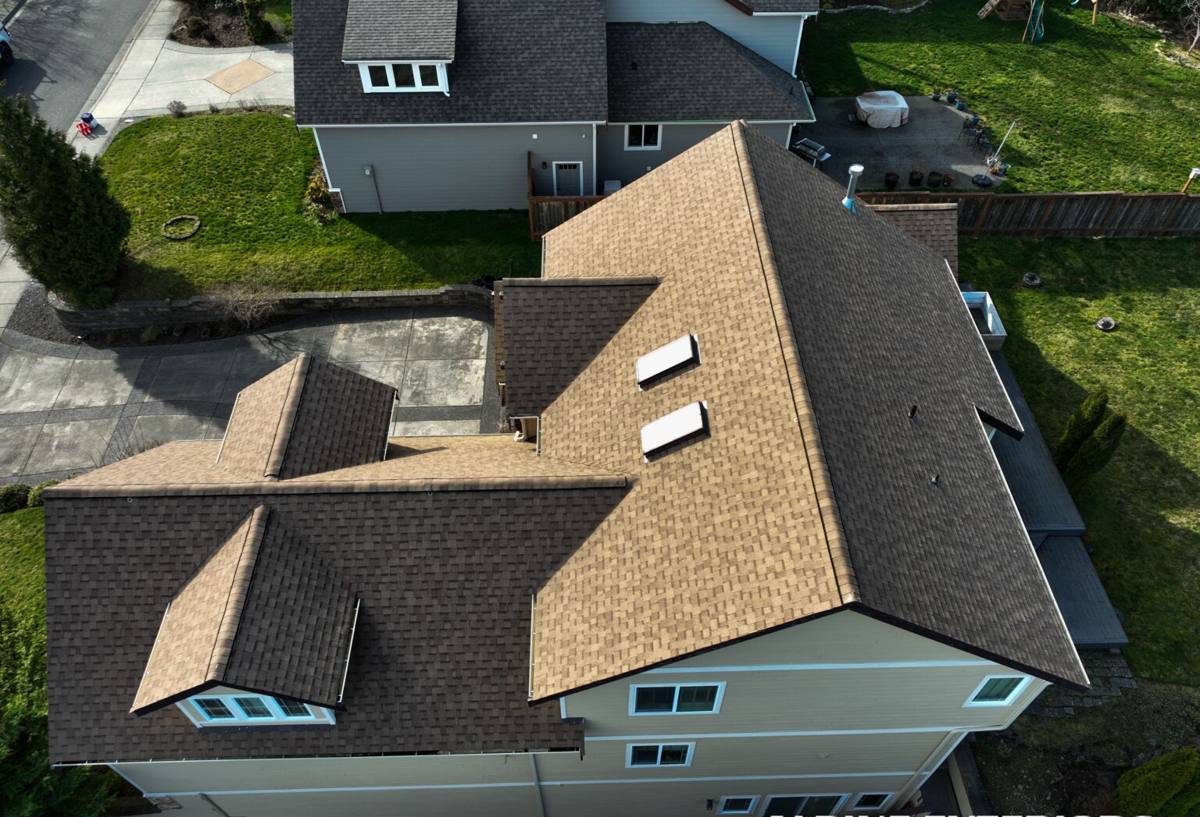
What Whatcom County's Climate Does to Siding Here
Western Washington siding problems almost always trace back to moisture that had nowhere to go. Sunnyland's setting adds a few specific pressures on top of that general truth.
A Long Moss Season
Tree cover keeps a lot of these lots shaded most of the year, which is great for the property and hard on exterior siding. Shade means slower drying after every rain, and slower drying means moss, algae, and mildew get a longer runway to establish themselves on north-facing and tree-shaded walls. Left alone, moss holds moisture directly against the siding surface for weeks at a stretch — that's the kind of sustained dampness that breaks down caulking, swells wood-based products, and eventually finds a way behind the cladding.
Driving Rain and Wind-Driven Water
Whatcom County doesn't just get a lot of rain — it gets a lot of horizontal rain, pushed sideways by wind off the water and through the valleys. Wind-driven rain doesn't just wet a wall's surface; it tests every seam, every piece of trim, every place two pieces of siding meet. A caulk joint or flashing detail that would hold up fine in a gentler climate can fail here within a few seasons if it wasn't installed with wind-driven water specifically in mind.
Salt-Tinged Marine Air
This is coastal-influenced marine climate, and that salt-tinged air works on fasteners, flashing, and any exposed metal trim over time, encouraging corrosion at the exact points — nail heads, flashing edges, joint hardware — where a small failure turns into a bigger moisture problem behind the wall.
None of these forces act alone. Moss holds water in place, wind drives that water into joints, and salt air degrades the metal components meant to keep it out. A siding repair that only addresses the visible symptom, without accounting for how these forces compound, tends to come back.
Common Siding Repair Problems We Find in Sudden Valley Homes
- Rotted or delaminating boards at the bottom courses, around downspouts, and anywhere siding sits close to grade or landscaping beds that stay damp.
- Failed caulking and sealant joints at trim, window and door casings, and butt joints — usually the first line of defense to give out under repeated wind-driven rain.
- Moss and algae buildup on shaded, tree-covered walls that's been left to sit long enough to start breaking down the surface underneath it.
- Nail pops and fastener corrosion, especially on older installations where fasteners weren't rated for this coastal-influenced climate.
- Hidden moisture damage behind siding that looks fine on the surface — soft sheathing, staining, or a musty smell that shows up before any visible siding damage does.
- Damaged flashing around windows, roof-to-wall transitions, and penetrations, which lets water in even when the siding itself is intact.
- Cracked or impact-damaged panels from falling branches or debris, common on lots with mature tree cover.
What a Correct Siding Repair Actually Involves
A patch-and-paint fix addresses what you can see. A correct repair addresses what caused it. That distinction matters more here than in drier parts of the state, because the underlying cause is almost always moisture that found a way past the siding's first line of defense.
Before we touch a single board, we look at what's behind it. That means pulling back damaged siding to check the condition of the water-resistive barrier and flashing underneath, checking for soft or discolored sheathing, and using a moisture meter where there's any doubt rather than guessing. If the damage is limited to the visible siding and the wall assembly behind it is sound, a targeted repair is the right call. If moisture has already worked its way into the sheathing or framing, patching over that is a short-term fix that guarantees a bigger repair later — and we'll tell you that plainly instead of quoting a patch job that won't hold.
Matching matters too. James Hardie's factory-applied ColorPlus finish is manufactured in specific color runs and product lines, so a repair on an existing Hardie home means sourcing the right plank profile, exposure, and color match — not just "siding that looks close." Done carelessly, a repair sticks out for years. Done right, it disappears into the wall.
Repair or Replace? What Actually Tips the Decision
Homeowners in Sunnyland often call about one bad section of siding and want to know honestly whether that's a repair or the start of a bigger conversation. These are the factors that actually decide it:
| Factor | Leans toward repair | Leans toward replacement |
|---|---|---|
| Extent of damage | Isolated to one wall or a few boards | Spread across multiple elevations |
| Cause | Impact damage, failed caulk, isolated flashing issue | Widespread moisture intrusion behind the cladding |
| Age of existing siding | Newer, still within its service life | Original siding nearing or past expected lifespan |
| Material | James Hardie fiber cement in good general condition | Wood, older vinyl, or products already showing systemic wear |
| Sheathing condition | Dry, structurally sound behind the damaged area | Soft, stained, or moisture-compromised |
We'll never push a full replacement when a repair genuinely solves the problem — and we won't quote a repair when the investigation shows it won't hold. That call gets made after we've actually opened up the affected area, not off a curbside guess.
Our Siding Repair Process in Sunnyland
- On-site inspection. We look at the damaged area and the surrounding siding, checking for signs the problem extends further than what's visible.
- Investigate behind the siding. Where there's any sign of moisture intrusion, we open the area up to check the water-resistive barrier, flashing, and sheathing before quoting anything.
- Honest scope and estimate. You get a clear explanation of what's actually wrong, what it takes to fix it correctly, and a written estimate — no upsell to a full re-side unless the investigation actually supports it.
- Source matching material. For Hardie homes, we match plank profile, exposure, and ColorPlus finish so the repair blends with the existing siding rather than standing out.
- Correct the underlying cause. Damaged flashing gets replaced, not caulked over. Compromised sheathing gets addressed before new siding goes back on.
- Install and seal to spec. Fasteners, joint treatment, and sealant are installed to manufacturer specification, sized for the wind-driven rain this area actually sees.
- Final walkthrough. We show you what was done and why, so you know exactly what's now protecting that wall.
Why It Matters to Hire a Crew That Already Works This Neighborhood
A siding repair estimate can look identical on paper from two different contractors and turn out completely different in practice. The difference usually comes down to whether the crew actually understands the conditions a given neighborhood puts on a wall. A crew that regularly works Sudden Valley and the Sunnyland area already knows to check shaded, moss-prone elevations more carefully, knows what wind-driven rain does to a poorly sealed joint here, and isn't guessing at how this coastal-influenced marine climate treats fasteners and flashing over time. That local pattern recognition is what keeps a repair from turning into a repeat visit.
It also matters for something simpler: showing up. A local crew can get out to look at a problem, source the right matching material, and come back to finish the job without the scheduling gaps that come with contractors working far outside their normal service area.
Why We Repair With James Hardie, Not Vinyl or Wood Patches
We install James Hardie fiber cement exclusively — no vinyl, no LP SmartSide, no primed wood — and that standard carries through to repair work. When we patch a wall, we're not going to introduce a different material system into an existing wall assembly just because it's faster to source. Vinyl expands and contracts differently than fiber cement and can't be color-matched into a Hardie wall; wood-based patches bring back the exact moisture-absorption problem that tends to cause damage in this climate in the first place. Hardie's fiber cement is non-combustible, holds its factory ColorPlus finish without repainting for years, and is engineered for the wet, wind-driven conditions Whatcom County actually produces. Repairing a Hardie home with anything else undermines the reason it was installed in the first place — and repairing a non-Hardie home is a fair moment to have an honest conversation about what a future full re-side with a better-suited product would look like, on your timeline, not ours.
Signs Your Sunnyland Home Needs a Siding Repair Inspection
- Visible cracking, splitting, or delamination on any siding board
- Moss or algae buildup that's thick enough to hold moisture against the surface
- Soft spots when you press gently on the siding near the base of the wall
- Caulking that's cracked, shrunk, or pulled away from trim and joints
- Staining, bubbling paint, or discoloration on interior walls near exterior siding
- A musty smell near an exterior wall with no obvious source
- Nail heads that have popped through the siding surface or show rust staining
- Damaged or missing flashing around windows, doors, or roof-to-wall transitions
If any of that sounds familiar, it's worth having someone take an honest look before the next wet season adds to it. If you're in Sunnyland or elsewhere in Sudden Valley and want a straight answer on what's going on with your siding, we're happy to come take a look and put together a free, no-pressure estimate — no obligation to do anything with it beyond knowing where you stand.