 Sudden Valley Siding
 Board & Batten Siding Built for South Hill's Wet, Mossy Climate
Board and batten has a strong, clean look that suits the wooded, hillside character of South Hill in Sudden Valley — vertical lines that read well against evergreens, sloped lots, and the mix of cabin-style and modern homes tucked into this part of Whatcom County. But the look is only half the job. Vertical siding sheds water differently than horizontal lap siding, and if it's built wrong, it holds moisture right where you don't want it: behind the battens, at the seams, and low on the wall where splashback and shade keep things damp longest. On South Hill, where rain comes in sideways off the hills and moss has all winter and spring to get established, those details aren't optional extras. They're the difference between siding that looks good for thirty years and siding that needs attention in five.
This page is about one thing: doing board and batten right, on this specific terrain, in this specific climate, with the one material we're willing to put our name behind.
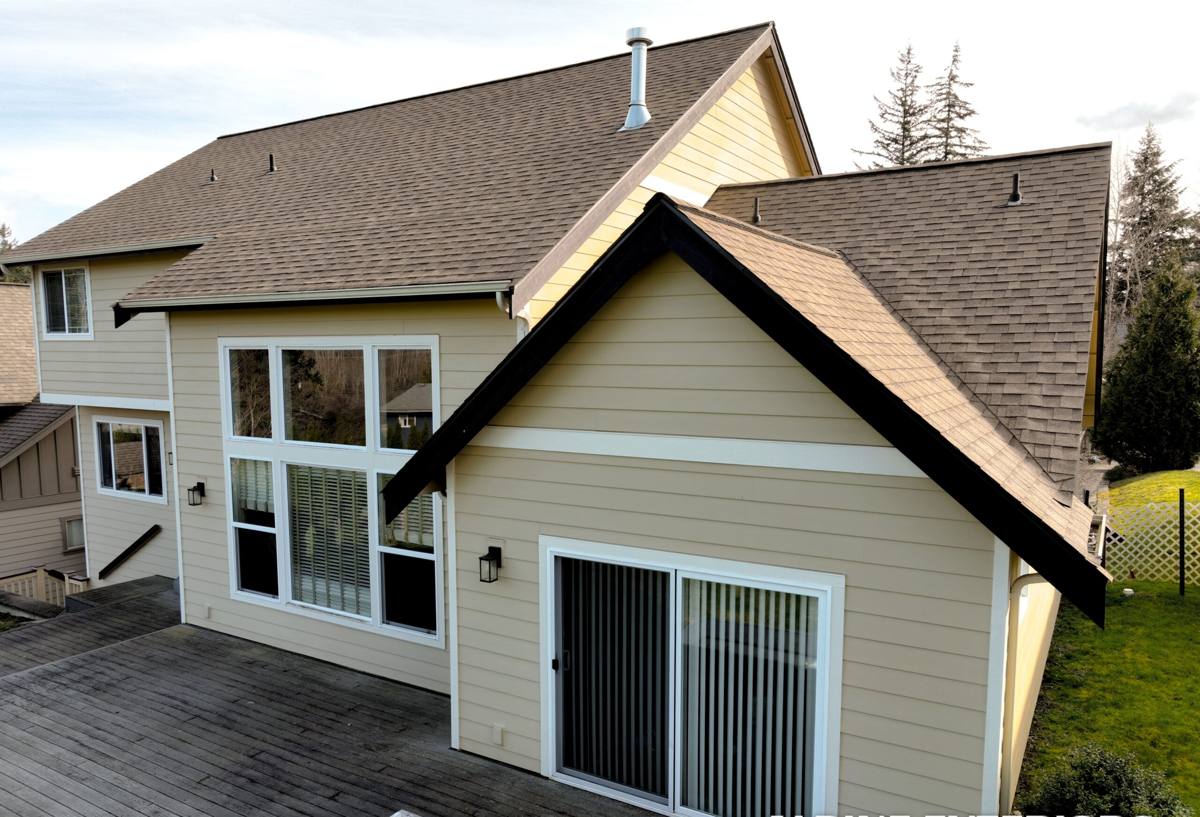
What Whatcom County Weather Does to Vertical Siding
South Hill sits in a part of Whatcom County that gets a steady diet of driving rain, salt-tinged marine air moving in off the water, and long stretches of overcast, low-sun conditions that keep siding damp far longer than a drier climate would. That combination is hard on any exterior product, but it's particularly hard on vertical siding profiles for a few reasons:
- Battens create shadow lines and shade. The same reveals that give board and batten its look also create shaded pockets where moisture lingers and moss and algae get a foothold first.
- Vertical seams run with gravity. Water travels straight down a board-and-batten wall, which means every seam, joint, and fastener penetration along that path needs to be sealed and flashed correctly the first time.
- Moss season isn't a season here — it's most of the year. On north-facing walls and anywhere tree cover blocks direct sun, siding can stay damp for months at a stretch, which is exactly the environment moss and mildew need to take hold.
- Salt air accelerates fastener and finish breakdown. Cheaper fasteners and lower-grade finishes corrode and fade faster in this environment than they would inland.
None of this means board and batten is a bad choice for South Hill — it means the material and the installation both have to be matched to the climate, not just the style.
Why We Install Board & Batten Only in James Hardie Fiber Cement
We get asked fairly often why we don't offer board and batten in vinyl, LP SmartSide, or cedar, since all three are available and all three can be made to look reasonable on day one. Here's the honest version of why we standardized on James Hardie fiber cement instead:
- Vinyl board and batten is affordable and low-maintenance in dry climates, but it's a thin extruded product that expands and contracts with temperature swings, and in a wet, moss-prone climate it doesn't give you the rigid, paintable, long-term surface that a real board-and-batten look benefits from. It also isn't fire-rated the way fiber cement is.
- LP SmartSide is an engineered wood product with a real fan base, and it performs well when it's kept dry and well-maintained. But it's still wood-based, which means it's more sensitive to sustained moisture exposure than fiber cement, and in a climate with as much standing dampness as Whatcom County sees, that's a meaningful long-term risk we're not willing to install and stand behind.
- Cedar and primed spruce look beautiful when new, but real wood board and batten in this climate needs ongoing refinishing, caulking, and moisture monitoring to avoid rot, cupping, and insect damage. It's a legitimate choice for someone who wants that look and is prepared for the upkeep — it's just not what we sell as a maintenance-light, long-term exterior.
James Hardie fiber cement is non-combustible, dimensionally stable, and doesn't absorb and swell with moisture the way wood-based products do. Paired with Hardie's factory-applied ColorPlus finish, it also holds color and resists the fading, chalking, and touch-up cycle that field-painted siding goes through in a wet climate. That's the whole reason we made it our standard: it's the product we've found actually holds up to what South Hill's weather does to a wall, year after year, without asking the homeowner to babysit it.
What a Correct Board & Batten Installation Actually Involves
Board and batten looks simple — flat panels with strips over the seams — but the system behind that look is where the job is won or lost. A rushed or undertrained install can look identical to a correct one on the day it's finished and still fail years later.
Rainscreen and Furring Strategy
On a wall that stays damp as long as South Hill's does, siding shouldn't sit flush against the weather barrier. A furring strip or rainscreen gap behind the panel lets bulk water drain and lets the wall assembly dry out between rain events instead of trapping moisture against the sheathing. This is one of the most commonly skipped steps on lower-bid jobs, and it's one of the most important ones in this climate.
Flashing, Trim, and Batten Fastening
Every horizontal transition — window heads, door heads, roof-to-wall intersections, and the base of the wall — needs proper metal or Hardie trim flashing to direct water out and away from the substrate. Battens themselves need to be fastened into solid backing at the correct spacing, with fastener heads sealed or countersunk per manufacturer specification, not just nailed through the panel into open air. Gaps at panel joints and inside/outside corners need to be sized correctly and sealed with a flexible, paintable sealant rated for exterior use, not filled and forgotten.
Ground and Roof Clearance
Board and batten that runs too close to grade, a deck, or a roofline invites splashback and debris buildup right at the bottom edge — exactly where moss, mildew, and rot start on a shaded, damp lot. Correct clearance is a small detail during installation and an expensive one to fix afterward.
Board & Batten Design and Cost Factors
A few choices drive both the look and the price of a board and batten project. None of these are decisions to make on the fly — they should be part of the estimate conversation up front.
| Factor | What It Affects | Considerations for South Hill |
|---|---|---|
| Panel width & batten spacing | Overall look, number of seams, material cost | Wider spacing shows more of the panel; narrower spacing means more seams to detail and seal |
| HardiePanel + HardieTrim system | How the vertical panel and battens are combined | Correct fastening and gapping between the two components matters more in a wet climate than a dry one |
| Existing siding removal & sheathing condition | Labor scope, timeline, potential repair costs | Homes with prior moisture issues may need sheathing repair before new siding goes on |
| Rainscreen/furring installation | Long-term drying capacity of the wall | Strongly recommended given how long walls stay damp on shaded, hillside lots |
| ColorPlus factory finish vs. field paint | Long-term color retention, maintenance schedule | Factory finish resists fading and chalking better in salt-influenced marine air |
Our Process for South Hill Homes
- On-site walkthrough. We look at wall orientation, tree cover, drainage, and existing moisture damage — all of which shape the recommendation, not just the measurements.
- Written estimate with real specifics. Panel and batten layout, trim details, and any sheathing repair are spelled out before work starts, not discovered mid-project.
- Prep and moisture check. Old siding comes off, sheathing gets inspected, and any soft or water-damaged areas are addressed before anything new goes up.
- Rainscreen, flashing, and panel installation to manufacturer spec, with attention to every horizontal transition and ground clearance point.
- Final walkthrough so you can see the completed work and ask questions before we consider the job done.
Every crew we send to South Hill has worked this hillside terrain before — the mix of steep lots, tree-shaded walls, and older homes with siding histories that aren't always obvious from the street.
Maintenance Checklist for Board & Batten in a Moss-Prone Climate
Correctly installed Hardie board and batten needs far less attention than wood or vinyl, but no exterior in Whatcom County is truly maintenance-free. A short annual check keeps small issues from becoming expensive ones:
- Look at north-facing and tree-shaded walls each spring for early moss or algae growth and clean it gently before it spreads
- Check caulking at panel joints, corners, and around windows and doors for cracking or gaps
- Confirm gutters and downspouts are clear and directing water away from the wall, not down it
- Walk the base of the wall and clear any leaf litter, mulch, or debris piling up against the bottom edge
- Look for any fastener heads that have worked loose or lost their seal
- Touch up any nicks or scrapes in the finish promptly rather than letting bare fiber cement sit exposed
Why a Crew That Already Works South Hill Matters
South Hill's terrain isn't uniform — wall orientation, tree cover, and slope change from lot to lot, and each of those changes how much sun a wall gets and how long it stays wet after a storm. A crew that's already worked this area knows to look for those differences instead of applying a one-size-fits-all install. Local experience also means knowing what tends to go wrong on homes in this specific stretch of Sudden Valley — where moisture problems show up first, which details get skipped on lower-bid jobs, and what it actually takes to keep siding performing through another wet Whatcom County winter.
If you're weighing board and batten for a home on South Hill or anywhere else in Sudden Valley, we're glad to walk the property, talk through what your walls are actually up against, and put together a straightforward, no-pressure estimate using the free form below.