 Sudden Valley Siding
 Why Fiber Cement Is Built for Silver Beach's Climate
Silver Beach sits in one of the wetter corners of Whatcom County, close enough to the water that homes here deal with more than just rain — there's marine-influenced air moving in off Bellingham Bay and the Sound, extended damp stretches that settle in around the Lake Whatcom shoreline, and a moss season that can run a good chunk of the year. Siding that works fine on a dry-side house forty miles east often struggles here. It's not a defect in the product, usually — it's a mismatch between what the material was designed for and what the site actually demands.
Fiber cement was developed specifically to hold up under this kind of exposure. It doesn't swell, rot, or delaminate the way wood-based products can when they stay damp for weeks at a stretch, and it doesn't provide the same food source for the mold and moss spores that are constantly airborne this close to the lake. That's the starting point for every job we do in this neighborhood: the material has to match the climate, not just the budget or the look.
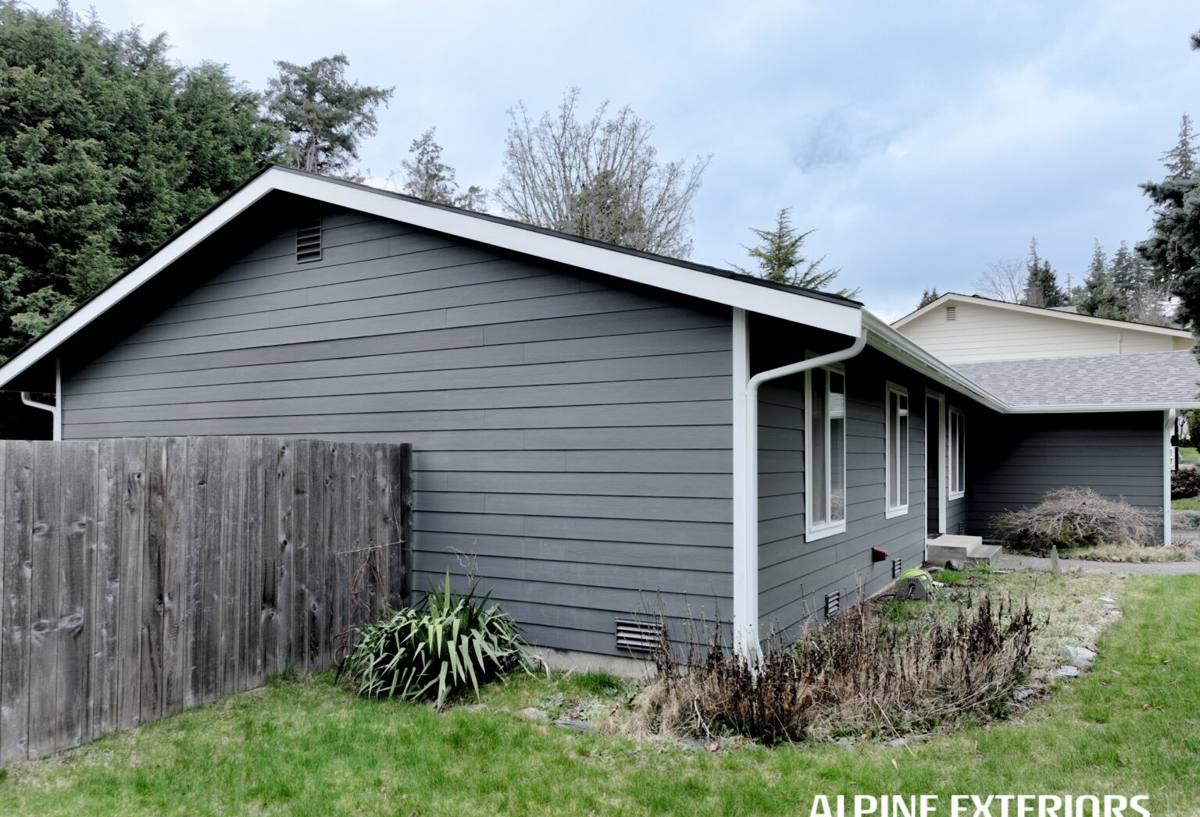
What Marine Air, Rain, and Moss Actually Do to a Home's Siding
Moisture that doesn't fully dry out
Driving rain off a storm system pushes water sideways into laps, seams, and trim joints. On a lot with any tree cover or a north-facing wall, that surface can stay damp for days. Materials that absorb water and swell will eventually lose paint adhesion, cup, or split at the joints. Fiber cement resists water absorption at the panel level, which matters far more here than it would on a site with steady sun and wind to dry things out between storms.
Moss, algae, and organic growth
Moss doesn't just grow on roofs. Given a rough or porous surface and consistent shade and moisture — both easy to find around Silver Beach — it will colonize horizontal trim, butt joints, and anywhere water sheets slowly instead of running off. Left alone, that growth holds moisture against the siding and accelerates whatever damage is already starting underneath. A smooth, factory-finished surface gives it far less to grab onto than a rough-sawn or field-painted one.
Freeze-thaw and finish breakdown
Whatcom County doesn't get brutal winters, but it does get repeated freeze-thaw cycling on saturated materials, plus steady UV exposure in the summer months. Any coating that's thin, inconsistently applied, or not bonded to the substrate at the factory level is the first thing to fail — and once the finish goes, everything underneath it is exposed.
Why We Install Only James Hardie Fiber Cement
We standardized on James Hardie products years ago and we don't install anything else — no vinyl, no LP SmartSide, no primed spruce or cedar, no other fiber cement brands. That's a deliberate call, not a sales preference. Hardie's HardieZone system is engineered by climate region, the ColorPlus finish is baked on at the factory rather than field-applied, and the product is non-combustible, which matters more every year given wildfire smoke seasons across the Pacific Northwest. For a lakeside, marine-exposed neighborhood like Silver Beach, we want a product line that was designed for exactly this kind of weather — not one we have to hope performs well here.
What a Correct Fiber Cement Siding Installation Involves
The water management plane comes first
The siding itself is the last thing that goes up, not the first line of defense. Before a single plank is installed, the wall needs a properly lapped weather-resistive barrier, correctly flashed windows and doors, kick-out flashing where a roofline meets a wall, and a drainage gap or rainscreen behind the siding so any water that does get past the surface has somewhere to go. Skipping or rushing this step is the single biggest reason siding fails early, regardless of what brand is on the outside.
Fastening, gapping, and clearances to spec
James Hardie publishes specific fastener spacing, butt-joint treatment, and clearance requirements above rooflines, decks, and grade. Nailing patterns that are too tight, joints that aren't back-primed or properly caulked, and siding installed too close to grade or a roof deck are common shortcuts that don't show up as problems for a year or two — then show up as moisture damage that's expensive to trace and fix.
Factory finish versus field-applied paint
ColorPlus finish is cured under controlled conditions at the factory, which gives it more consistent adhesion and UV resistance than paint applied on site after installation. We install ColorPlus products specifically because that finish is part of what makes the siding perform in a climate like this one, not just an aesthetic option.
| Detail | Done to spec | Common shortcut |
|---|---|---|
| Weather barrier laps | Shingle-lapped, sealed at penetrations | Stapled loosely, gaps left at seams |
| Butt joints | Back-primed, properly sealed or flashed | Caulked over raw cut edges only |
| Clearance above grade/roof | Meets manufacturer minimums | Set tight to save trim work |
| Fastener placement | Per Hardie's published pattern | Over-driven or spaced by eye |
| Finish | Factory-cured ColorPlus | Field-painted after install |
Our Process for a Silver Beach Fiber Cement Project
- Site walk and moisture check. We look at the existing siding, trim, and any soft spots around windows, decks, and grade level before quoting anything.
- Scope and product plan. We confirm panel style, exposure, and color, and plan for the HardieZone HZ5 product line that's engineered for this climate.
- Tear-off and sheathing check. Old siding comes off and the sheathing underneath gets inspected — this is where hidden moisture damage from years of exposure usually turns up.
- Water management install. Barrier, flashing, and drainage gap go in first and get inspected before any siding is hung.
- Siding installation to spec. Fastening, gapping, and joint treatment follow Hardie's requirements, not a rush schedule.
- Final walk-through. We go over trim, caulking, and touch-up details with you before calling the job done.
Cost Factors for Fiber Cement Siding in Silver Beach
Every home is different, but the factors that move the price on a project here are fairly consistent:
| Factor | Why it matters |
|---|---|
| Tear-off vs. overlay | Removing old siding adds labor but lets us inspect and repair sheathing underneath |
| Home size and stories | More wall area and taller elevations mean more material and access equipment |
| Trim and architectural detail | Dormers, bump-outs, and multiple roof intersections add flashing and cutting time |
| Hidden moisture damage | Rot found at tear-off has to be repaired before new siding goes on |
| Site access | Sloped or lake-adjacent lots can limit staging and require extra scaffolding |
| Panel style and finish | Lap width, texture, and ColorPlus color selection affect material cost |
Why Hiring a Crew That Already Works Silver Beach Matters
Sudden Valley is an established, largely HOA-governed community, and a lot of homes in and around Silver Beach sit on sloped lots close to the lake with limited street access. A crew that already works this neighborhood knows how to stage material and equipment on tighter driveways, what the local permitting process through Whatcom County looks like, and what to check for on homes that have spent years in this specific combination of shade, moisture, and lake-effect humidity. That's not something you can fully substitute with general siding experience from a drier or more exposed part of the region — the failure patterns we see on Silver Beach homes are specific to this microclimate, and knowing what to look for at tear-off saves time and avoids surprises mid-project.
Maintenance Checklist for Fiber Cement Siding Near Lake Whatcom
Correctly installed Hardie siding is low-maintenance, not no-maintenance. A few habits go a long way in this climate:
- Rinse moss and algae buildup off siding and trim once or twice a year, especially on shaded or north-facing walls
- Check that gutters aren't overflowing and splashing back onto lower courses of siding
- Inspect caulking at trim joints and penetrations annually and re-caulk with a compatible product if it's cracking
- Keep landscaping and tree branches trimmed back so walls can dry between rain events
- Confirm crawlspace and attic ventilation is working — trapped interior moisture pushes outward through walls over time
- After major storms, do a quick visual check of flashing at rooflines and around windows
If your Silver Beach home is due for new siding, or you want a second opinion on damage you've noticed, we're happy to take a look. Fill out the form below for a free, no-pressure estimate — we'll walk the property with you and tell you honestly what we find.