 Sudden Valley Siding
 Why Decks Around Silver Beach Wear Out Faster Than People Expect
Homes near Silver Beach and the broader Sudden Valley area sit close to water and tree cover, which is a beautiful place to live but a hard environment for exterior wood. The combination of persistent moisture off the lake, driving rain that comes sideways during winter storms, and long stretches of shade from mature evergreens means decks here rarely fail from one dramatic event. They fail slowly, from the underside, in places you don't look at every day.
Moss and algae growth is the most visible sign, but it's really a symptom of a bigger issue: wood and fasteners that stay damp far longer than they were designed to. In Whatcom County's climate, a deck can look fine on top for years while the framing underneath, the ledger board connection, and the footings are quietly losing structural integrity. By the time boards feel spongy or joists show soft spots, the deck usually needs full replacement rather than a patch job.
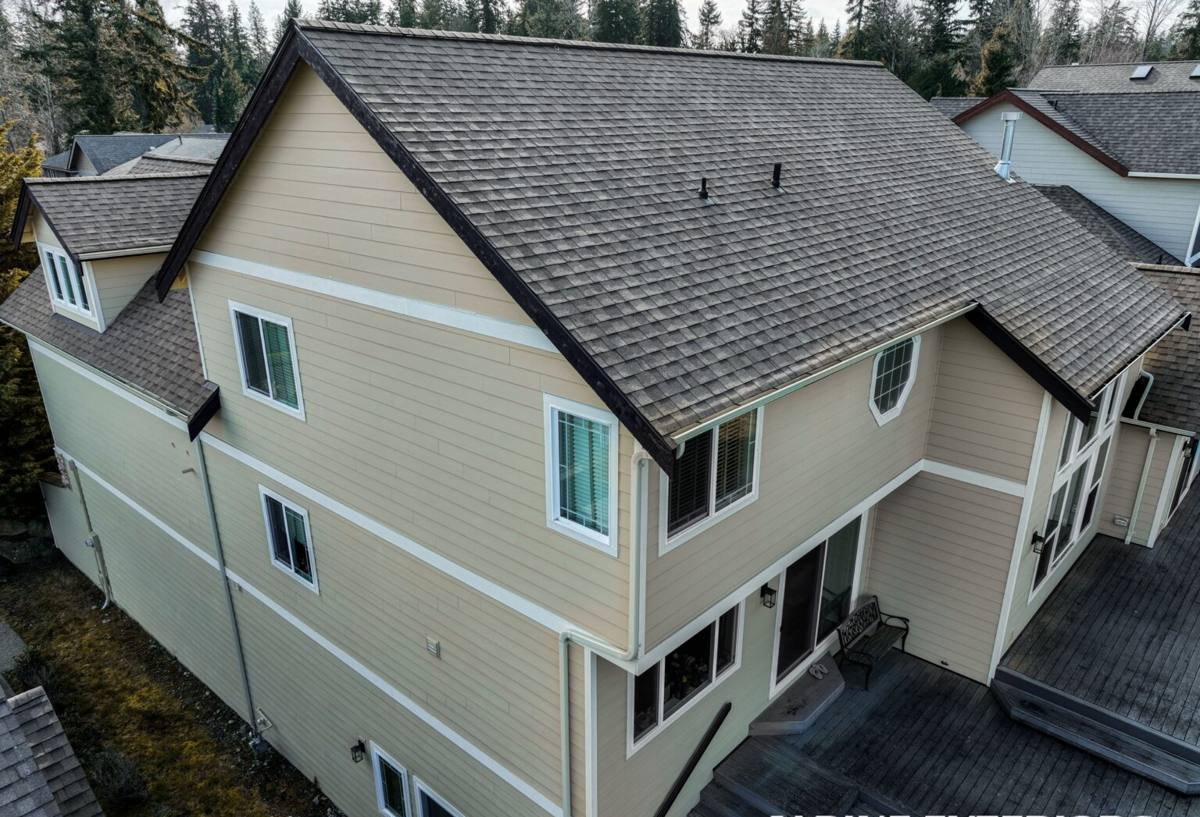
Repair or Replace? How We Make That Call
Not every deck problem means starting over. But there are a handful of signs that push a project from "repair" into "replace" territory, and it's worth knowing them before you spend money on cosmetic fixes that won't hold.
- Soft, spongy, or spring-back decking boards, especially near the house or in shaded corners
- Rust streaks or loose fasteners where the deck attaches to the house (the ledger connection)
- Visible gaps, cracking, or checking in support posts and beams
- A deck that feels like it moves or bounces more than it used to
- Persistent moss or dark staining that comes back within weeks of cleaning
- Railings that wiggle when pushed, which often points to rotted post connections, not just loose hardware
If a deck is structurally sound and the issues are limited to surface boards, resurfacing can make sense. But if the framing, ledger, or footings are compromised, replacing the deck properly is safer and, over time, cheaper than repeated patch repairs.
What a Correct Deck Replacement Actually Involves
Starting Below the Surface
A deck is only as good as what's underneath it, and that's where most shortcuts get taken on lower-quality jobs. A proper replacement starts with the ledger board connection to the house, which has to be flashed correctly to keep water from tracking behind the siding — a detail that matters even more in a climate that sees this much sustained rain. Footings need to sit below frost depth and bear on solid ground, not just be poured wherever is convenient.
Framing and Fasteners
Joists, beams, and posts should be sized for the actual span and load, not just "what was there before." In a wet climate, fastener choice matters as much as the wood itself — mismatched or undersized hardware corrodes and fails quietly, often years before the wood shows obvious damage. We use fasteners and connectors rated for ground contact and coastal-adjacent moisture exposure, because standard interior-grade hardware simply doesn't hold up here long-term.
Airflow Underneath
One detail that gets skipped constantly: making sure air can actually move under the deck. A low deck with poor ventilation traps moisture against the framing year-round, which is exactly what accelerates rot and moss growth in a shaded, damp lot. Grading, gaps, and skirting design all factor into whether a deck stays dry underneath or becomes a slow-motion problem.
Choosing the Right Decking Material for This Climate
Every decking material has tradeoffs, and the right choice depends on how much maintenance you're willing to do versus what you want to spend upfront. Here's how the common options actually perform in a wet, shaded, moss-prone environment like this one.
| Material | Moisture Behavior | Maintenance | Typical Lifespan Here |
|---|---|---|---|
| Pressure-treated wood | Absorbs and releases moisture; prone to moss/algae in shade | Annual cleaning and periodic sealing | 10-15 years before major issues |
| Cedar | Naturally rot-resistant but still needs sealing to hold up to sustained rain | Regular sealing/staining | 15-20 years with upkeep |
| Composite decking | Doesn't absorb water like wood; resists rot, but can still grow surface algae if never cleaned | Occasional washing, no sealing needed | 25+ years, backed by manufacturer warranty |
| PVC/capped polymer | Essentially non-absorbent; best moisture performance of the group | Minimal — occasional rinse | 25-30+ years |
We don't push one material on every homeowner. Wood has a warmer look and lower upfront cost, and for some homeowners that tradeoff is worth the extra maintenance. But given how much moss pressure this area sees, we're honest that composite and PVC decking generally hold up with far less ongoing work, which matters if you don't want to be power-washing and resealing every year.
Our Process, Start to Finish
- On-site assessment — we look at the existing deck's framing, footings, and ledger connection, not just the surface boards, so we know what's actually driving the deck's condition.
- Honest scope conversation — we tell you plainly whether you're looking at a repair, a partial rebuild, or a full replacement, and why.
- Design and material selection — sizing, layout, railing style, and material chosen for your budget and how much upkeep you want long-term.
- Permitting — we handle the permit and inspection requirements that apply to the project.
- Demolition and structural rebuild — old decking, framing, and any compromised footings removed and replaced to current code.
- Decking, railing, and finish work — installed to manufacturer specifications, including fastener spacing and gapping appropriate for wet-climate expansion and contraction.
- Final walkthrough — we go over the finished deck with you, including basic maintenance guidance specific to the material you chose.
Permits and Code Considerations
Deck replacement in Whatcom County generally requires a permit, particularly for anything structural — new footings, ledger reattachment, or railing height and guard spacing changes. Skipping this step is one of the more common corners cut by unlicensed or out-of-area crews, and it can come back to bite homeowners at resale when a buyer's inspector asks for permit history that doesn't exist. We handle the permitting process as part of the job so you're not left chasing paperwork after the fact.
What Drives the Cost of a Deck Replacement
| Factor | Why It Matters |
|---|---|
| Deck size and height | Larger decks and taller structures need more framing, more footings, and more labor |
| Material choice | Wood costs less upfront; composite and PVC cost more initially but less over time |
| Condition of existing structure | Rotted framing or failed footings add rebuild scope beyond just new boards |
| Railing and stair complexity | Custom railing styles, multiple stair sets, or level changes add labor |
| Site access | Sloped or wooded lots common around Silver Beach can add time for material staging and equipment access |
We're not going to publish a one-size-fits-all price here because it depends heavily on these factors — but we'll give you a clear, itemized estimate before any work starts, so there are no surprises partway through.
What to Ask Before You Hire Anyone for This
- Are you licensed and insured to work in Washington state, and can you provide proof?
- Will you pull the required permit, or is that left to me?
- Will you inspect the footings and framing, or just replace the surface boards?
- What fastener and flashing details do you use at the ledger board?
- Do you have experience with decks in this specific area's moisture and moss conditions?
- What does your warranty actually cover — labor, materials, or both?
Any contractor who hesitates on these questions is worth a second look before you sign anything.
Why It Matters That We Already Work This Area
A crew that mainly works drier, more exposed neighborhoods can still build a technically fine deck — but they may not think twice about the specific combination of shade, moisture, and moss pressure that decks around Silver Beach and Sudden Valley deal with year-round. We've seen how these conditions actually play out on real structures over time: which corners of a lot stay damp longest, which framing details fail first, and which materials genuinely hold up versus which just look good on day one. That local pattern recognition shapes how we frame, flash, and finish every deck we build here — it's not something you get from a general contractor passing through once.
If your deck is showing its age, or you're just not sure whether it needs a repair or a full rebuild, we're happy to take a look and give you an honest read — no pressure, no upsell. Reach out using the form below for a free estimate.