 Sudden Valley Siding
 Siding That Has to Work Year-Round in Sehome
Homes in the Sehome and Sudden Valley area deal with a specific combination of weather stress that most siding products were never really engineered for. Salt-laden air moves in off the water, driving rain hits siding sideways for days at a stretch during the wet season, and shaded, tree-covered lots hold moisture long enough for moss and algae to take hold and stay there for months. None of that is dramatic on its own, but stacked together year after year, it is exactly the kind of slow, cumulative exposure that separates siding that lasts twenty-plus years from siding that starts failing at year eight or nine.
We install fiber cement siding exclusively for homeowners in this area because it is the one product category that was actually built to handle sustained moisture exposure without the material itself breaking down. This page walks through what that means in practical terms for a Sehome home specifically — not generic siding advice, but what the climate here actually does to a wall assembly and what a correctly installed fiber cement system does about it.
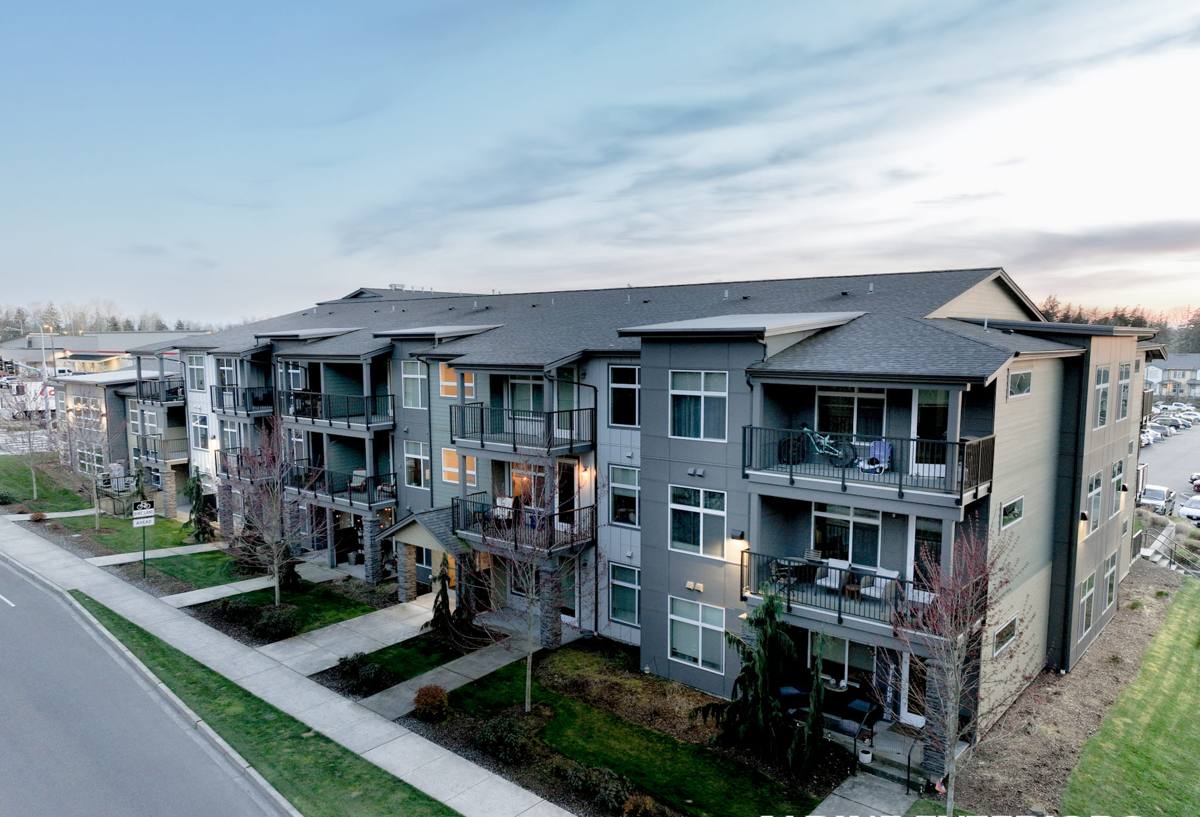
What Whatcom County's Climate Does to Siding Over Time
Three climate factors do most of the damage locally, and they compound each other:
Salt Air and Corrosion
Coastal-influenced air carries fine salt particles that settle on exterior surfaces and accelerate corrosion of fasteners, flashing, and any exposed metal trim. Over time this can also degrade certain paints and coatings faster than a manufacturer's inland test data would predict, which is one reason coating durability matters more here than in a dry inland climate.
Driving Rain
Wind-driven rain doesn't just wet a wall face — it pushes water sideways and upward into laps, seams, and any gap in the water-resistive barrier behind the siding. A siding system's real performance depends less on how it looks in a brochure and more on how it manages water at the seams, the flashing details, and the bottom edge where boards meet the foundation.
A Long Moss and Algae Season
Shaded lots, tree cover, and persistent damp conditions give moss and algae a long runway to establish on any surface that holds moisture. Wood-based products are especially vulnerable because the organic material itself feeds fungal growth once moisture gets past the surface finish. Fiber cement doesn't feed mold or rot the way wood-based sidings do, which matters enormously in a climate where surfaces rarely get a long enough dry stretch to fully recover.
Why We Install Only James Hardie Fiber Cement
We standardized on James Hardie products years ago and we don't install LP SmartSide, vinyl, Cemplank, Allura, or raw wood siding. That's not brand loyalty for its own sake — it's a decision based on how each material actually performs under sustained moisture and salt exposure, which is the exact condition Sehome and Sudden Valley homes live in.
Non-Combustible, Moisture-Stable Core
Fiber cement is made from cellulose fiber, sand, and cement. It doesn't absorb and swell the way wood-based composite products can, and it doesn't require the same vigilance around cut-edge sealing that engineered wood products do. That matters in a climate where a missed seal on an exposed edge has months of wet weather to find its way in before things dry out again.
HZ5 Engineering for This Climate
James Hardie engineers its HZ product lines by climate zone, and the Pacific Northwest falls into their wet-climate HZ5 specification. The board formulation and moisture-management engineering are built around exactly the kind of sustained rain exposure this region gets, rather than a one-size-fits-all national spec.
ColorPlus Factory Finish
Most of what fails first on painted siding isn't the substrate — it's the coating. ColorPlus is baked on in a controlled factory environment in multiple coats, which gives a more consistent, UV- and moisture-resistant finish than field-applied paint, and it comes with its own finish warranty separate from the substrate warranty. In a salt-air climate where field-painted finishes tend to chalk and fade faster, that factory consistency is a real, measurable advantage — not a marketing point.
What a Correct Fiber Cement Installation Involves
Fiber cement is only as good as the installation behind it. The material itself resists moisture and organic growth, but a poorly flashed or improperly fastened installation can still let water into the wall assembly, and once water is behind the siding, the siding material almost doesn't matter anymore. Correct installation in this climate means:
- A properly lapped and sealed water-resistive barrier behind the siding, with all penetrations (vents, hose bibs, electrical) flashed individually before the siding goes on
- Rain-screen or drainage-plane detailing so any moisture that does get behind the cladding has a path to drain and dry out, rather than sitting against the sheathing
- Correct fastener type and spacing per the James Hardie installation spec — the wrong fastener or over-driven nail is one of the most common causes of premature siding failure
- Proper clearance at grade, decks, and roof lines so siding never sits in standing water or constant splash-back
- Factory-cut and field-cut edges sealed per spec, since an unsealed cut edge is the one place fiber cement can take on moisture
- Caulking and joint treatment at butt joints and trim that's rated for the coastal exposure, not a generic interior-grade product
Skipping any one of these doesn't usually cause an immediate problem. It shows up two, five, or ten years later as a soft spot, a stain, or a section that needs to come off and be redone — usually after the damage has already spread into the sheathing behind it.
Our Process for a Sehome or Sudden Valley Project
The process is the same whether the home is closer to the water or further up toward Sudden Valley's tree-covered lots, but what we look for during the assessment shifts based on exposure:
- On-site assessment. We walk the exterior looking at existing moisture damage, moss patterns, flashing condition, and how exposed the home is to prevailing wind and rain direction.
- Sheathing and moisture check. Where old siding is coming off, we check the sheathing underneath for soft spots or trapped moisture before anything new goes up — this is where problems from the old siding surface if they exist.
- Product and color selection. We walk through the relevant James Hardie lines and ColorPlus colors, including how different finishes hold up under the salt-air and shade conditions specific to the lot.
- Installation to spec. Water-resistive barrier, flashing, fastening, and clearances are done to James Hardie's published installation requirements — this is also what keeps the manufacturer warranty valid.
- Final walkthrough. We go over the finished work with the homeowner, including basic care and what to watch for over the first year or two as the home settles into the new siding.
Cost Factors Worth Understanding Up Front
Fiber cement costs more up front than vinyl and often more than engineered wood siding. The honest way to evaluate that is against what drives cost on a given project, not just against a per-square-foot number:
| Factor | Why It Affects Cost |
|---|---|
| Existing siding removal | Tear-off and disposal of old material, plus any sheathing repair found underneath |
| Home size and complexity | Cut lines, corners, and trim detail around windows and rooflines add labor time |
| Board profile and plank width | Lap siding, panel systems, and shingle-style products have different material and labor costs |
| ColorPlus vs. field paint | Factory-finished color typically costs more up front but removes a repaint cycle from the maintenance timeline |
| Site access and exposure | Steep lots, tree cover, and multi-story sections affect staging and labor time |
We give straightforward, itemized estimates rather than a single lump number, so a homeowner can see what's actually driving the price on their specific home.
Maintenance and Longevity in This Climate
Fiber cement is low-maintenance, not no-maintenance. In a climate with this much moss and moisture, a small amount of regular attention goes a long way:
- Rinse siding periodically to keep salt residue, pollen, and organic buildup from sitting on the surface long-term
- Keep gutters clear and downspouts directing water away from siding, especially where roof runoff hits a wall directly
- Trim back vegetation and tree cover that keeps a section of wall shaded and damp longer than the rest of the house
- Check caulking at trim and butt joints every couple of years and re-caulk as needed — this is the first thing to wear out, well before the siding itself
- Address any moss or algae growth early rather than letting it establish, since it holds moisture against the surface
Done consistently, this kind of basic upkeep is what lets a correctly installed Hardie system reach its full service life instead of an early repaint or repair.
Why Local Installation Experience Matters
Manufacturer specs are written for a range of climates, but knowing how to apply them to a specific Sehome lot — how much wind-driven rain a given elevation actually takes, how long a shaded north wall stays damp, where salt exposure is worse — comes from having installed and revisited siding on homes in this specific area over time. A crew that only occasionally works in Whatcom County's marine climate is more likely to apply a generic install and move on. A crew that works here regularly builds judgment about where the extra flashing detail or extra clearance actually matters on this coastline, not just what the spec sheet says in the abstract.
That local pattern recognition is a big part of why we standardized on one product installed correctly, rather than offering several lower-cost options and letting the climate sort out which ones hold up.
If you're weighing a siding project on a Sehome or Sudden Valley home, we're happy to walk the exterior with you, look at what your specific exposure and moisture conditions call for, and put together a straightforward estimate — no pressure, no obligation. The form below is the easiest way to get that started.