 Sudden Valley Siding
 Whatcom County Weather and What It Does to a Roof
A roof over Columbia doesn't fail the same way a roof does in a dry climate. Out here, the damage is slow and cumulative: driving rain pushed sideways by wind finds every weak seam, salt-laden air off the water accelerates corrosion on fasteners and flashing, and a long, wet moss season keeps organic growth working at the shingle surface for most of the year. None of these forces are dramatic on their own. Together, over ten or fifteen years, they're what turns a roof that "still looks fine from the driveway" into one that's actually failing from the inside.
Homes in Columbia and the rest of Sudden Valley sit under tree cover for much of the year, which means shade, moisture, and slow-drying roof decks are the norm rather than the exception. That combination is exactly what moss, algae, and rot need to take hold. A roof replacement done for this specific climate looks different than a generic tear-off-and-shingle job — it has to account for how long surfaces stay damp, not just how hard it rains.
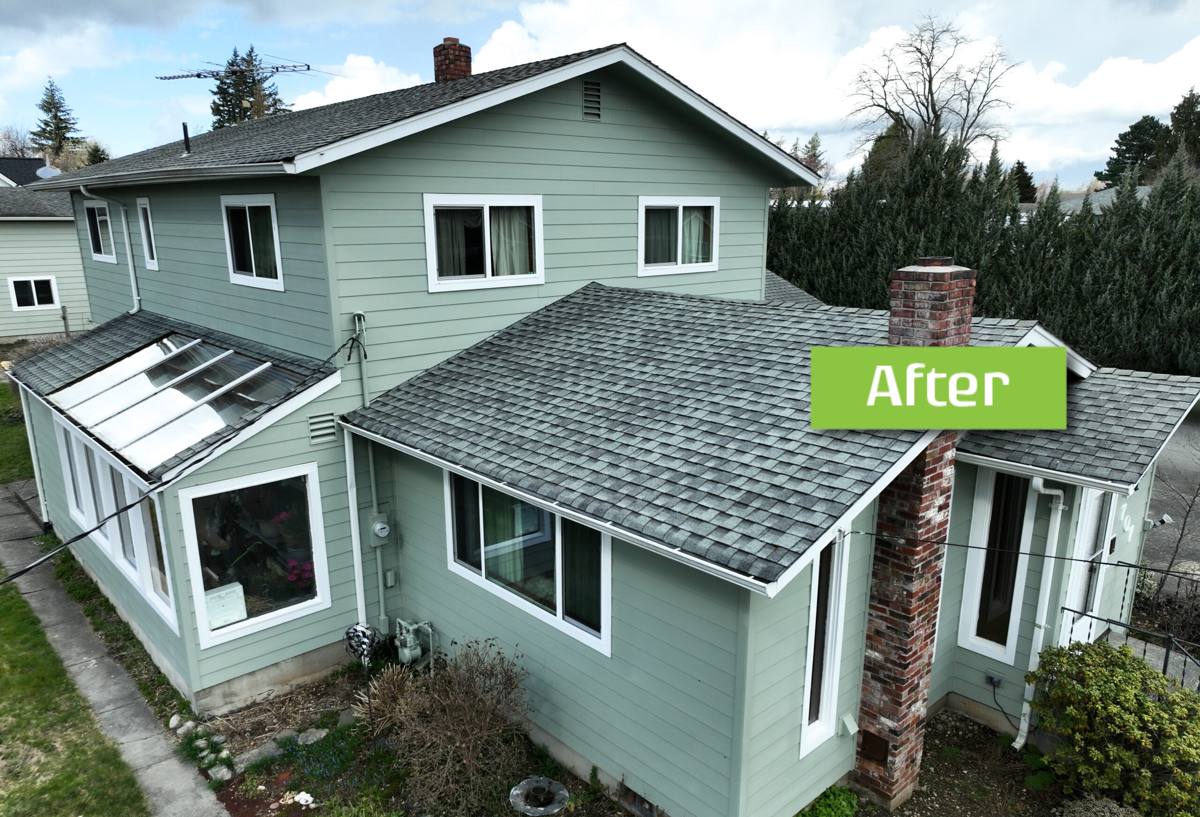
Signs a Columbia Roof Has Reached the End of Its Life
Not every roof problem means you need a full replacement. But there's a point where patching stops making financial sense and starts becoming a pattern of chasing leaks instead of solving them. Here's what tells us a roof has crossed that line:
- Granule loss heavy enough that you're finding grit in gutters and downspouts every season
- Shingles that are cupping, curling, or cracking, especially on south- and west-facing slopes
- Moss or algae established thickly enough that it's lifting shingle edges, not just discoloring the surface
- Soft spots in the decking when walked, or sagging visible from the ground
- Flashing around chimneys, vents, or valleys that's rusted, lifted, or was never properly step-flashed to begin with
- Leaks that show up in more than one location, or that reappear after a repair
- A roof that's 20+ years old and has never had a full tear-off
If you're seeing two or more of these, it's worth having someone look at the whole roof system rather than spot-treating the symptom you happened to notice.
What a Correct Roof Replacement Actually Involves
A roof replacement is more than stripping old shingles and nailing down new ones. The parts that actually determine how long the roof lasts in this climate are mostly invisible once the job is done.
Tear-Off and Deck Inspection
Every layer of old roofing comes off down to the decking. This is the only point in the job where we can see the plywood or planking underneath and catch soft, rotted, or delaminated sections before they're covered up again. Skipping a full tear-off — or "roofing over" an existing layer — hides deck problems instead of fixing them, and in a wet climate like this one, hidden rot doesn't stay small.
Underlayment and Ice/Water Protection
Underlayment is the roof's actual water barrier; shingles are the wear layer on top of it. Given how much driving rain Whatcom County roofs take, we don't treat underlayment as an afterthought. Self-adhered ice-and-water barrier goes in valleys, around penetrations, and along eaves — the spots where wind-driven rain is most likely to get pushed under a shingle edge.
Flashing Details
Chimneys, skylights, sidewalls, and valleys fail more often at the flashing than at the shingles themselves. Correct step flashing, counter-flashing, and valley metal — installed new, not reused — is what actually keeps water out at these transition points. This is also where corner-cutting shows up soonest, because bad flashing can look fine for a year or two before it leaks.
Ventilation
A roof deck that can't breathe stays damp longer after every rain, which is exactly what feeds moss and accelerates shingle aging from underneath. Balanced intake and exhaust ventilation isn't a luxury upgrade — on a shaded, moisture-heavy lot, it's part of what determines whether the new roof makes it to its full expected lifespan.
Choosing the Right Roofing Material for Columbia
There's no single "best" material for every home — it depends on your roof's exposure, your budget, and how much long-term maintenance you're willing to do. Here's how the common options compare for this specific climate:
| Material | Typical Lifespan | Moss/Algae Resistance | Relative Cost | Best For |
|---|---|---|---|---|
| 3-tab asphalt shingle | 15–20 years | Lower — flat profile holds moisture | Lowest | Budget-conscious replacements, secondary structures |
| Architectural (laminate) shingle | 25–30 years | Moderate; better with algae-resistant granules | Moderate | Most Columbia homes — balance of cost, durability, and appearance |
| Metal (standing seam or panel) | 40–50+ years | High — sheds moisture, little for moss to grip | Highest upfront | Homeowners planning to stay long-term or with heavy shade/moss history |
| Synthetic/composite shingle | 30–40 years | Moderate to high depending on product | High | Homes wanting shake or slate appearance with less maintenance |
For most homes in this area, an architectural shingle with algae-resistant (AR) granules is the practical middle ground — meaningfully more moss- and algae-resistant than a basic 3-tab, without the upfront cost jump of metal. If your lot is heavily shaded and you've fought moss for years, that history is a legitimate reason to look harder at metal, even with the higher initial price, since it removes moss as an ongoing maintenance issue rather than just slowing it down.
Our Roof Replacement Process, Start to Finish
- On-site inspection and estimate. We walk the roof (weather permitting) and the attic if accessible, check decking condition where we can, and give you a written scope and price — not a ballpark over the phone.
- Material selection. We go over the tradeoffs above based on your roof's specific exposure and your budget, and help you land on a spec that makes sense rather than upselling the most expensive option.
- Scheduling around the weather. A roof needs a reasonably dry window to go on correctly. We plan around Whatcom County's rain patterns rather than rushing a tear-off into a system that's about to roll through.
- Tear-off and disposal. Old material comes off, is loaded out, and disposed of properly — not left staged on the property longer than necessary in wet weather.
- Deck repair. Any soft or damaged decking found during tear-off gets replaced before anything new goes down. We flag this for you before proceeding, not after the invoice.
- Underlayment, flashing, and ventilation installation. The water-management layer goes in first and correctly, per the details above.
- Shingle or panel installation. Installed to manufacturer spec, which is also what keeps the material warranty valid.
- Cleanup and magnetic sweep for nails. Property, driveway, and yard cleared of debris and stray fasteners.
- Final walkthrough. We go over the finished roof with you before calling the job done.
Moss, Algae, and Keeping a New Roof Looking Right
A new roof in Columbia will eventually face the same moss pressure the old one did — the tree cover and moisture aren't going anywhere. The difference is that a correctly installed roof, paired with a little ongoing care, stays ahead of it instead of losing the fight within a few years.
- Have overhanging branches trimmed back where practical to increase sun exposure and airflow on the roof surface
- Keep gutters and valleys clear so water isn't sitting against the shingle edge
- Consider zinc or copper strips near the ridge on shaded slopes — rain washing over them helps suppress new moss growth
- Have the roof looked at every couple of years rather than waiting for a visible problem
- Avoid pressure washing shingles directly — it strips granules and shortens the roof's life faster than the moss it's removing
Permits and Working Within a Sudden Valley Community
Roof replacements in Whatcom County typically require a building permit, and we handle that as part of the job rather than leaving it on you to sort out. If your property is part of an HOA or community association — as much of Sudden Valley is — there can also be guidelines around material type or color that are worth checking before you commit to a shingle choice. We factor that into the material conversation up front so you're not picking a roof twice.
Why Local Experience in Columbia Matters
Roofing crews that only pass through an area occasionally tend to install to a generic spec and move on. A crew that regularly works Columbia and the surrounding Sudden Valley area has already seen how these specific roofs age — which slopes moss up first, which flashing details actually hold up to the wind-driven rain here, and which materials are worth the extra cost on a shaded lot versus an open one. That's not a marketing point, it's a practical one: it means fewer surprises during tear-off and a spec that's built for how this roof will actually be used, not a textbook average.
It also means being reachable after the job is done. A roof replacement should come with a real workmanship warranty and a contractor who's still around the area — not just a manufacturer's paperwork — if something needs a look years down the road.
If you're weighing a repair against a full replacement, or just want an honest read on how much life is left in your current roof, we're happy to take a look. There's a free, no-pressure estimate form below — reach out and we'll walk the roof with you and give you a straight answer.