 Sudden Valley Siding
 Why Cordata Roofs Take a Different Kind of Beating
Cordata sits close enough to Bellingham Bay that salt-laden air is a real factor in how fast roofing materials age here, not just a coastal-town talking point. Add in the driving, sideways rain that comes off Pacific storm systems through the fall and winter, and a wet season that runs long by most standards, and you've got a roof climate that's harder on materials than what a lot of manufacturers design and warranty for. This isn't a dramatic claim — it's just what Whatcom County weather does to asphalt, wood, and metal roofing components year after year.
The mature tree cover common in this part of Bellingham compounds the problem. Firs and cedars drop needles and debris into valleys and behind chimneys, holding moisture against the roof deck long after a storm has passed. Combine that with shaded north-facing slopes that never get a real chance to dry out, and you have the exact conditions moss and algae need to take hold. A roof repair here has to account for all three factors — salt air, rain volume, and moss — not just patch whatever's leaking at the moment.
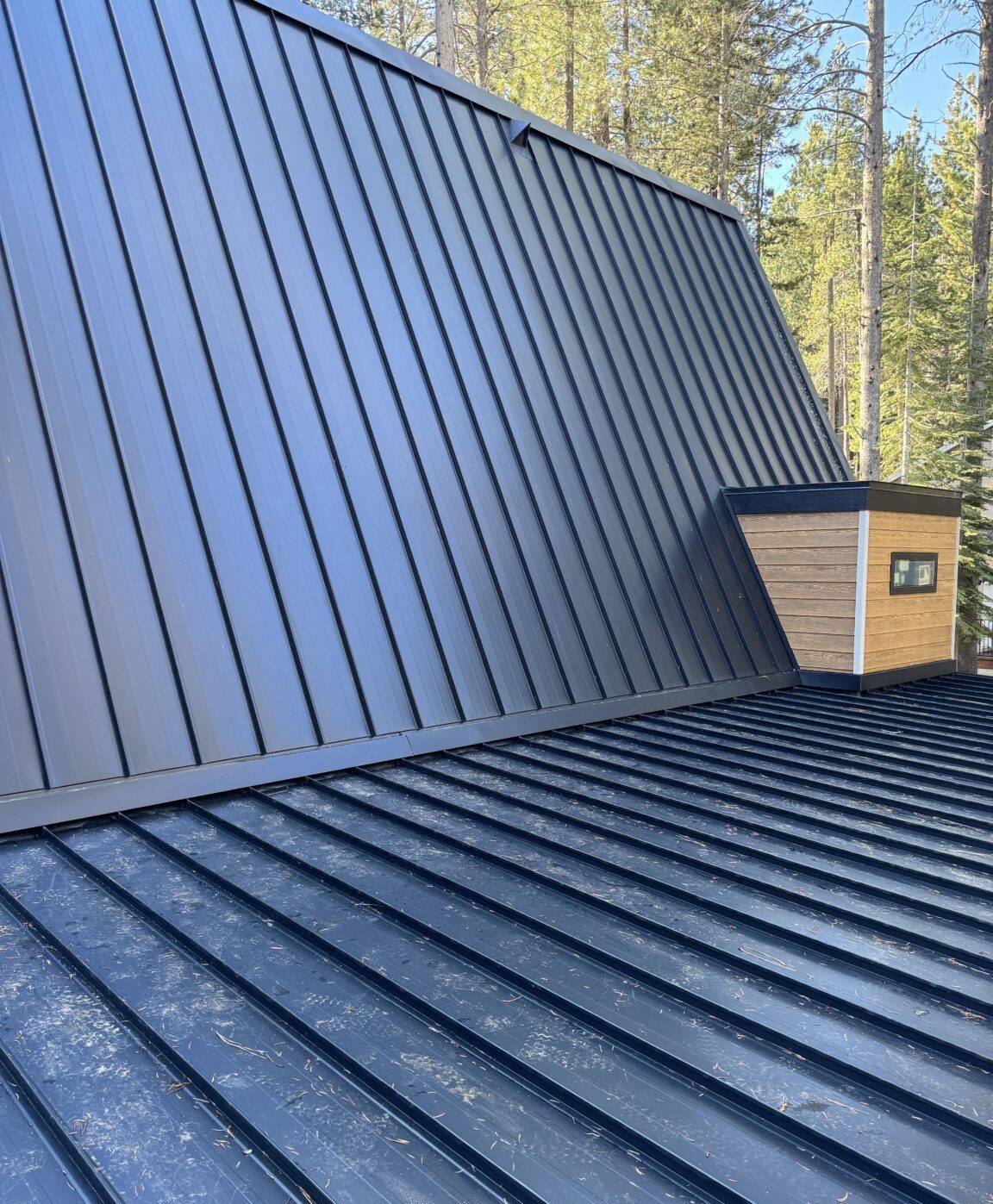
Recognizing a Roof That Needs Repair, Not Replacement
Most roofs don't fail all at once. They show warning signs for months, sometimes years, before a homeowner notices a stain on the ceiling. Catching these early is what keeps a repair a repair instead of turning into a full tear-off.
- Granule loss showing up as grit in gutters or downspouts, or bare-looking patches on the shingle surface
- Shingles that are curling, cupping, or lifting at the edges, especially on south- and west-facing slopes that see the most sun and wind exposure
- Moss mats thicker than roughly a quarter inch, particularly on shaded or north-facing sections
- Dark streaking or discoloration, which is usually algae rather than dirt
- Soft or spongy spots you can feel underfoot when walking the roof, which usually mean the decking underneath has taken on moisture
- Water stains on interior ceilings or in the attic, especially near chimneys, skylights, or roof valleys — these are the highest-failure-rate spots on any roof
- Missing, cracked, or displaced shingles after a windstorm
None of these automatically mean the whole roof is done. A roof that's otherwise structurally sound with isolated flashing failure or storm damage is usually a good repair candidate. A roof with widespread granule loss, multiple soft spots, and moss coverage across most slopes is telling you it's closer to the end of its service life.
What a Correct Cordata Roof Repair Actually Involves
Inspection Before Anything Else
A repair estimate that skips getting on the roof isn't a real estimate — it's a guess. A proper inspection covers the shingles themselves, but also the flashing around every penetration, the condition of the underlayment where it's exposed, the decking (checked for soft spots and moisture), attic ventilation, and gutter condition. Leaks almost never originate exactly where the stain shows up inside the house; water travels along rafters and sheathing before it drips, so tracing the actual source matters more than patching the visible spot.
Matching Materials, Not Just Patching
A repair that uses the wrong shingle profile, weight, or even the wrong color batch stands out and can also create a functional mismatch — different products shed water and expand/contract at different rates. On an older roof, exact matches aren't always available, and that's a conversation we have honestly with the homeowner up front rather than making promises we can't keep on color or texture.
Flashing and Underlayment: Where Most Repairs Actually Fail
Flashing around chimneys, skylights, and roof-to-wall transitions, along with the underlayment beneath the shingles, is where the overwhelming majority of roof leaks actually originate — not the shingles themselves. A repair that replaces surface shingles but reuses old, corroded, or improperly lapped flashing is a repair that will leak again, usually within a season or two. Doing this correctly means removing enough surrounding material to properly integrate new flashing and underlayment, not just caulking over the old flashing and calling it done.
Moss, Trapped Moisture, and Salt Air: The Three Local Culprits
These three factors interact more than most homeowners realize. Moss holds moisture against the shingle surface long after rain stops, which accelerates granule loss and shingle breakdown. Trapped moisture from poor attic ventilation pushes warm, humid air up against the roof deck from underneath, which can cause rot and mold even on a roof with no visible leaks. Salt air contributes to faster corrosion of exposed metal — flashing, fasteners, gutter hardware, and vent components — which is often the first thing to fail structurally, well before the shingles themselves are due for replacement.
Any repair that addresses moss on the surface but ignores ventilation, or replaces shingles but leaves corroding flashing in place, is treating a symptom instead of the underlying cause. A repair done right in this climate looks at all three together.
Repair or Replace? A Cost-Factor Comparison
This is the question we get asked most, and the honest answer depends on more than the homeowner's budget alone. Here's how we walk through it:
| Factor | Points Toward Repair | Points Toward Replacement |
|---|---|---|
| Age of roof | Under 15 years | Approaching or past manufacturer's expected lifespan |
| Extent of damage | Isolated to one slope, valley, or penetration | Spread across most or all slopes |
| Decking condition | Solid, no soft spots | Multiple soft or spongy areas found during inspection |
| Moss/algae coverage | Light, treatable, mostly cosmetic | Heavy, embedded, causing granule loss underneath |
| Number of past repairs | First or second repair on this roof | Third or more repair in recent years on the same roof |
| Ventilation | Adequate, functioning intake and exhaust | Inadequate — often drives repeat moisture problems regardless of shingle condition |
We'll tell a homeowner straight if a repair is the right call, even if a replacement would be the bigger job for us — a repair that's set up to fail again isn't good for anyone.
Our Process, Start to Finish
- Initial call or request — we ask what you're seeing (a stain, missing shingles, a storm event) so we know what to look for first
- On-site inspection — we get on the roof, in the attic if accessible, and document what we find with photos
- Written estimate — a clear scope of work and price range before anything is touched, including whether we recommend repair or replacement and why
- The repair itself — proper tear-back around the damaged area, correct flashing and underlayment work, matched materials where available
- Cleanup and walkthrough — debris and old material hauled off, and we walk the work with you before we consider the job done
Why a Crew Already Working in Cordata Matters
A roofing crew that regularly works this part of Whatcom County has already seen how the local mix of tree cover, moisture, and coastal air plays out on roofs like yours — which slopes tend to hold moss, which valleys clog fastest, and which shingle lines hold up better against sustained wet exposure. That's not a substitute for a proper inspection of your specific roof, but it does mean fewer surprises and a faster, more accurate estimate. It also means we're not disappearing after the invoice clears — if something needs a follow-up look after the next big storm, we're already local.
Being established here also means working relationships with material suppliers who stock what actually holds up in this climate, rather than ordering blind and hoping a product performs the way a spec sheet suggests it will in a drier region.
Maintenance Checklist to Extend the Life of Any Repair
A repair is only as good as the maintenance that follows it. This is the routine we recommend to Cordata-area homeowners to protect the work and get the full service life out of it:
- Clean gutters and downspouts at least twice a year — more often if you have overhanging conifers
- Trim back tree limbs that overhang or touch the roof surface
- Have moss treated before it establishes a thick mat, not after — early treatment is cheaper and far less damaging to the shingle surface
- Check attic ventilation is unobstructed, especially if insulation has been added or disturbed
- Have flashing around chimneys and skylights visually checked annually, since this is the most common leak point
- After any major windstorm, do a visual check from the ground for lifted or missing shingles
- Don't pressure-wash a roof — it strips granules and can force water under shingles; moss removal should be done with appropriate low-pressure methods
A Straightforward Estimate, No Pressure
If you're seeing signs of a leak, storm damage, or a moss problem that's gotten ahead of you, we're glad to come take a look and give you a straight answer on what it actually needs — repair, monitoring, or something more. Use the form below to request a free estimate; there's no obligation attached to it.