 Sudden Valley Siding
 Why Sehome Roofs Wear Out Differently Than Roofs Inland
A roof in Sehome doesn't fail the way a roof does 200 miles inland. Being close to Bellingham Bay means homes here deal with a steady mix of salt-laden air, wind-driven rain that gets pushed sideways under poorly lapped materials, and a wet season that runs long enough for moss and moisture-loving growth to get a real foothold on north-facing slopes and shaded valleys. None of that is dramatic on its own, but stacked year after year it's what separates a roof that makes it to 25 years from one that starts leaking at 15.
When we're asked to look at a roof in this part of Whatcom County, we're not just checking for missing shingles. We're checking how the roof has handled repeated wetting and drying cycles, whether flashing and fasteners have started to corrode from salt exposure, and whether moss has been allowed to lift shingle edges and hold moisture against the deck. A correct new roof installation here has to be built with that specific combination of stresses in mind, not just installed to a generic manufacturer spec sheet.
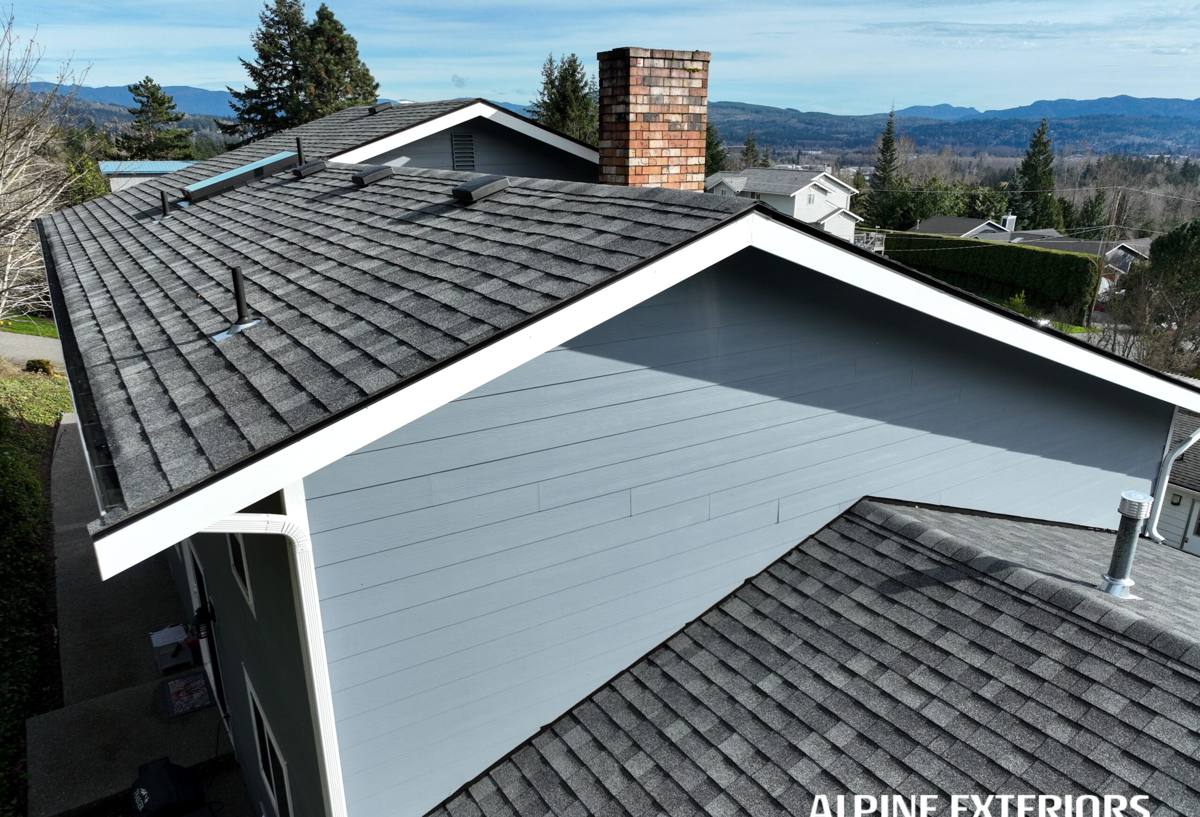
Signs a Sehome Home Needs a New Roof, Not Another Repair
Most roofs give warning signs well before they actually leak. The trouble is that a lot of those signs look minor from the ground, so they get put off. Here's what we tell homeowners to watch for:
- Granules collecting in gutters or at downspout outlets, which means the shingle surface is wearing thin
- Shingles that are cupping, curling at the edges, or visibly buckling in rows
- Dark streaking or thick moss growth, especially on the north or shaded side of the roof
- Soft spots or a slight give felt when walking the roof during an inspection
- Daylight visible through the attic decking, or damp insulation and staining on rafters
- A roof that's already had two or more patch repairs in the last few years for separate leaks
- Flashing around chimneys, skylights, or roof-to-wall transitions that's rusted, lifted, or resealed with visible caulk patches
Any one of these can sometimes be handled with a targeted repair. Several of them together, especially on a roof already past 18-20 years old, usually means repair costs are about to start chasing new problems faster than they solve old ones. That's the point where a full replacement is the more honest recommendation.
What a Correct New Roof Installation Actually Involves
A new roof is more than laying down new shingles over what's already there. Every layer underneath the visible surface is doing specific work, and in a climate that sees this much wind-driven rain, skipping or shortcutting any one of them is where future leaks come from.
Tear-Off and Deck Inspection
We remove the old roofing down to the deck rather than layering over it. That's the only way to actually see the plywood or plank decking underneath, check for soft or delaminated sections from long-term moisture intrusion, and replace only what's actually compromised. Roofing over old, saturated decking just hides a problem that will resurface as sagging or soft spots later.
Underlayment and Moisture Barrier
A synthetic underlayment goes down over the full deck as the roof's real waterproofing layer, with a self-adhering ice-and-water membrane at the eaves, valleys, and any low-slope transitions where wind-driven rain is most likely to work its way backward under the shingles. This is the layer that's doing the actual work if wind ever drives rain past the shingle surface, so we don't treat it as an afterthought.
Flashing at Every Transition
Chimneys, skylights, sidewalls, and any place the roof plane changes are where the majority of leaks actually start, not in the open field of shingles. New step flashing, counter-flashing, and valley metal get installed correctly rather than resealed with sealant over old, corroded pieces — sealant is a maintenance item, not a permanent fix, and salt air accelerates corrosion on cheap or reused flashing.
Ventilation
Balanced intake at the eaves and exhaust at the ridge keeps the attic close to outside temperature and humidity, which reduces condensation on the underside of the deck and slows moss and mildew growth from underneath. A roof that looks great on the surface but traps warm, moist air underneath will age faster than the shingle warranty assumes.
Choosing a Roofing Material for This Climate
There's no single "best" roofing material for every home — it depends on the roof's slope, the home's style, and what a homeowner wants to manage long-term. What matters is picking a material with realistic expectations for how it performs under salt air, sustained rain, and heavy moss pressure.
| Material | Moss & Moisture Behavior | Salt Air Durability | Typical Lifespan |
|---|---|---|---|
| Architectural asphalt shingles | Good drainage profile; needs periodic moss treatment on shaded slopes | Solid with quality fasteners and flashing | 25-30 years |
| Standing seam metal | Sheds water and debris fast; very low moss retention | Excellent with proper coatings and fasteners | 40-50+ years |
| Synthetic/composite shingle | Resists moisture absorption well; low maintenance | Good, does not corrode | 30-50 years |
| Wood shake | High moisture retention; needs regular treatment and airflow to resist rot and moss | Moderate; requires more upkeep near salt air | 20-30 years with maintenance |
We install and stand behind asphalt, metal, and synthetic roofing systems depending on what fits the home and budget. We generally steer homeowners away from wood shake on heavily shaded, north-facing roofs in this specific climate — not because the material is bad, but because the maintenance schedule needed to keep it performing well here is a real, ongoing commitment, and we'd rather set that expectation up front than let a homeowner find out the hard way.
What Drives the Cost of a New Roof
We don't quote roofs off a square-footage number alone — the details below move the price more than most homeowners expect.
| Factor | Why It Matters |
|---|---|
| Roof pitch and complexity | Steeper slopes and multiple valleys or dormers take more labor and material to flash correctly |
| Layers of existing roofing | Removing multiple old layers takes more time and disposal cost than a single-layer tear-off |
| Deck condition | Sections of rotted or soft decking need to be replaced before new roofing goes down |
| Material choice | Asphalt, metal, and synthetic products carry different material and labor costs |
| Penetrations and features | Chimneys, skylights, and multiple vents each need individual flashing work |
| Access and staging | Steep sites or limited equipment access can add labor time |
Because of that spread, we don't publish a flat price online — an accurate number takes an actual look at the roof. What we can say honestly is that most full replacements on a typical single-family home fall into a broad mid-range once you account for tear-off, decking repair, and quality materials, with the specifics depending entirely on the factors above.
How Our Roof Installation Process Works
- On-site inspection. We walk the roof and attic, check the current material's condition, and look for signs of deck damage or ventilation problems before quoting anything.
- Written estimate. You get a clear scope of work and price, including material options, so there are no surprise line items added mid-project.
- Scheduling around the weather. Whatcom County's rain pattern means we plan tear-off days around dry stretches whenever possible and keep the roof protected if weather turns during the job.
- Tear-off and deck repair. Old roofing comes off, the deck gets inspected, and any compromised sections are replaced before anything new goes down.
- Underlayment, flashing, and material installation. Each layer goes on in the order and manner it's designed for, not shortcuts to save a day of labor.
- Final walkthrough. We go over the finished roof, ventilation, and cleanup with you directly before calling the job done.
Why a Crew That Already Works in Sehome Makes a Difference
Roofing crews that work primarily in drier, inland regions sometimes bring assumptions that don't hold up here — lighter underlayment specs, less attention to ventilation, or scheduling that doesn't account for how often a project can get pushed by rain. A crew that regularly works roofs in and around Sehome and the rest of Whatcom County already knows how much ice-and-water membrane a given roof actually needs, which slopes tend to hold moss the longest, and how to sequence a tear-off so a home isn't left exposed if the forecast changes.
That local familiarity also matters for permitting and code requirements specific to the area, and for having a realistic sense of what materials and installation details actually hold up over years of real Pacific Northwest weather rather than a manufacturer's lab conditions. It's the difference between a roof that's technically installed correctly and one that's installed correctly for where it actually sits.
Keeping a New Roof Performing for the Long Run
A new roof installed well should need very little from you, but a few habits extend its life meaningfully in this climate:
- Keep gutters and downspouts clear so water isn't backing up under the eaves during heavy rain
- Have moss growth treated or removed before it spreads and starts lifting shingle edges
- Keep overhanging branches trimmed back so shaded areas of the roof get more airflow and sun exposure
- Schedule a quick visual check after major windstorms to catch lifted flashing or shingles early
- Have the attic checked periodically for proper ventilation and any early signs of moisture
None of this requires climbing on the roof yourself — most of it is just knowing when to call someone out for a look before a small issue becomes a bigger one.
If your roof is showing its age or you just want an honest read on where it stands, we're happy to come out, take a real look, and walk you through your options with no pressure to decide on the spot. Use the form below to request a free estimate.