 Sudden Valley Siding
 Roofing Built for Acme's Weather, Not a Generic Climate
Acme sits in a stretch of Whatcom County where the weather doesn't do anything halfway. Rain settles in for weeks at a time, the tree canopy keeps roofs shaded and damp longer than homes out in the open, and salt-laden air moving in off the water corrodes metal fasteners and flashing faster than most homeowners expect. Add a moss season that can run eight or nine months out of the year, and you have a roofing environment that punishes shortcuts. A roof that would hold up fine in a dry inland climate can fail early here if it's installed without accounting for constant moisture, wind-driven rain, and organic growth.
When we install a new roof in Acme, we're not just swapping old shingles for new ones. We're building a system — decking, underlayment, flashing, ventilation, and surface material — that's matched to what this specific area throws at a house year-round.
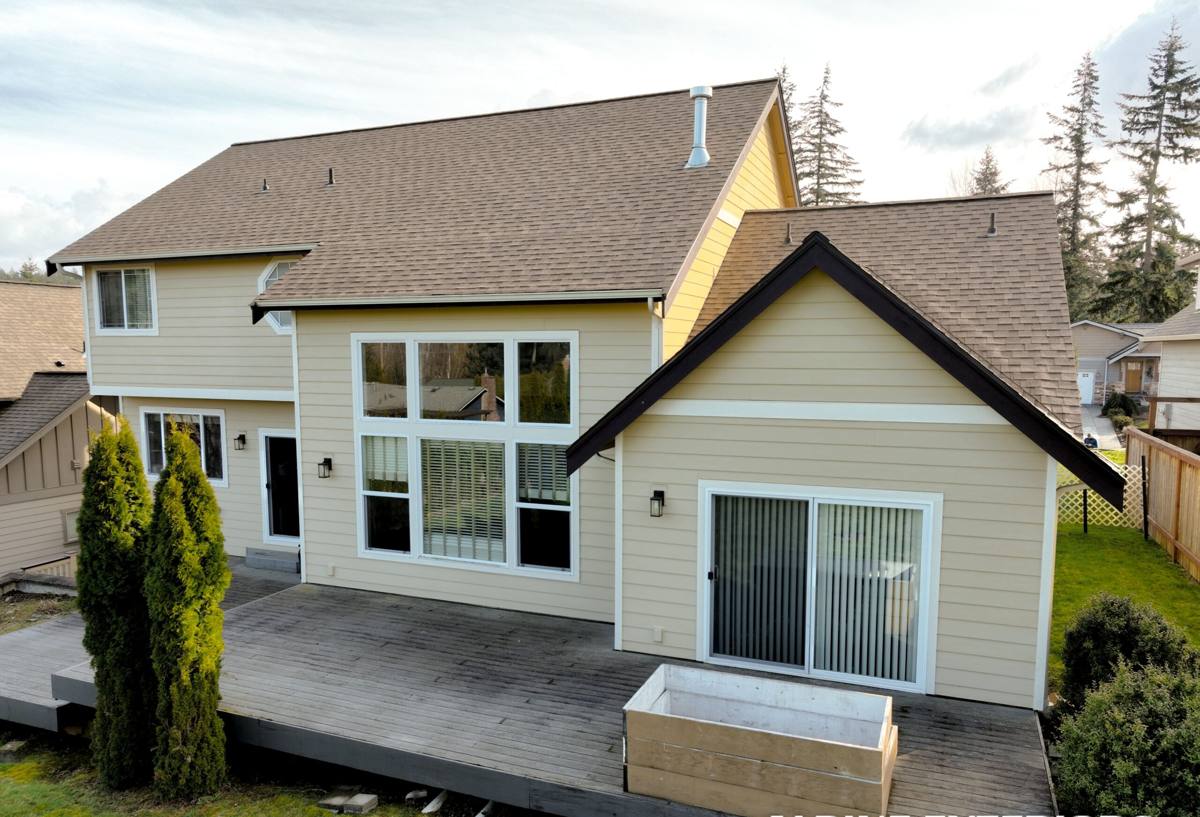
What Local Homes Actually Need From a New Roof
Moisture Management First
Whatcom County's driving rain doesn't just fall straight down — wind pushes it sideways under shingle edges, around vents, and into valleys. A roof here needs a underlayment strategy that assumes water will get past the top layer at some point, and a drainage path that gets it back out before it reaches the decking.
Moss and Organic Growth Resistance
Shaded lots and long damp stretches mean moss isn't a cosmetic issue — it's a maintenance and lifespan issue. Moss holds moisture against the roof surface, works into shingle granules, and can lift edges over time. A correct installation plans for this from day one rather than leaving it as a problem to manage later.
Corrosion Resistance
Salt air accelerates rust on exposed metal — nail heads, flashing, vent stacks, and gutter hardware. Using the wrong grade of fastener or flashing is a slow failure that doesn't show up until years later, usually as a leak with no obvious cause.
What a Correct Installation Actually Involves
A new roof is more than the shingles or panels on top. The parts homeowners don't see are what determine whether the roof lasts fifteen years or thirty.
- Full tear-off: we remove existing roofing down to the decking rather than layering over it, so we can actually inspect the structure underneath.
- Decking inspection and repair: soft, delaminated, or water-stained sheathing gets replaced before anything new goes down.
- Ice-and-water shield at vulnerable points: eaves, valleys, and roof-to-wall transitions get self-adhering membrane, not just felt.
- Synthetic underlayment across the field: more tear-resistant and water-resistant than old-style felt, especially during the install itself when the roof deck is exposed to weather.
- Corrosion-resistant flashing and fasteners: matched to the coastal exposure this area sees, not generic hardware.
- Balanced ventilation: intake at the eaves and exhaust at the ridge, sized to the attic, so moisture doesn't get trapped from the inside.
Material Options and Honest Trade-Offs
There isn't one "best" roofing material for every home in Acme — it depends on the roof's pitch, the tree cover, the budget, and how long you plan to stay in the house. Here's how the common options actually compare for this climate.
| Material | Typical Lifespan | Moss Resistance | Best Fit |
|---|---|---|---|
| Architectural asphalt shingle | 25–30 years | Moderate — needs periodic cleaning | Most homes; best value-to-performance ratio |
| Standing seam metal | 40–50+ years | High — sheds moss more easily | Homes under heavy tree cover or steep pitch |
| Synthetic composite (slate/shake look) | 30–50 years | Moderate to high | Homes wanting a specific look with less maintenance than real wood |
| Cedar shake | 20–30 years with upkeep | Low without regular treatment | Homeowners committed to ongoing maintenance |
We install cedar shake when a homeowner specifically wants that look and understands the upkeep involved, but we're upfront that in a shaded, damp Whatcom County lot it demands more regular attention than composite or metal. That's not a knock on the material — it's just a maintenance reality worth knowing before you commit to it.
Cost Factors Worth Understanding Up Front
| Factor | Why It Moves the Price |
|---|---|
| Roof pitch and access | Steeper or harder-to-reach roofs take longer and need more safety equipment |
| Layers to remove | Tearing off multiple existing layers adds labor and disposal cost |
| Decking condition | Rot or soft sheathing found during tear-off means replacement, which isn't always visible from the ground |
| Material choice | Asphalt, metal, and composite carry different material and installation costs |
| Ventilation upgrades | Older homes often need added intake or exhaust vents to meet current standards |
We give a firm, itemized quote after an on-site inspection — not a phone estimate — because pitch, layers, and decking condition can only be confirmed in person.
How Our Process Works
- On-site inspection: we walk the roof and attic, check for soft decking, existing ventilation, and signs of past leaks.
- Written estimate: material options, scope, and price laid out clearly, with no pressure to decide on the spot.
- Scheduling around weather: we plan installs for stretches with the best realistic chance of dry working conditions, and we tarp and protect the structure if weather turns mid-project.
- Tear-off and decking repair: old roofing removed, decking inspected and repaired as needed.
- Underlayment, flashing, and ventilation installed: the moisture-management system that does the real long-term work.
- Final roofing material installed: per manufacturer specifications, which matters for warranty coverage.
- Site cleanup and walkthrough: debris and nails cleared, and we walk the finished roof with you before we consider the job done.
Ventilation and Moss Prevention Details
A roof that traps heat and moisture in the attic ages faster from the inside than from weather hitting the outside. Poor ventilation shortens shingle life, can warp decking, and creates the humid conditions moss and mildew thrive in. When we install a new roof, we check attic ventilation as part of the job — not as an upsell, but because installing new shingles over an under-ventilated attic just repeats the same problem in a few years.
For moss specifically, zinc or copper strips near the ridge can help suppress regrowth over time as rainwater carries trace metal down the roof surface. It's a supplement to good design and periodic cleaning, not a replacement for either.
Permits and Local Code Considerations
Roofing work in unincorporated Whatcom County typically requires a permit, and inspections check things like proper flashing, ventilation, and ice-and-water shield placement in vulnerable areas. We handle the permit process as part of the job so homeowners aren't left tracking down inspections themselves. Skipping permits might save a little time upfront, but it can create real problems at resale or with insurance claims down the road.
Signs Your Roof Needs Replacing, Not Just Repairing
- Granules collecting in gutters or at downspout outlets
- Shingles that are curling, cupping, or visibly cracked
- Daylight visible through the attic roof boards
- Persistent moss growth that returns quickly after cleaning
- Soft or spongy spots when walking the roof
- Water stains on interior ceilings, especially near valleys or chimneys
- A roof approaching or past the manufacturer's expected lifespan
Some of these point to a targeted repair rather than a full replacement — a full inspection is the only way to know which situation you're actually in.
Why Hiring a Crew That Already Works in Acme Matters
A crew that regularly works this part of Whatcom County already knows which details matter here: how much ventilation an attic under heavy tree cover actually needs, which flashing details hold up against sideways rain, and where moss tends to establish first on a given roof pitch. That's different knowledge than a crew that mostly works drier, more open areas and treats every roof the same way. Local experience also means faster response if something needs a follow-up look after a storm, since we're not driving in from far outside the area.
What a Fair Warranty Should Cover
A new roof installation should come with two separate types of coverage: a manufacturer's warranty on the material itself, and a workmanship warranty from the installer covering the labor and installation details. Read both before signing — manufacturer warranties are often prorated after the first several years, and some require proof of proper ventilation to remain valid. We explain exactly what's covered, for how long, and what would void it, before work starts.
If your roof is showing its age or you're just weighing your options, we're happy to walk it with you and give a straight, no-pressure estimate — use the form below to get started.