 Sudden Valley Siding
 Metal Roofing Built for Yew Street's Conditions
Yew Street sits inside the broader Sudden Valley community, tucked against the timber and terrain that make this stretch of Whatcom County beautiful — and hard on a roof. Homes here deal with a specific combination of moisture problems: lake-effect humidity, tree cover that keeps roof surfaces shaded and damp longer than open areas, and the steady drizzle that defines a Pacific Northwest fall and winter. A metal roof, installed correctly for this environment, handles that combination better than most other roofing materials available to homeowners in this area.
This page focuses specifically on metal roofing for Yew Street properties — what the local climate demands from the material, what a correct installation actually involves, and why local experience matters more than most homeowners realize when it comes to roofing decisions.
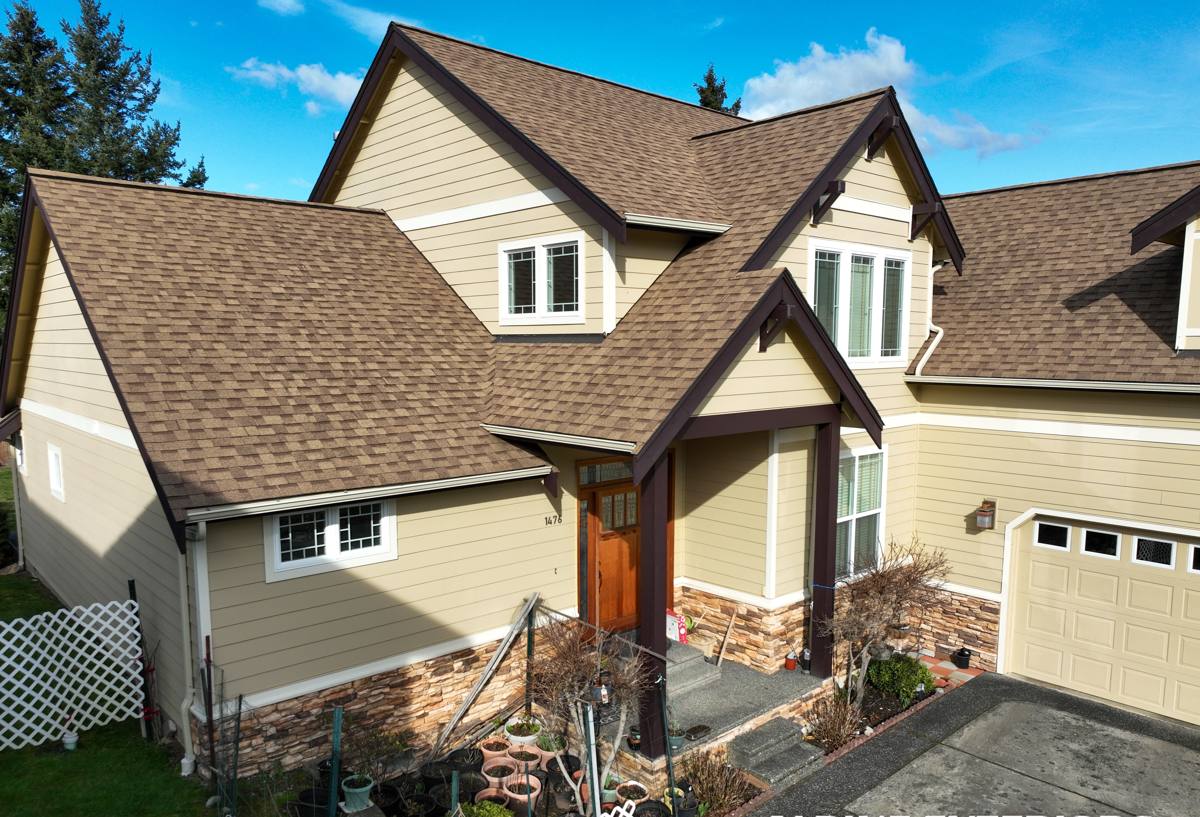
What This Climate Does to a Roof
Whatcom County's weather isn't extreme in the way hurricane or heavy-snow regions are, but it's relentless in ways that wear down roofing systems over time. Three factors matter most for Yew Street homes:
Persistent Moisture and Driving Rain
Rain here isn't usually a short, hard downpour — it's long, low-intensity, and often wind-driven off the lake and surrounding terrain. That kind of rain finds weak points that a heavier, shorter storm might not: poorly lapped seams, under-driven fasteners, and flashing details that were installed to a minimum standard rather than a correct one.
Moss and Organic Growth
Tree cover around Sudden Valley keeps many roof surfaces shaded for a large part of the day, especially on north-facing slopes. Shade plus consistent moisture is exactly what moss needs to establish. On asphalt shingles, moss lifts tabs and holds water against the roof deck. On a correctly installed metal roof, moss has a much harder time getting a foothold because the surface sheds water quickly and doesn't hold the granular texture moss spores latch onto — though debris in valleys and against obstructions still needs to be kept clear.
Humidity and Salt-Influenced Air
Proximity to the lake and the broader Puget Sound air pattern means metal roofing components in this area benefit from coatings and fastener systems rated for a humid, occasionally salt-tinged environment, rather than a generic dry-climate spec. This is a detail that's easy to skip and hard to notice until a roof is 8-10 years old and fasteners start showing corrosion first.
Why Metal Roofing Is a Strong Fit for Yew Street Homes
Metal roofing isn't the right choice for every home or every budget, but for the moisture and moss pressures common in this part of Sudden Valley, it holds several practical advantages:
- Steep water shed: Standing-seam and most profiled metal panels move water off the roof faster than shingles, reducing the time any given area stays wet.
- Low organic growth surface: A smooth, factory-finished metal surface gives moss and algae far less to grip onto compared to granulated shingle surfaces.
- Long service life: A correctly installed metal roof commonly outlasts multiple shingle roof cycles, which matters on a heavily wooded lot where roof access for maintenance isn't always convenient.
- Wind and debris resistance: Wooded properties see more limb drop and wind-driven debris; metal panels resist puncture and impact better than most asphalt products.
- Reduced fire exposure risk: A non-combustible roofing surface is a meaningful consideration for wooded, semi-rural properties.
The trade-offs are real too — higher upfront cost, the need for a crew experienced in metal-specific detailing, and some added attention to noise and expansion/contraction if the substrate isn't handled properly. We walk homeowners through these honestly rather than only selling the upside.
What a Correct Metal Roof Installation Actually Involves
The material itself is only part of the equation. Most metal roof problems we get called to fix on older installs trace back to installation shortcuts, not the panels themselves. A correct job for this area includes:
Deck Inspection and Prep
Any existing moisture damage, soft decking, or trapped organic material needs to be addressed before a single panel goes down. Installing over a compromised deck just seals the problem in.
Underlayment Suited to a Wet Climate
A high-temperature, self-adhered underlayment at eaves, valleys, and penetrations gives a second line of defense against the wind-driven rain common here — this is not an area to use a bargain underlayment.
Fastener and Panel System Matched to Exposure
Fastener coatings, panel finish, and clip systems should be specified for a humid, tree-covered, near-lake environment, not a generic regional default.
Flashing and Penetration Detail
Chimneys, vents, skylights, and valleys are where most leaks originate. Metal roofing requires flashing details specific to the panel profile — this is where installer experience matters most and where corner-cutting shows up first as a leak.
Ventilation
Proper intake and exhaust ventilation prevents condensation from forming on the underside of metal panels, which is a common and avoidable issue when ventilation is overlooked.
Comparing Roofing Options for This Environment
Homeowners in Yew Street often ask how metal stacks up against other common roofing choices given the local climate. Here's an honest comparison based on how each material tends to perform under sustained moisture and shade:
| Factor | Metal Roofing | Asphalt Shingles |
|---|---|---|
| Moss/algae resistance | High — smooth surface, minimal grip | Moderate — granules trap spores and moisture |
| Typical service life | 40-70 years with correct install | 20-30 years in this climate |
| Upfront cost | Higher | Lower |
| Water shed speed | Fast | Moderate |
| Maintenance needs | Periodic debris/valley clearing | Regular moss treatment and tab checks |
| Installer skill sensitivity | High — detailing matters a great deal | Moderate |
Neither option is universally "correct" — the right call depends on the home's roof structure, budget, and how long the homeowner plans to stay in the property. We give a straight answer on which makes more sense for a given house rather than defaulting to one product.
Our Process for a Yew Street Metal Roof Project
Working repeatedly in Sudden Valley, including the Yew Street area, has given us a clear sense of the tree cover patterns, drainage tendencies, and access considerations that come up on this kind of terrain. Our process reflects that:
- On-site assessment: We look at the existing roof structure, deck condition, ventilation, and how the property's tree cover and drainage patterns affect that specific roof.
- Honest scope and options: We explain what's needed versus what's optional, including panel profile, gauge, and finish choices suited to the site.
- Written estimate: Clear pricing with no vague allowances, so there are no surprises mid-project.
- Careful tear-off and deck check: We don't cover up existing damage — anything found gets flagged and addressed before new roofing goes down.
- Detail-first installation: Flashing, valleys, and penetrations get the same attention as the field panels, since that's where failures start.
- Final walkthrough: We go over the completed work with the homeowner and explain any maintenance that will keep the roof performing long-term.
Maintenance Checklist for Metal Roofs in This Area
A metal roof needs far less upkeep than shingles, but it isn't maintenance-free in a wooded, damp environment like Sudden Valley. We recommend homeowners keep an eye on:
- Valleys and low-slope areas where needles, leaves, and debris can accumulate and hold moisture against the panel
- Fastener condition at accessible points, especially after the first few winters
- Sealant at penetrations (vent pipes, chimneys, skylights), which can age faster than the panels themselves
- Gutters and downspouts, since a fast-shedding roof moves more water volume into them at once
- Any overhanging limbs that could drop debris or abrade the panel finish over time
Why Local Experience Matters More Than It Seems
Metal roofing forgives very little when it comes to installation quality. A crew that hasn't worked this specific terrain — tree-shaded lots, lake-proximity humidity, and the drainage patterns common around Sudden Valley — can install a technically adequate roof that still underperforms here because it wasn't detailed for these conditions. Crews that already work in this area bring a working knowledge of how water moves across these lots, where debris tends to collect, and which flashing details actually hold up through a Whatcom County winter rather than just passing a first-year inspection.
That local familiarity doesn't replace good workmanship, but it does mean fewer surprises, more accurate estimates, and a roof detailed for the conditions it will actually face rather than a generic spec sheet.
If you're weighing metal roofing for a Yew Street property, we're glad to take a look and give you a straightforward, no-pressure estimate — use the form below to get started.