 Sudden Valley Siding
 Why Barkley Roofs Take a Different Kind of Beating
Homes in the Barkley area sit in a stretch of Whatcom County where the roof rarely gets a break. Rain doesn't just fall here, it drives sideways off the water and through the tree canopy for months at a stretch. Salt air drifts inland and works on anything metal that isn't properly coated or fastened. And the long, wet shoulder seasons in spring and fall give moss and moisture more time to sit on a roof surface than almost anywhere else in the state. None of that is a reason to avoid metal roofing on a Barkley home — it's the reason metal, done correctly, tends to outperform other options here. The problems show up when a roof is installed to a generic spec instead of one built for this specific climate.
A roof that's correct for a dry inland town isn't automatically correct for Barkley. Panel selection, fastener type, underlayment, and flashing details all need to account for the amount of standing moisture, wind-driven rain, and organic debris this area sees every year.
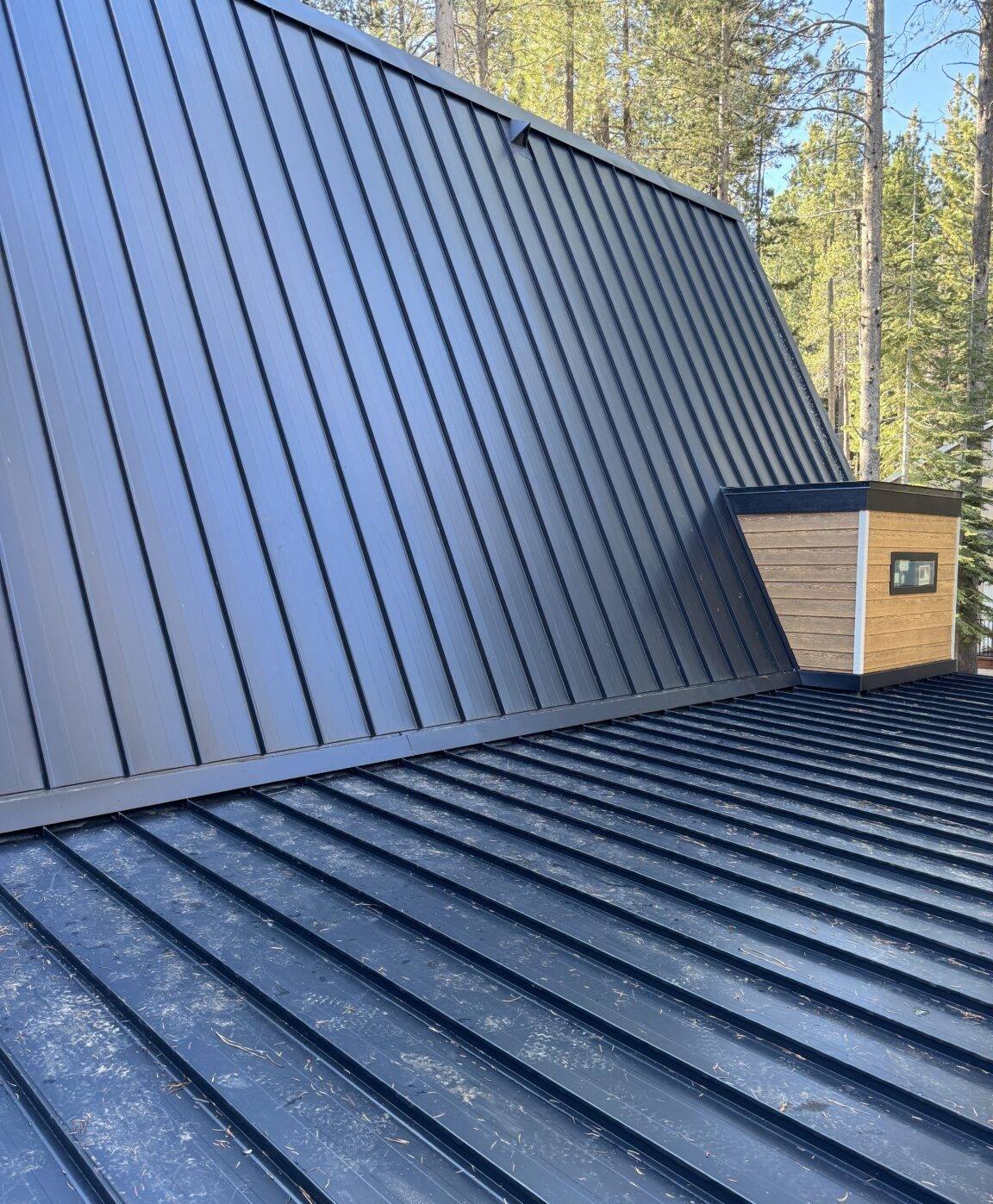
What Metal Roofing Does Well in This Climate
Metal roofing earns its reputation in wet coastal climates for a few concrete reasons, not marketing claims:
- Moss resistance: Moss needs a rough, porous surface and standing moisture to establish itself. A smooth metal panel gives it far less to grip than shingle granules or wood shakes.
- Shedding performance: Steep, seamed metal panels shed driving rain and heavy debris faster than most other roofing materials, which matters when storms come in off the water.
- Longevity under UV and moisture cycling: A properly coated steel roof holds up to decades of freeze-thaw-adjacent dampness (even without hard freezes, wet-dry cycling stresses roofing materials) without the granule loss or curling that shortens the life of asphalt shingles here.
- Lower long-term maintenance: Fewer seams and no exposed organic material means less to clean, patch, or replace piecemeal over the years.
None of this makes metal roofing maintenance-free. It makes it a better match for the conditions Barkley homes actually face, provided the installation respects the details below.
Choosing the Right Metal Roofing System for a Barkley Home
"Metal roofing" isn't one product — the panel type changes how the roof performs in wind-driven rain and salt-influenced air. We walk every Barkley homeowner through the real trade-offs instead of defaulting to whatever is easiest to install.
| System | Fasteners | Moisture Performance | Best Fit |
|---|---|---|---|
| Standing seam | Concealed, clipped | Excellent — no exposed penetrations for water or salt air to work into | Full roof replacements, homes with heavy rain/wind exposure |
| Exposed-fastener panel | Screwed through the panel face | Good if gasketed screws are maintained; fasteners are the weak point over time | Outbuildings, budget-conscious full replacements |
| Stone-coated steel | Concealed or clipped, varies by product | Very good; coating adds a wear layer over the steel | Homeowners who want a shingle or shake profile with metal's core durability |
For most primary residences in this area, we steer homeowners toward standing seam or a quality stone-coated steel system, specifically because concealed fasteners remove the recurring maintenance point that exposed-fastener panels create in a climate this wet.
Coatings Matter as Much as the Metal
The steel substrate is only half the story. The paint or coating system on top of it is what actually fights salt air corrosion and UV breakdown over the roof's life. We use coating systems rated for coastal-influenced exposure, not a generic finish, because a roof panel is only as good as what's protecting it.
What a Correct Installation Actually Involves
Most metal roofing problems we get called out to fix in this region trace back to shortcuts taken during installation, not the material itself. A correct job covers several details that don't show up in a quick walk-around estimate.
Underlayment and Moisture Protection
A synthetic, high-temp underlayment goes down first, with self-adhered ice-and-water membrane at eaves, valleys, and any low-slope transitions. In a climate where a roof can stay damp for days at a time, this layer is what protects the deck if wind ever drives water past the panel seams.
Flashing and Penetration Details
Every vent pipe, chimney, and roof-to-wall transition is a point where water finds its way in if the flashing isn't formed and sealed correctly. On a Barkley roof, we pay particular attention to roof-to-wall flashing where the roofline meets siding, since that's a common leak point on homes that have had roofing and siding work done by different crews at different times without coordinating the details.
Fastening and Panel Seams
Fastener spacing, panel overlap, and seam type all affect how the roof handles wind uplift and driving rain. We follow manufacturer fastening schedules rather than field-guessing spacing, and we use fasteners rated to resist corrosion in salt-influenced air rather than standard hardware.
Ventilation
A metal roof installed over a poorly ventilated attic can trap moisture underneath it just as easily as any other roofing material. Proper intake and exhaust ventilation keeps condensation from forming on the underside of the deck, which matters in a climate where the air itself carries a lot of moisture much of the year.
Moss, Debris, and What Long-Term Maintenance Looks Like
Even a well-installed metal roof needs periodic attention here. Overhanging tree limbs drop needles and leaves into valleys and against walls, and if that debris is left to sit through the wet months, it holds moisture against the panel and gives moss spores somewhere to land even on a smooth surface.
- Clear debris from valleys and roof-to-wall intersections at least once a year, ideally before the fall rains set in.
- Keep gutters and downspouts flowing freely so water sheds off the roof instead of backing up under the drip edge.
- Trim back branches that overhang the roofline to cut down on organic buildup and moss exposure.
- Have flashing and sealant points inspected periodically, especially after a hard windstorm off the water.
This is lighter maintenance than an asphalt or wood roof needs in this same climate, but it isn't nothing. Anyone telling a Barkley homeowner a metal roof needs zero upkeep isn't giving the full picture.
Our Process for a Barkley Metal Roofing Project
Inspection and Estimate
We start on the roof and in the attic, not just from the ground. That means checking deck condition, existing ventilation, flashing details, and any signs of past moisture intrusion before we ever talk panel type or price.
Preparation
Depending on the existing roof's condition, we'll either tear off down to the deck or, in limited cases, install over a sound existing surface with the right underlayment in between. We'll tell you honestly which approach is right for your roof rather than defaulting to whichever is cheaper for us.
Installation
Underlayment, flashing, panels, and trim go in following the sequence and fastening schedule the manufacturer specifies for this panel type — no shortcuts on details that don't show once the roof is finished but matter every time it rains.
Final Walkthrough
We walk the finished roof and the ground-level sightlines with you, confirm flashing and trim are tight, and go over what maintenance to expect before we consider the job done.
Cost Factors on a Barkley Metal Roof
Metal roofing costs more upfront than asphalt shingles, generally by a meaningful multiple, but the right comparison is lifetime cost and how often you're back up on the roof. What actually moves the number on a given Barkley home:
| Factor | Why It Matters |
|---|---|
| Panel system chosen | Standing seam typically costs more than exposed-fastener panel, less than premium stone-coated systems |
| Roof complexity | Valleys, dormers, and multiple roof planes add labor and flashing work |
| Tear-off vs. overlay | Full tear-off costs more but is often the right call on an older deck |
| Deck condition | Rot or soft sheathing found during tear-off adds repair cost before panels go on |
| Access and roof pitch | Steep or hard-to-reach roofs take longer and require more safety setup |
We give a written estimate that breaks these factors out, rather than a single lump number, so you can see exactly what's driving the cost.
What to Ask Before Hiring a Metal Roofing Contractor
- Are you licensed and insured to do roofing work in Washington, and can you provide proof?
- Who is actually on the crew installing the roof — is it your own employees or a subcontracted crew?
- What underlayment and flashing details will you use at valleys, eaves, and penetrations?
- What panel gauge and coating system are you specifying, and why for this house?
- Will you inspect and address attic ventilation as part of the job, not just the roof surface?
- What does the workmanship warranty cover, separate from the manufacturer's material warranty?
- Can you walk me through how you'll handle the roof-to-wall and siding transition points?
If a contractor can't answer these clearly before signing a contract, that's worth taking seriously.
Why a Crew That Already Works in Barkley Matters
A roof detailed for a dry climate and one detailed for Whatcom County's wet, salt-influenced air can look identical from the ground and perform very differently after a few winters. A crew that already works this area knows which flashing details actually hold up here, which coatings are worth the upgrade, and how local roof and siding transitions typically get built — because we've been up on the roofs of homes with the same exposure, the same moss pressure, and the same driving rain that yours gets. That local track record is worth more than a lower bid from a crew that treats every roof the same regardless of where it sits.
If you're weighing a metal roof for a Barkley home, we're glad to take a look and give you a straightforward, no-pressure estimate — use the form below to get started.