 Sudden Valley Siding
 Why Windows Take a Beating Around Lake Whatcom
Homes on and near Lake Whatcom deal with a different set of conditions than a house a few miles inland. The lake keeps humidity higher at ground level, especially on calm mornings when fog sits over the water and drifts into yards and up against siding and window trim. Add the tree canopy that shades a lot of lakefront and near-lake lots — fir and cedar that block sun and slow drying after every storm — and you get wood, caulk, and weatherstripping that stay damp longer than they would on an open, sunny lot.
Whatcom County's marine climate does the rest: salt-tinged air moving in off the Sound, driving rain that comes in sideways during winter systems, and a moss season that can run more than half the year on shaded elevations. None of that is unique to any one house, but it adds up fastest on windows, because a window is the one part of the wall assembly with moving parts, seams, and glass seals that can fail. A window that's flashed and sealed correctly shrugs most of this off for decades. One that isn't starts showing problems in a handful of years — soft sills, fogged glass, drafts, and interior condensation that never quite dries out.
What "Correctly Installed" Actually Means
A window installation is judged on what you can't see once the trim goes back on. The unit itself matters, but most window failures we get called out to fix trace back to the install, not the product. Done right, a window installation includes:
- A sloped sill pan under the rough opening so any water that gets past the window drains back out, not into the wall
- Flashing tape or metal lapped in the right order — head flashing over the siding or house wrap, side flashing tucked under it, sill pan under everything — so water always sheds downward and outward
- The unit shimmed plumb, level, and square before it's fastened, so sashes operate smoothly and weatherstripping seals evenly for the life of the window
- Low-expansion foam or backer rod and sealant around the frame for air sealing — not packed full-expansion foam, which can bow vinyl and fiberglass frames out of square
- Exterior sealant rated for the substrate it's meeting, tooled properly instead of just gunned and smeared
Flashing Details Matter Most in Wet Climates
In a drier climate, a sloppy flashing job might not show up for years. Here, it shows up fast. The most common failure we find on older installs isn't a bad window — it's a window that was set into the opening and caulked around the outside with no sill pan and no proper flashing lap underneath the siding. That traps any water that gets past the exterior seal instead of letting it drain, and it rots the sill and the framing behind it from the inside, where you can't see it until the wood is already soft.
Choosing Windows for a Lake-Facing Home
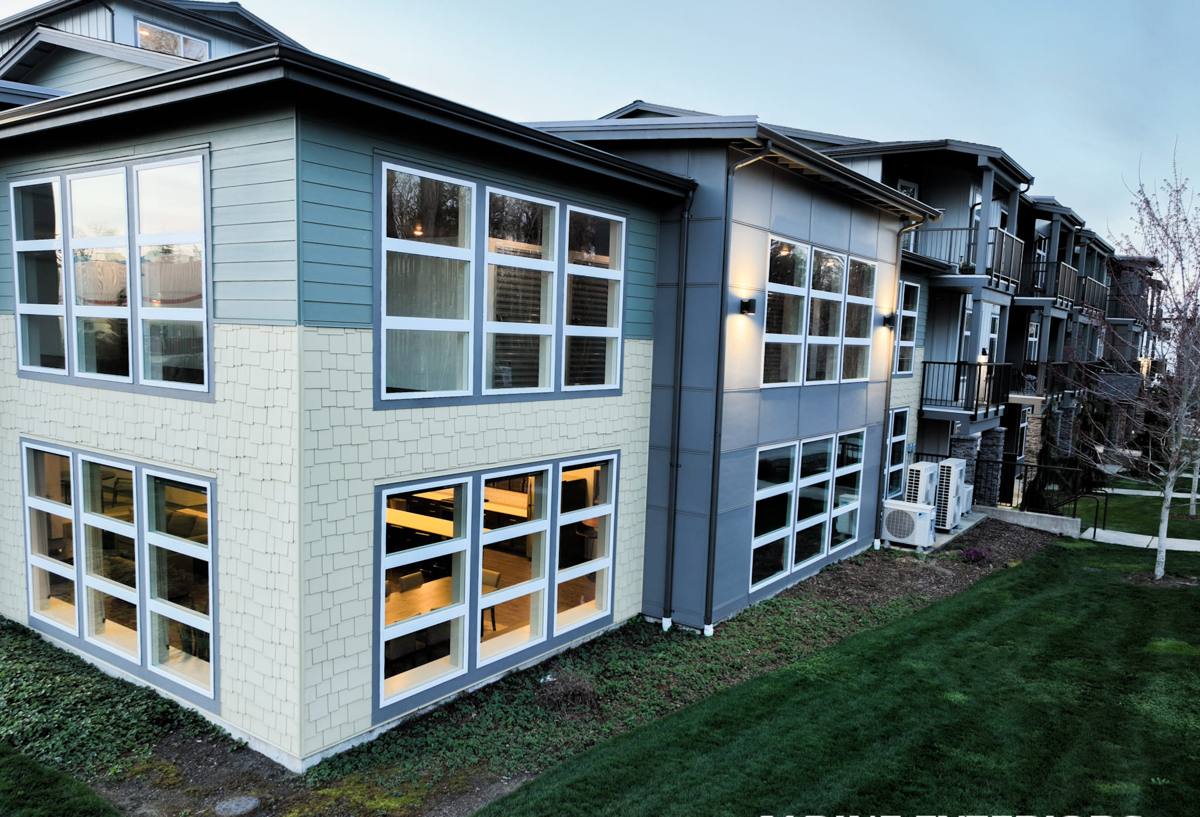
Homes with a lake view usually carry more glass and bigger openings than the average house — picture windows, large sliders, sometimes a wall of windows facing the water. That changes what matters in the window itself, not just the install.
Matching Glass Performance to Your Home's Exposure
A window that faces open water and afternoon sun has different needs than one tucked under trees on the shaded side of the house. For sunnier, water-facing exposures, a lower solar heat gain coefficient (SHGC) helps keep rooms from overheating in summer. For shaded, damp-side exposures, condensation resistance and a solid U-factor matter more, since those units stay cooler and are more prone to interior condensation in our humid stretches. There's no single "best" spec — it depends on which wall of the house you're glazing.
| Frame Material | How It Handles Moisture | Maintenance | Typical Trade-off |
|---|---|---|---|
| Vinyl | Won't rot; seams and welds need to be well-made to stay watertight long-term | Low — no painting, occasional cleaning | Can flex on very large openings without internal reinforcement |
| Fiberglass | Very stable in wet/dry and hot/cold cycling; holds paint and finish well | Low to moderate | Higher upfront cost than vinyl |
| Wood or Wood/Clad | Interior wood needs a dry, well-sealed exterior clad layer to avoid rot in a wet climate | Higher — periodic finish and seal checks | Best look for some homes, but least forgiving of a poor install or deferred maintenance |
We'll walk you through what actually fits your house and your budget rather than pushing one material for every job — the right call depends on exposure, upkeep you're willing to do, and how long you plan to be in the house.
Our Window Installation Process
- On-site assessment — we measure every opening and check the framing, not just the window, since rot or past water damage changes the scope
- Written proposal — clear pricing per opening, no vague lump-sum guessing
- Ordering — windows are built to your exact openings and finish
- Careful removal — old units come out with the framing inspected before anything new goes in; this is where hidden rot from a past bad install usually turns up
- Install with proper flashing and insulation — sill pan, flashing lap order, shimming, and air sealing done to spec, not shortcut
- Exterior finish — trim and sealant tooled and left clean
- Interior finish — trim reset or replaced to match
- Final walkthrough — every window operated and checked with you before we call it done
Keeping the Lake Clean While We Work
Lake Whatcom is the drinking water reservoir for a large part of the surrounding area, and that shapes how we run a job site anywhere near the shoreline. Old caulk, paint chips, cut-off trim, and packaging don't get left to blow or wash toward the water — we tarp and contain debris and haul it off rather than letting it sit in the yard between visits. It's a basic professional standard on any job, but it matters more here than on a job with no sensitive water body nearby, and it's part of why local crews tend to be more careful about site cleanup around the lake than an outfit passing through from out of the area.
What Affects the Cost
Every quote is different because every house is different, but the factors that move the price are consistent:
| Factor | Why It Matters |
|---|---|
| Window size and style | A standard slider costs less than a large picture window, bay, or custom shape |
| Number of openings | Per-window pricing drops slightly on multi-window jobs since setup and access are shared |
| Site access | Steep lake-facing lots, decks, and second-story openings take more time and equipment than ground-level access |
| Condition of the framing | Rot repair from a past bad install adds carpentry time before the new window ever goes in |
| Full-frame vs. insert replacement | A full-frame replacement (down to the studs) costs more than an insert into an existing, sound frame, but it's the only way to fix a bad flashing job underneath |
| Glass package | Upgraded U-factor/SHGC glass or tempered safety glass near decks and walkouts adds cost per unit |
| Disposal and haul-away | Old windows and debris need proper disposal, which is usually rolled into the quote |
Signs Your Windows Are Due for Replacement
- Fogging or a permanent haze between the panes — the seal has failed and can't be repaired
- Condensation forming on the inside of the glass on a regular basis, not just during a cold snap
- Soft, spongy, or discolored wood at the sill, jamb, or interior trim
- Windows that are hard to open, close, or lock, or that have started to bind
- Visible daylight, drafts, or whistling around the frame in wind
- Moss or persistent green growth building up on the exterior trim or sill
- Single-pane glass still in place on an older home
- Exterior or interior paint that keeps peeling or bubbling near the frame no matter how often it's redone
Why a Crew That Already Works Lake Whatcom Matters
A lot of homes in and around Sudden Valley and other lake communities fall under a community association's design guidelines — exterior color, trim material, and sometimes window style need to fit within approved standards before work starts. A crew that already does regular work in the area knows to check that up front instead of discovering it after materials are ordered.
Local experience also means knowing which parts of a lot get hit hardest by wind-driven rain off the water, which lots need extra care with access on steep or wooded terrain, and which older homes in the area are more likely to have the flashing shortcuts described above hiding behind the trim. None of that replaces a proper on-site assessment, but it means fewer surprises once we're into the job.
If you're weighing whether your windows need attention or you're ready to move forward, we're happy to take a look and give you a straight answer — no pressure, no upsell. Use the form below to request a free estimate.