 Sudden Valley Siding
 Windows Built for Yew Street's Weather, Not a Catalog Average
Yew Street sits inside Sudden Valley, close enough to Lake Whatcom and the surrounding tree cover that homes here take on a specific mix of weather stress: humid, shaded lots that hold moisture longer than open ground, wind-driven rain off the lake, and a moss and algae season that runs long into what other parts of Whatcom County would call the dry months. Windows on these homes aren't just holes in a wall that need double glass. They're one of the biggest gaps in a home's thermal envelope, and one of the most common places we find rot, fogged glass, and drafts when we're out doing siding work in the neighborhood.
When we talk about "energy-efficient windows" for a Yew Street home, we mean windows and installation details chosen for this specific site condition — not just a generic upgrade from single-pane to double-pane. The frame material, the flashing detail, the glass package, and even the installer's sequencing around your siding all matter more here than they would on a dry, sun-exposed lot on the other side of the county.
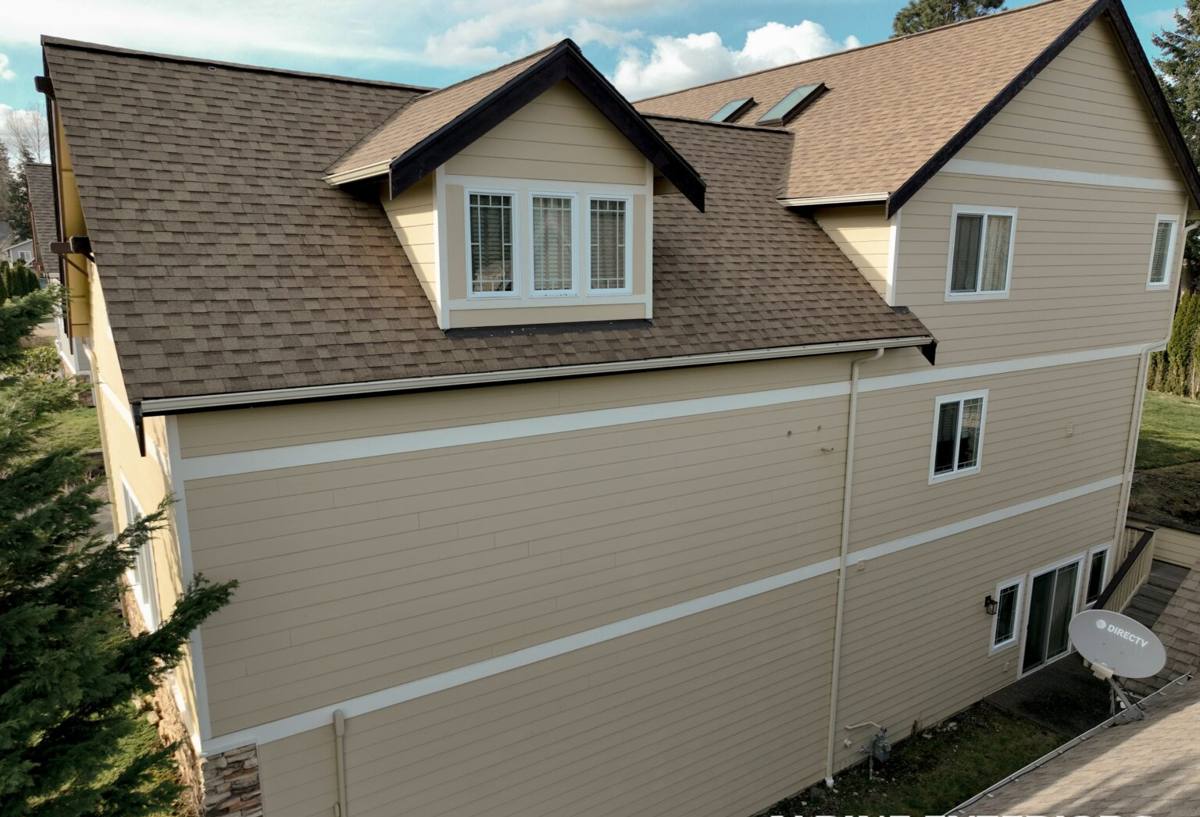
What Sudden Valley's Climate Actually Does to Windows
Moisture Load and Shade
Many Yew Street lots sit under mature tree canopy, which is part of what makes the neighborhood pleasant to live in — but it also means less direct sun to dry out window sills, cladding, and trim after a rain event. Wood and vinyl frames that would dry out in a day on an open lot can stay damp for a week here, which accelerates rot at the sill and encourages mold and mildew growth around the frame perimeter.
Driving Rain Off the Lake
Wind off Lake Whatcom can drive rain sideways into west- and south-facing walls. A window that's watertight in a light rain can still leak under wind-driven conditions if the flashing and sill pan aren't detailed correctly. This is less about the window unit itself and more about how it's integrated into the wall — a point we come back to below.
Moss, Algae, and Organic Buildup
The same shade and moisture that stress the wall assembly also feed a long moss and algae season on horizontal surfaces — window sills, sloped trim, and mulling strips between ganged windows. Left alone, that organic growth holds water against the frame and finish, which shortens the life of both.
Salt Air Influence
While Sudden Valley is inland from saltwater, homes throughout this part of Whatcom County still see some marine air influence carried up from the Puget Sound region, especially on hardware, screens, and exposed metal flashing. It's a slower corrosion process than a beachfront property would see, but it's still worth factoring into hardware and fastener choices over a 20-30 year window lifespan.
What "Correct" Looks Like on a Job Like This
A proper energy-efficient window replacement on a Yew Street home involves more than swapping the sash. Here's what we consider non-negotiable:
- Full removal of the old unit down to the rough opening, not a pocket/insert replacement over a compromised frame
- Inspection of the sill and framing for rot or soft wood before anything new goes in
- A sloped sill pan flashing so any water that gets past the window drains out, not into the wall cavity
- Proper window flashing tape integration with the house wrap or weather-resistive barrier — shingle-lapped so water sheds downward and outward
- Low-expansion foam or backer rod plus sealant at the perimeter, not just caulk alone
- Correct interior and exterior trim reinstallation with paintable, weather-rated sealant joints
- A final water test or visual check of drainage paths before we call the job done
Skipping any one of these steps is how a brand-new, energy-rated window still ends up with a soft sill and a moisture problem five years later. The window's efficiency rating is only as good as the installation around it.
Choosing the Right Glass and Frame Package
Glass
For this climate, we generally recommend double-pane, low-E glass with argon fill as the practical baseline — it balances real-world energy performance with cost and long-term serviceability. Triple-pane is available and does offer a further step up in insulation value, which some homeowners want on north- or lake-facing rooms that run cold in winter, but it adds weight, cost, and installation demands that aren't always worth it on every elevation of the house.
Frame Material
Vinyl and fiberglass frames both hold up well against the moisture load this neighborhood sees, as long as drainage details at the sill are correct. We're more cautious recommending unclad wood frames on shaded, damp Yew Street lots — not because wood windows are a bad product, but because the maintenance burden (repainting, sealing, monitoring for rot) is higher in a climate that doesn't dry the frame out quickly. If a homeowner wants the look of wood, a wood-interior/clad-exterior unit is usually the better trade-off for this specific site condition.
Comparison: Common Window Options for This Climate
| Option | Moisture Tolerance | Maintenance | Typical Fit for Yew Street |
|---|---|---|---|
| Vinyl, double-pane low-E | Good, if sill drains correctly | Low | Solid default for most walls |
| Fiberglass, double-pane low-E | Very good | Low | Good upgrade for high-exposure walls |
| Triple-pane (vinyl or fiberglass) | Very good | Low | Worth it on cold, north-facing rooms |
| Clad wood (wood interior, clad exterior) | Good with proper detailing | Moderate | Best for homeowners wanting a wood look |
| Unclad wood | Fair — needs regular upkeep | High | We steer most shaded lots away from this |
How This Connects to Your Siding
Windows and siding meet at the same joint, and that joint is where most water intrusion problems start. When we're on a Yew Street property for siding work, window flashing and trim condition are part of what we look at, because a window that's leaking behind the trim will eventually cause siding and sheathing damage nearby — and siding that's failing at a window opening will do the same in reverse. If you're planning new siding and your windows are original or aging, it's worth doing both in the right order: window replacement or flashing correction first, then siding tied into the new flashing, rather than installing new siding around windows that still need work.
Our Process for a Yew Street Window Job
- On-site assessment — we look at each window's frame condition, sill, and how it interacts with your siding and trim, not just the glass
- Honest scope — we tell you which windows need full replacement, which can be repaired, and which are fine to leave alone
- Product selection — we walk through glass and frame options based on that window's orientation and exposure, not a one-size-fits-all package
- Removal and prep — old units come out, framing gets inspected and repaired if needed before anything new goes in
- Installation with proper flashing — sill pan, shingle-lapped tape, and sealant details as described above
- Trim and finish — interior and exterior trim reinstalled and sealed to match the rest of your home
- Final check — we confirm operation, seal integrity, and drainage before we consider the job complete
Why Hire a Crew That Already Works This Neighborhood
Sudden Valley's lots aren't all the same — a window job on a shaded Yew Street property under tree cover calls for different judgment than one on an open, sun-exposed lot elsewhere in Whatcom County. A crew that's already worked in this community knows which elevations take the worst of the lake wind, how long moss season really runs here, and what the local soil and drainage conditions do to a home's foundation and sill lines over time. That local pattern recognition is what keeps a window installation from becoming a callback five years later.
We also carry the county permitting and code knowledge that comes with regularly pulling permits for window and siding work in this area, so there are no surprises partway through the job.
What to Budget For
Costs vary by window size, count, glass package, and how much repair work (if any) the rough opening needs once the old unit is out. As a broad range, expect standard double-pane vinyl replacement windows to run in the low-to-mid thousands per opening installed, with fiberglass, triple-pane, or clad-wood options running higher, and any hidden rot repair adding to that once we're inside the wall. We'll always give you the real number for your specific windows and site condition, not a phone-quote guess.
Signs You May Need Window Attention Sooner Than Later
- Fogging or moisture between panes (failed seal)
- Soft or spongy wood at the sill or lower frame corners
- Visible moss or algae staining on horizontal trim or sills
- Drafts you can feel near the frame on a windy day
- Paint or finish that's peeling faster on one window than others nearby
- Difficulty opening, closing, or locking the window
If you're seeing any of these signs on a Yew Street home, or you're planning ahead for a siding project and want your windows evaluated at the same time, we're happy to take a look. Reach out for a free, no-pressure estimate — the form below gets you started.