 Sudden Valley Siding
 Why Ferndale Decks Wear Out Faster Than the Brochure Says
A deck in Ferndale doesn't fail the same way one does in a dry inland climate. Whatcom County sits close enough to Puget Sound and the Strait of Georgia that salt-laden air reaches framing and fasteners long before most homeowners notice a problem. Add driving rain that comes in sideways during fall and winter storms, and a moss season that can run eight months out of the year in shaded yards, and you've got three separate forces working against the same structure at the same time. Salt air accelerates corrosion in fasteners and metal connectors. Wind-driven rain finds its way past ledger boards and butt joints that would stay dry in a calmer climate. And moss doesn't just look bad — it holds moisture against decking boards and framing, which speeds up rot in wood and can make even composite surfaces dangerously slick.
None of that means a deck in Ferndale is doomed. It means the build has to account for those three factors from the ground up, not as an afterthought. That's the difference between a deck that needs replacing again in eight years and one that holds up for decades.
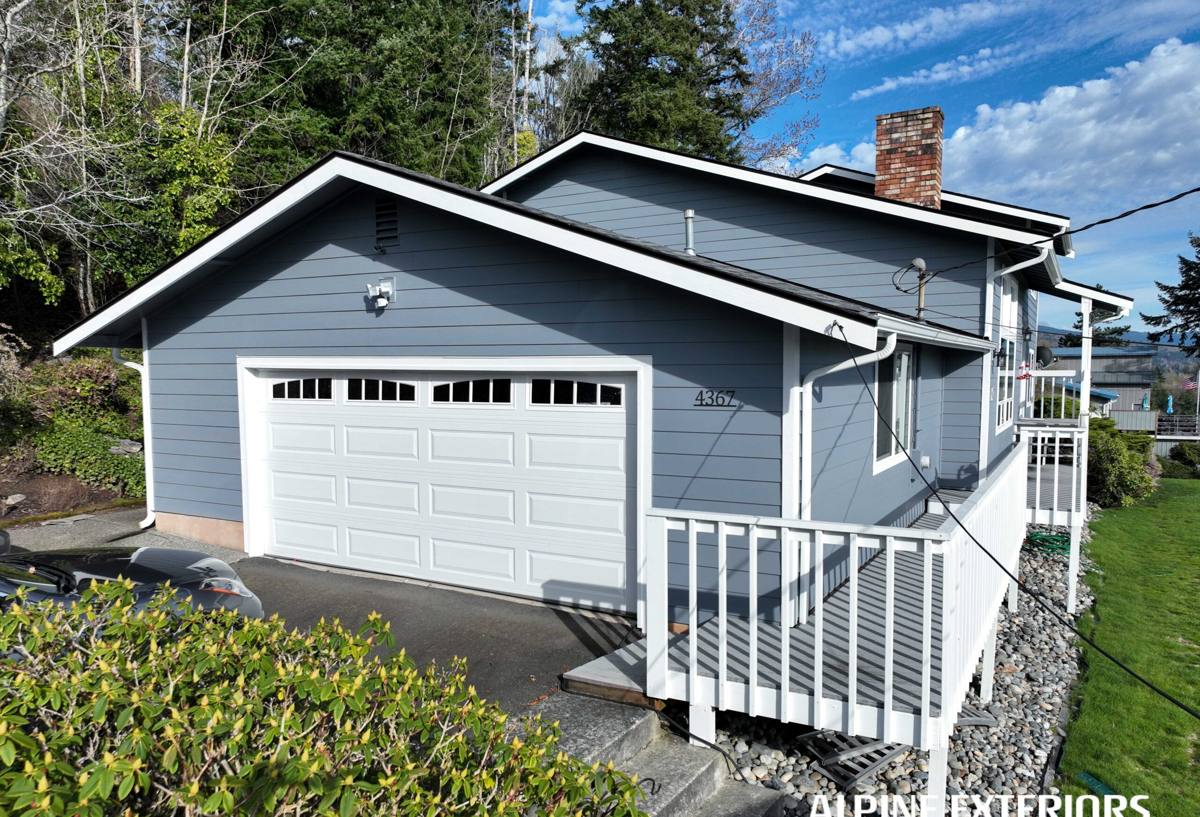
Signs Your Deck Has Reached the End of the Road
Repairs make sense for isolated problems — a cracked board, a loose railing baluster, a single soft spot. Replacement makes sense when the damage is systemic. Here's what tells us a deck is past the point of patching:
- Soft or spongy decking boards in more than one area, not just one spot
- Rust staining or crumbling wood around the ledger board where the deck meets the house
- Fasteners that are rusted, backing out, or leaving dark streaks on the wood
- Visible gaps where the deck has pulled away from the house framing
- Noticeable bounce, sway, or movement when walking across the deck
- Moss or algae that keeps coming back within weeks of cleaning, even after treatment
- Support posts that show rot at the base or have shifted on their footings
- A deck that's more than 20-25 years old and has never had the substructure inspected
If you're seeing two or more of these, it's worth having someone look underneath the deck, not just at the surface boards. Surface rot is usually the last thing to show up, not the first.
What a Correct Deck Replacement Actually Involves
A deck replacement isn't just pulling up old boards and screwing down new ones. Done right, it's a structural project with a finish layer on top.
The Structural Rebuild
Everything below the decking boards — ledger board, joists, beams, posts, and footings — gets inspected and, where it doesn't meet current code or hasn't held up to the local climate, replaced. This is where most of the long-term durability decisions get made. Joist spacing, beam sizing, and footing depth all need to match the span and load the deck will actually carry, not just whatever was there before.
Ledger Board Flashing
The ledger board — the piece bolted to the house that the deck framing hangs from — is the single most common source of hidden rot in this region. Wind-driven rain gets pushed up and behind ledger boards that aren't properly flashed, and by the time it shows up as a problem, the house rim joist can be damaged too. Correct flashing includes a water-resistant barrier behind the ledger, metal flashing that directs water out and away from the house, and proper fastening so the ledger doesn't pull away over time.
Fasteners and Hardware
This is where salt air makes the biggest difference in material choice. Standard galvanized fasteners can start showing corrosion within a few years this close to the water. We use stainless steel or heavy hot-dip galvanized hardware rated for coastal exposure, along with structural connectors sized to current code — joist hangers, post bases, and hurricane-style ties where wind exposure calls for it.
Choosing the Right Decking Material for This Climate
There's no single "best" decking material — there's a best fit for your budget, how much upkeep you want to do, and how much moss and moisture exposure the deck will see. Here's how the common options actually compare in a Whatcom County setting:
| Material | Upfront Cost | Moisture & Moss Behavior | Maintenance | Realistic Lifespan |
|---|---|---|---|---|
| Pressure-treated lumber | Lowest | Absorbs water; needs sealing to resist moss staining and swelling | Annual cleaning, resealing every 2-3 years | 15-20 years with upkeep |
| Cedar | Mid-range | Naturally rot-resistant but still needs sealing against sustained damp and moss | Cleaning and resealing every 1-2 years | 15-25 years with consistent care |
| Composite/PVC decking | Highest | Doesn't absorb water or rot; moss sits on the surface and rinses off more easily | Periodic washing, no sealing or staining | 25-30+ years, manufacturer-warrantied |
In a yard with a lot of shade or tree cover, moss recovery on wood decking can be a constant fight no matter how often it's cleaned. That's where composite earns its higher price tag — not because wood is a bad material, but because the maintenance burden in a shaded, damp Ferndale lot is real and ongoing. For decks in more open, sunnier spots, well-maintained cedar or pressure-treated lumber can perform very well for a fraction of the cost.
Railings, Stairs, and the Code Details That Get Skipped
Railings and stairs are where a lot of older decks fall out of compliance, usually because they were built before current code or modified over the years without a permit. When we replace a deck, we bring the whole structure — not just the decking surface — up to current guardrail height, baluster spacing, and stair rise-and-run requirements. This matters for safety, but it also matters for resale: an out-of-code deck can become a negotiating point or an inspection flag when the home eventually sells.
What Gets Checked
- Guardrail height and baluster spacing (gaps large enough for a small child to pass through are a common violation on older decks)
- Stair rise and run consistency — uneven steps are a leading cause of falls
- Handrail requirements on stairs with more than a few risers
- Post attachment to the structure, not just to the decking surface
Our Deck Replacement Process in Ferndale
We keep the process straightforward because a deck project shouldn't feel like a mystery from tear-out to final walkthrough.
- On-site inspection: We look at the deck surface, the substructure underneath, the ledger connection, and the footings before we quote anything.
- Written scope and estimate: You get a clear breakdown of what's being replaced, what materials are involved, and why.
- Permitting: We handle the permit application with Whatcom County or the applicable local jurisdiction where required.
- Demolition: Old decking, railings, and any compromised framing come out, with the site protected and debris hauled off.
- Structural rebuild: Ledger flashing, framing, footings, and hardware are installed or replaced to current code, sized for the actual deck.
- Decking, railing, and stairs installed: Using the material you've chosen, with corrosion-rated fasteners throughout.
- Final walkthrough: We go over the finished deck with you, including what maintenance it will need going forward.
Living With Moss Season After the Rebuild
A new deck isn't maintenance-free just because it's new, especially with moss season being a fact of life in this part of Washington. A few habits go a long way toward protecting the investment:
- Sweep debris and standing organic matter (leaves, needles) off the deck regularly, especially in shaded areas
- Clean wood decking with a deck-safe cleaner at least once a year, more often under tree cover
- Reseal or stain wood decking on the schedule appropriate to the product — don't wait until it's visibly gray
- Rinse composite decking periodically to prevent moss and algae film from building up on the surface
- Check underneath the deck once a year for standing water, drainage issues, or early signs of rot at the ledger
None of this is complicated, but skipping it is exactly how a deck that was built correctly still ends up needing early repairs.
Why a Crew That Already Works in Ferndale Matters
Deck-building fundamentals don't change from town to town, but the details that determine how long a deck lasts absolutely do. A crew that regularly works in Ferndale and the rest of Whatcom County already knows which fastener grade holds up against the salt air coming off the Sound, how deep footings need to go for the local frost and soil conditions, and which yards are going to fight moss no matter what decking material goes down. That local pattern recognition means fewer surprises during the build and a deck that's specified correctly the first time — not a generic build that gets adjusted after problems show up.
It also means a faster, more informed permit process, since the same jurisdiction's requirements come up on nearly every project we run in the area.
If your deck is showing its age, or you just want an honest read on whether it needs replacing or can be repaired, we're happy to take a look. Estimates are free, there's no pressure, and you'll get a straight answer either way — just fill out the form below.