 Sudden Valley Siding
 Deck Repair in Yew Street, Built Around What This Climate Does to Wood
A deck in Yew Street doesn't age the same way a deck in a drier part of the country does. Living this close to Lake Whatcom, in a corner of Whatcom County that gets a steady diet of marine air, long stretches of rain, and short winter daylight, means wood decks are almost never fully dry for more than a few days at a stretch from fall through spring. That's the environment a repair has to be designed for — not just patched to look right for a season, but rebuilt to actually shed water and resist the moss and rot that come back every year if the underlying problem isn't fixed.
We work on decks throughout Sudden Valley regularly, and Yew Street has its own quirks: tree cover that keeps certain decks shaded and damp most of the day, lots between properties, and homes built at different points over the last few decades with different framing standards. A repair plan that ignores those local realities usually fails again within a year or two. One that accounts for them holds up.
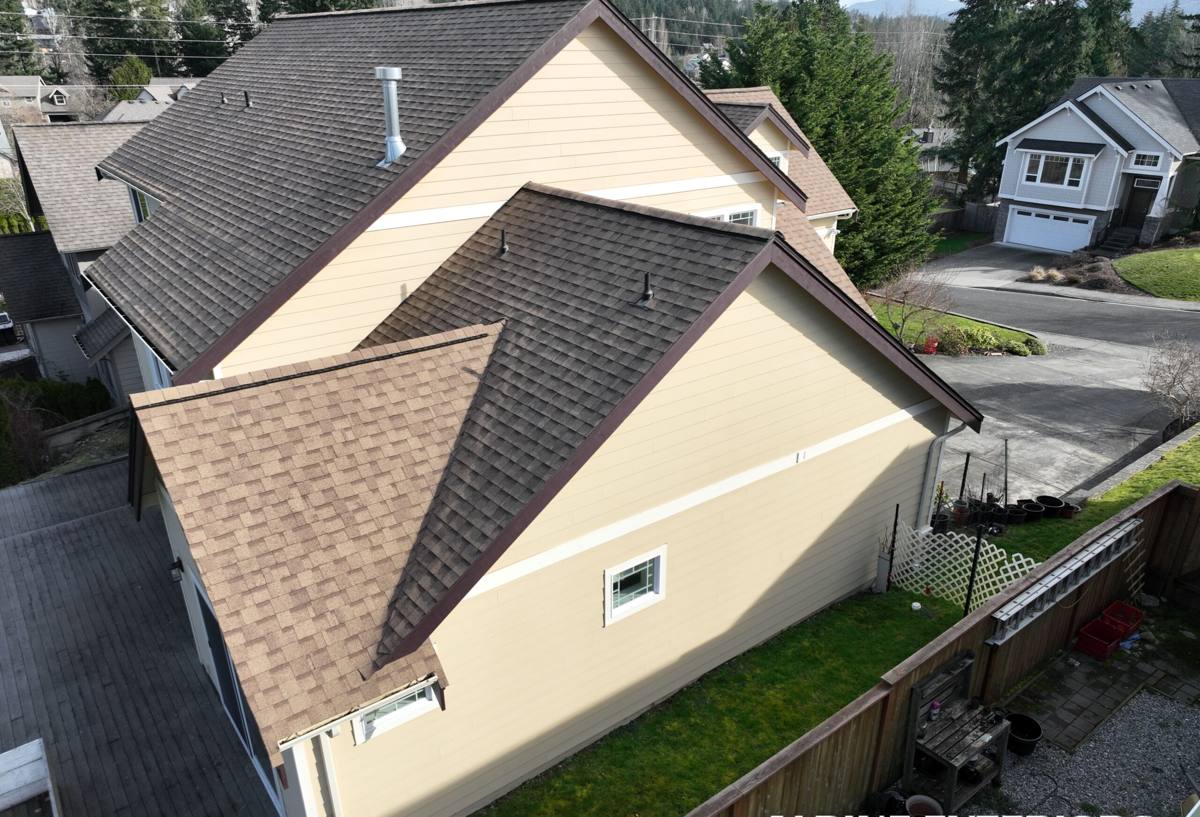
What Whatcom County Weather Actually Does to a Deck Over Time
Deck failure in this region rarely comes from one dramatic event. It's cumulative — small amounts of trapped moisture, repeated freeze-thaw cycling in the shoulder seasons, and organic growth that holds water against wood and metal far longer than open sun and dry air would allow.
Moss and Algae
The long moss season here isn't just cosmetic. Moss and algae hold moisture directly against decking boards, stair treads, and railings, which keeps wood wet long after a rain event has passed. On shaded or north-facing decks, that dampness can persist for days. Over a few seasons, that constant wetness breaks down wood fiber and accelerates rot, especially where boards meet each other or meet framing.
Driving Rain and Wind-Driven Moisture
Rain that comes in sideways during a storm finds its way into places vertical rain never would — under railing caps, behind ledger boards, into end-grain cuts on stair stringers. Once water gets past the surface of a board, especially into end grain, it can sit there and rot the wood from the inside while the surface still looks fine.
Salt-Influenced Marine Air and Fastener Corrosion
Whatcom County sits in a coastal-influenced climate, and that marine air carries moisture and mineral content that speeds up corrosion on exposed metal — nails, screws, joist hangers, and railing hardware. Corroding fasteners lose holding strength gradually and quietly, which is why a deck can look structurally sound right up until a board or railing section fails under load.
Freeze-Thaw Cycling
Cold snaps aren't extreme here, but they're frequent enough in winter to matter. Water that's soaked into a crack or a fastener hole expands when it freezes, widening the damage a little more each cycle. It's a slow process, which is exactly why it's easy to underestimate until a board splits or a post base cracks.
Signs a Yew Street Deck Needs Repair Now, Not Later
Most deck problems give warning signs well before anything becomes dangerous. The homeowners who catch small issues early spend far less than the ones who wait until a board gives way.
- Soft or spongy spots underfoot, especially near the house or at board ends
- Visible moss or dark green-black staining that keeps returning after cleaning
- Gaps opening up between decking boards or boards cupping and warping
- Rust streaks below joist hangers, screws, or bolts
- A railing or post that flexes or wobbles more than it used to
- Water pooling on the deck surface instead of draining off the edges
- Any gap or dark staining where the deck ledger board meets the house siding
- Stair stringers that feel less solid than the rest of the deck
Any one of these on its own might be minor. Several together, or anything involving the ledger board connection to the house, is worth having looked at before the next wet season sets in.
What a Correct Deck Repair Actually Involves
A repair that's done right addresses the cause of the damage, not just the visible symptom. That distinction matters most in a climate like this one, where surface fixes tend to fail fast.
Structural Framing First
Before anything cosmetic gets touched, we check the joists, beams, posts, and especially the ledger board connection to the house — the single most common point of hidden rot on an attached deck. If flashing behind the ledger is missing, damaged, or was never properly installed, water has likely been getting into the house rim joist for years, and that gets corrected before anything else.
Fastener and Hardware Condition
Corroded joist hangers, nails backing out, or undersized fasteners get replaced with hardware rated for exterior, moisture-exposed use. Reusing hardware that's already showing rust is a false economy — it will fail again, usually sooner than the wood around it.
Decking, Railings, and Stairs
Individual rotted or cupped boards get replaced rather than the whole deck resurfaced unnecessarily, unless enough boards are compromised that a full resurface is actually the more honest and cost-effective call. Railings and stair stringers get evaluated for the same rot and fastener issues as the deck frame, since a loose railing is a safety issue, not just a cosmetic one.
Drainage and Airflow Underneath
A deck that can't shed water or breathe underneath will keep having the same problems no matter how many boards get replaced. Where it makes sense, we improve slope, spacing, or ventilation under low decks so trapped moisture has somewhere to go.
Repair or Replace: How We Actually Make That Call
Not every deck problem calls for a full rebuild, and not every deck is worth patching indefinitely either. We look at the extent and location of the damage, the age and condition of the frame, and what it would cost to keep repairing piece by piece versus doing it once.
| Factor | Leans Toward Repair | Leans Toward Replacement |
|---|---|---|
| Framing condition | Joists and beams solid, isolated soft spots | Widespread rot in joists, beams, or posts |
| Ledger board | Flashing intact, no water intrusion into house | Chronic leak history at ledger-to-house connection |
| Decking surface | A handful of boards affected | Most boards cupped, splitting, or rotted |
| Age of structure | Newer deck, isolated damage from one source | Deck near or past typical service life |
| Hardware | Mostly sound, a few fasteners need swapping | Widespread corrosion throughout the frame |
| Budget approach | Fix what's failing now, monitor the rest | Stop paying to patch a structure in ongoing decline |
We'll tell you honestly which side of that table your deck falls on. If a repair genuinely solves the problem, that's what we recommend — there's no benefit to us in replacing something that doesn't need it.
Our Deck Repair Process for Yew Street Homes
- On-site assessment. We walk the full deck — surface, framing where accessible, ledger connection, railings, and stairs — and identify every source of damage, not just the obvious one.
- Written scope and estimate. You get a clear breakdown of what needs to be done, what's optional, and what it costs, before any work starts.
- Repair the cause, not just the symptom. That means fixing flashing, drainage, or fastener issues alongside any board or framing replacement, so the same failure doesn't recur next wet season.
- Match materials appropriately. Replacement lumber or composite is chosen to work with what's already there, both structurally and in appearance, unless you'd rather upgrade a section while we're in there.
- Final check and cleanup. We confirm the deck is solid, drains properly, and that the site is left clean before we call the job done.
Repair Material Options
Pressure-treated lumber remains the most common choice for structural framing repairs because it's rated for ground and moisture exposure and matches most existing deck frames in this area. For visible decking boards, some homeowners stick with wood to match the existing look, while others use the repair as a chance to switch a moisture-prone section to composite decking, which resists rot and moss staining better over time but comes with a higher material cost and its own installation requirements. Neither choice is wrong — it depends on your budget, how much of the deck needs new boards, and how much upkeep you want going forward.
Keeping Moss and Rot From Coming Back After the Repair
A repair holds up longer when it's paired with a little seasonal upkeep. None of this is complicated, but it makes a real difference in a climate that stays damp as much of the year as this one does.
- Sweep leaves and debris off the deck surface regularly, especially in fall
- Rinse off moss and algae growth before it gets established and staining
- Keep gutters and downspouts clear so runoff isn't draining onto the deck
- Check the ledger board area at the house connection once a year for staining or gaps
- Reseal or re-stain wood decking on the manufacturer's recommended schedule, not just when it looks faded
- Trim back overhanging branches that keep sections of the deck shaded and damp
Why a Crew That Already Works in Yew Street Makes a Difference
Deck repair isn't a one-size-fits-all trade. A crew that's already worked on homes in Sudden Valley knows which construction eras in this area tend to have undersized ledger flashing, which tree-heavy lots keep decks damp longer, and how the local building department handles permitting for structural deck repairs versus cosmetic resurfacing. That local familiarity means less guesswork and fewer surprises once we open things up.
It also means accountability. We're not driving in from out of the area for a one-time job — we're a contractor your neighbors can point to, which is exactly the kind of pressure that keeps a repair job honest from the estimate through the final walkthrough.
Get an Honest Look at Your Deck
If your deck in Yew Street has soft spots, moss that won't quit, or a railing that doesn't feel as solid as it used to, it's worth getting a straight answer on what's actually going on underneath before another wet season adds to the damage. We offer free, no-pressure estimates — fill out the form below and we'll take a look and tell you exactly what we find.