 Sudden Valley Siding
 Why Roof Replacement in Cordata Isn't a One-Size-Fits-All Job
Cordata sits inside Whatcom County's marine climate belt — close enough to Puget Sound and Bellingham Bay to pick up salt-laden air, and wet enough for months at a stretch that moss and algae have almost year-round conditions to establish themselves on a roof. A roof replacement here has to answer to three things a dry-climate roof never deals with: near-constant moisture exposure, driving rain that gets pushed sideways under flashing and shingle edges by wind off the water, and a moss season that, realistically, runs from fall through spring. A roofing crew that treats this like a generic tear-off-and-reshingle job is setting the homeowner up for the same problems five years later.
That doesn't mean Cordata roofs need exotic materials or a completely different approach than the rest of Whatcom County. It means the details — underlayment choice, flashing, ventilation, and how the job is sequenced around our weather — matter more here than they do in a drier region, and skipping any of them shows up as a leak, a stain, or premature shingle failure sooner rather than later.
Signs a Cordata Roof Needs Replacing, Not Just Repairing
Not every roof problem in this climate means a full replacement. But there's a point where patching stops making financial sense and a full tear-off is the more honest recommendation. Common signs we look for on Cordata homes include:
- Granule loss heavy enough that you can see bare or shiny patches on asphalt shingles, especially on south- and west-facing slopes that take the most weather
- Moss that's established a root mat under the shingle edges rather than just growing on the surface — surface moss can be treated, rooted moss has usually already lifted the shingle
- Soft or spongy decking felt underfoot in the attic, which points to moisture getting past the roofing system over time
- Curling, cupping, or cracked shingles across a large portion of the roof rather than one isolated spot
- Staining or discoloration on interior ceilings that comes and goes with heavy rain, which usually means the leak path is intermittent and hard to chase with spot repairs
- A roof that's simply reaching the end of its rated service life — most asphalt roofs in this climate run shorter than their national rating because of the added moisture load
If a roof is showing two or three of these at once, that's usually the point where a repair is a short-term patch on a system that's already failing underneath.
What a Correct Roof Replacement Involves in This Climate
Full Tear-Off and Deck Inspection
We don't recommend overlaying new shingles on old ones here. A tear-off exposes the decking, which is the only way to actually find and fix rot, delamination, or soft spots caused by years of moisture cycling — problems that a re-cover would just seal over. Any damaged sheathing gets replaced before anything new goes down; installing new roofing over compromised decking is a warranty problem waiting to happen.
Underlayment and Ice-and-Water Protection
Synthetic underlayment does the day-to-day job of shedding water that gets past the shingles, but in a climate with this much driving rain, the vulnerable points — eaves, valleys, and around any roof penetration — need self-adhering ice-and-water membrane, not just underlayment. Wind-driven rain can travel uphill under shingles in gusty conditions, and that membrane is what stops it from reaching the decking.
Flashing That Actually Sheds Water
Chimneys, skylights, sidewalls, and roof-to-wall transitions are where most leaks start, and they're where corner-cutting shows up fastest. Proper step flashing, counter-flashing, and a correctly installed drip edge and gutter apron aren't optional extras — they're what keeps water moving off the roof instead of finding a seam to work into.
Ventilation That Matches the Insulation
A roof system that's sealed tight without balanced intake and exhaust ventilation traps moist attic air against the underside of the decking. In a climate this wet, that's a slow path to rot and mold that has nothing to do with the roofing material itself. Soffit intake vents paired with ridge or other exhaust venting keep air moving and keep the deck dry from the inside as well as the outside.
Moss-Resistant Materials Where It Makes Sense
Shingles with algae-resistant (copper-infused) granules slow down the staining and growth that plain shingles pick up fast under Whatcom County's tree cover and humidity. On roofs with heavy shade or moss history, zinc or copper strips near the ridge are a low-cost addition that release trace metal ions with every rain and measurably cut down on regrowth.
Comparing Roofing Materials for a Cordata Home
| Material | Moisture/Moss Resistance | Typical Lifespan Here | Maintenance |
|---|---|---|---|
| Architectural asphalt shingle (standard) | Fair — benefits from algae-resistant granules | 18-25 years | Periodic moss/debris removal |
| Architectural asphalt shingle (algae-resistant) | Good | 20-25 years | Lower moss maintenance |
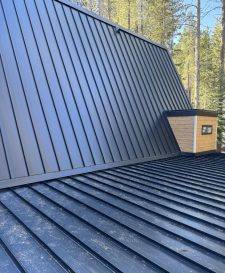
| Standing-seam metal | Very good — sheds moss and debris better than shingles | 40+ years | Minimal; occasional debris clearing |
| Cedar shake | Requires diligent upkeep in this climate | Highly maintenance-dependent | High — regular treatment and moss control |
We're upfront that cedar shake, while attractive, asks a lot of an owner in a climate this wet — it needs consistent moss control and periodic treatment to hold up, and skipping that maintenance shortens its life fast. That's a maintenance-burden tradeoff worth knowing before choosing it, not a reason to rule it out for an owner who wants the look and is willing to keep up with it.
Our Roof Replacement Process
- On-site inspection and estimate — we walk the roof (or use appropriate access for steep pitches), check the decking condition where visible, and note ventilation, flashing points, and moss/algae history.
- Written scope and material selection — a clear breakdown of tear-off, decking allowance, underlayment, flashing, and shingle or metal system, so there's no ambiguity about what's included.
- Permit and scheduling — we pull the required permit and plan the job around a realistic weather window rather than rushing it into a forecasted rain system.
- Tear-off and deck repair — old roofing removed, decking inspected board by board, and any rot or soft spots replaced before moving forward.
- Underlayment, ice-and-water shield, and flashing installation — installed to manufacturer spec at every eave, valley, and penetration.
- Roofing material installation — shingles or metal panels installed with correct nailing/fastening pattern and exposure for wind and rain performance.
- Ventilation check and final walkthrough — confirming intake and exhaust venting are balanced, and walking the finished roof with the homeowner.
- Cleanup and magnetic sweep — job site and yard cleared of debris and stray fasteners.
Permits, Codes, and Timing
Whatcom County requires a permit for a full roof replacement, and inspections confirm the work meets the Washington State Energy and Building Codes, including ventilation and underlayment requirements. We handle the permit application as part of the job rather than leaving it on the homeowner's plate. On timing: because this region doesn't have a short, clean dry season, we plan tear-offs around multi-day forecast windows and keep exposed decking protected if weather turns mid-job — an exposed deck sitting open overnight in a rain-heavy climate is how a roofing job creates water damage instead of preventing it.
Why a Crew That Already Works in Cordata Matters
Roofing crews that work this specific part of Whatcom County regularly get a practical education that general contractors passing through don't: which roof lines in older Cordata-area homes tend to have undersized original ventilation, how tree canopy in this area accelerates moss regrowth on north-facing slopes, and how wind off the Sound behaves differently on exposed versus tree-sheltered lots. That's not marketing — it's the difference between a crew guessing at flashing details and one that's already seen what fails here and builds around it from the start. It also means faster response if something needs a look after a major storm, since we're not driving in from outside the area.
Homeowner Checklist Before You Hire
- Get a written scope that specifies tear-off, decking allowance, underlayment type, and ice-and-water shield locations — not just "new roof installed"
- Confirm the contractor pulls the Whatcom County permit rather than skipping it
- Ask what ventilation changes, if any, are included — a re-roof is the easiest time to fix a poorly vented attic
- Ask whether algae-resistant shingles or moss-control strips are included given this area's moss season
- Check that flashing at chimneys, skylights, and sidewalls is explicitly part of the scope, not assumed
- Get manufacturer and workmanship warranty terms in writing before work starts
- Confirm how the crew protects an open deck if weather changes mid-project
What Affects the Cost
| Cost Factor | Why It Matters |
|---|---|
| Roof size and pitch | Steeper roofs take longer and need more safety setup, adding labor time |
| Number of existing layers | Multiple old layers mean more tear-off labor and disposal |
| Decking condition | Rot or soft spots found during tear-off add material and labor not visible from the ground |
| Material choice | Standard shingle, algae-resistant shingle, and metal carry different upfront costs |
| Roof complexity | Valleys, dormers, skylights, and chimneys each add flashing work |
| Access and tree cover | Limited access or heavy overhanging trees can slow setup and cleanup |
We don't quote a roof over the phone or from a satellite photo — the honest number comes after a real look at the roof's size, pitch, layers, and condition, so the estimate reflects the actual job rather than a rough guess that changes once we're up there.
If your Cordata roof is showing its age or you just want a straight answer on whether it's a repair or a replacement, we're glad to take a look. Fill out the form below for a free, no-pressure estimate.