 Sudden Valley Siding
 New-Construction Windows Built for Cordata's Weather
New-construction window installation is one of those jobs that looks straightforward from the outside and is anything but. The window itself is only part of the equation. What actually determines whether a home stays dry for the next twenty years is how the opening is flashed, how the nailing fin is sealed to the weather-resistive barrier, and how the whole assembly is sequenced with the siding that goes over it. In Whatcom County, where homes deal with salt-laden air off the Sound, long stretches of driving rain, and a moss season that can run half the year, those details matter more than they would in a drier climate.
We install new-construction windows on homes in and around Cordata as part of our broader Sudden Valley and Whatcom County service area. Whether you're a homeowner working with a builder or a general contractor who needs a crew that shows up, flashes correctly, and doesn't cut corners on sequencing, this page covers what a correct install actually involves here.
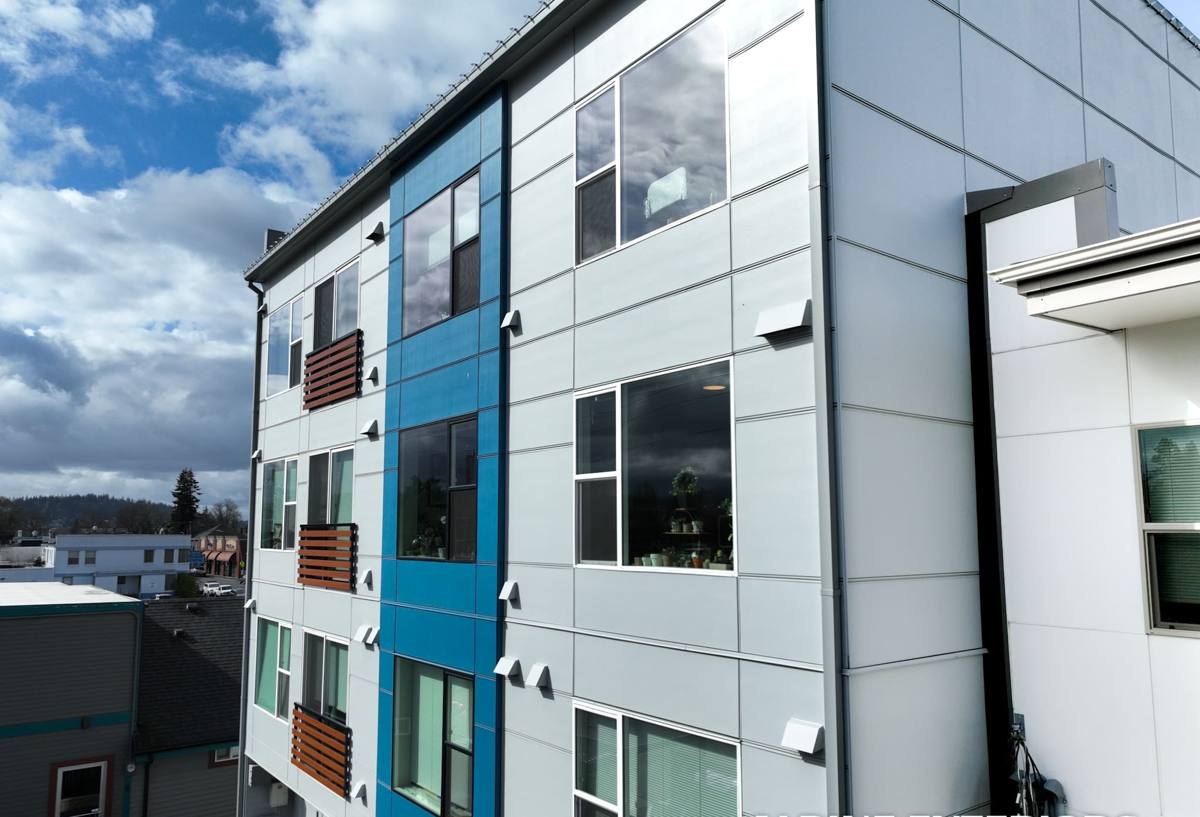
What Local Homes Need From a New-Construction Window Install
Moisture Management Starts at the Rough Opening
Most window failures we get called out to inspect aren't glass failures or hardware failures — they're water intrusion problems that trace back to the rough opening. A sill pan that wasn't installed, house wrap that was cut and taped incorrectly, or a nailing fin that was fastened before the flashing sequence was complete. In a climate that gets sustained rain events rather than quick summer downpours, any gap in that sequence eventually shows up as rot in the sill plate or staining on interior drywall, sometimes years after the original install.
Wind-Driven Rain and Salt Air Exposure
Homes closer to the water deal with wind-driven rain that can push moisture sideways into places a vertical-only flashing detail won't catch. Salt air also accelerates corrosion on unprotected fasteners and lower-grade hardware over time. None of this means a home needs exotic materials — it means the basics (proper flashing laps, compatible sealants, corrosion-resistant fasteners) need to actually be done right, every time, not just on the visible parts of the job.
The Moss and Algae Season
Whatcom County's damp season runs long, and that means sustained moisture sitting against exterior surfaces for months at a stretch. Window sills, trim, and the transition between window and siding are where we most often see moss and algae growth start — not because the window itself failed, but because water was allowed to pool or wick into wood trim instead of shedding cleanly away from the wall.
New-Construction vs. Replacement Windows: Why It Matters Here
"New-construction" windows and "replacement" windows are not interchangeable, and using the wrong one for the situation is a common source of future leaks. New-construction windows have a nailing fin that fastens directly to the framing and gets integrated into the weather-resistive barrier and flashing system before siding goes on. Replacement windows are designed to fit into an existing frame without disturbing the exterior siding.
| Factor | New-Construction Window | Replacement Window |
|---|---|---|
| Best used for | New builds, additions, or full siding tear-off projects | Swapping a window while keeping existing siding intact |
| Attachment method | Nailing fin fastened to framing | Fits into existing frame, no fin |
| Flashing integration | Fully integrated with house wrap and flashing before siding | Relies on the condition of the existing flashing |
| Typical project pairing | New home construction, room additions, siding replacement | Standalone window upgrades |
| Long-term moisture control | Best possible, if installed correctly | Limited by what's already behind the existing siding |
For Cordata-area new builds and additions, new-construction windows are almost always the right call because they let us build the moisture management system from scratch instead of working around what's already there.
What a Correct Install Actually Involves
Flashing Sequence Comes First
Before a window ever goes into the opening, the sill needs a proper pan flashing that directs any water that gets past the window back out, not into the wall cavity. The house wrap or weather-resistive barrier gets cut and integrated in a specific order — sill, sides, then head — so that each layer sheds water onto the layer below it, the same way shingles work on a roof. Skipping or reversing that order is the single most common shortcut we see on jobs we're asked to inspect or fix.
Setting and Sealing the Window
The window gets shimmed level and plumb, fastened through the nailing fin per the manufacturer's schedule, and sealed with a compatible sealant at the fin — not just caulked around the trim afterward. Backer rod and sealant at the interior and exterior trim lines finish the job, along with insulating the gap between the frame and rough opening so the window performs the way it's rated to.
Checklist: What Should Happen On Your Job
- Sill pan flashing installed and sloped to drain outward
- House wrap integrated in the correct shingle-lap order around the opening
- Nailing fin fastened per manufacturer spec with corrosion-resistant fasteners
- Compatible sealant used at the fin — not mismatched caulk that can fail or degrade the wrap
- Window checked for level, plumb, and square before final fastening
- Interior and exterior gaps insulated and sealed, not just left open behind trim
- Photos or documentation of the flashing before siding covers it, if requested
Materials and Glass Considerations for This Climate
For a Whatcom County build, we generally steer homeowners toward vinyl or fiberglass frames with dual-pane, low-E glass rated for the Pacific Northwest's mix of cool temperatures and high humidity. Wood-clad windows can look great, but the maintenance burden in a climate this wet is real — any gap in the cladding or finish becomes an entry point for moisture, and upkeep has to be consistent to avoid problems down the road. That's a trade-off we're upfront about rather than talking anyone out of a product they've already chosen; it's simply something to plan for if wood is the goal.
Corrosion-resistant fasteners and hardware are worth the small upcharge for homes closer to the water, where salt air shortens the life of standard-grade screws and hinges. We also pay attention to how window flashing details interact with whatever siding product is going over it, since a mismatch there is where a lot of "why is this leaking" calls originate months or years later.
Our Process for Cordata New-Construction Projects
Working Alongside Builders and GCs
On new builds and additions, we coordinate directly with the general contractor or builder on sequencing — windows typically go in after the house wrap is up and before siding starts. We show up on schedule, flag any framing issues (out-of-square openings, missing blocking) before they become install problems, and document the flashing work before it gets covered.
Homeowner-Direct Projects
If you're managing your own addition or build without a GC, we'll walk the openings with you beforehand, talk through window selection and sizing, and give you a straightforward estimate and timeline. We don't upsell products you don't need — if a mid-grade vinyl window is the right call for the project, that's what we'll recommend.
What to Expect Timeline-Wise
Most Cordata-area new-construction window packages install over one to a few days depending on the number of openings, weather, and how the rest of the build schedule is moving. We work around Whatcom County's rain windows when we can, but the flashing and sealing steps are done correctly regardless of conditions — we don't rush a moisture detail to beat the weather.
Why a Crew That Already Works Cordata Matters
A crew that installs windows across Whatcom County regularly sees how these details hold up over years, not just on install day. We know which flashing sequences actually keep water out through a full wet season, which hardware holds up near salt air exposure, and which shortcuts show up as callbacks two or three winters later. That's the kind of knowledge that only comes from doing this work repeatedly in this specific climate, not from a generic install checklist written for a different region.
We're also positioned to respond quickly if a builder needs a punch-list item addressed or a homeowner has a question after the siding goes on — we're not driving in from out of the area for a one-off job.
Mistakes We See and How We Avoid Them
The most common issues we're asked to inspect or repair on new-construction window jobs trace back to a handful of avoidable mistakes: house wrap taped in the wrong order, sill pans skipped entirely, incompatible sealants used at the fin, or windows fastened before flashing was finished because a schedule got tight. None of these save meaningful time on the job — they just move the cost from install day to a repair call a few years down the line. We build enough time into every window package to do the flashing sequence correctly the first time.
If you're planning a new build, addition, or full siding replacement in the Cordata area and want new-construction windows installed the right way from the start, we're happy to walk the site and put together a free, no-pressure estimate. There's a form below — reach out and we'll get back to you with next steps.