 Sudden Valley Siding
 Why Decks in Cordata Take a Different Kind of Beating
Cordata sits inside a stretch of Whatcom County that gets more than its share of moisture on the calendar: long stretches of driving rain from fall through spring, humid summers that never quite dry the shaded corners of a yard, and a moss season that can run eight or nine months if a deck sits under trees or on the north side of a house. None of that is exotic or surprising to anyone who has lived here a while, but it adds up on a wood or composite deck faster than most homeowners expect. Fasteners loosen as boards swell and shrink through repeated wet-dry cycles. Ledger boards and joists hidden underneath the decking can be quietly rotting for years before a soft spot shows up on the surface. Moss and algae hold moisture against the wood grain long after the rain stops, which is exactly the kind of standing dampness that accelerates rot.
A deck repair here isn't just a cosmetic fix. Done right, it has to account for how water actually moves through and off the structure in this climate — not just patch what's visibly failing.
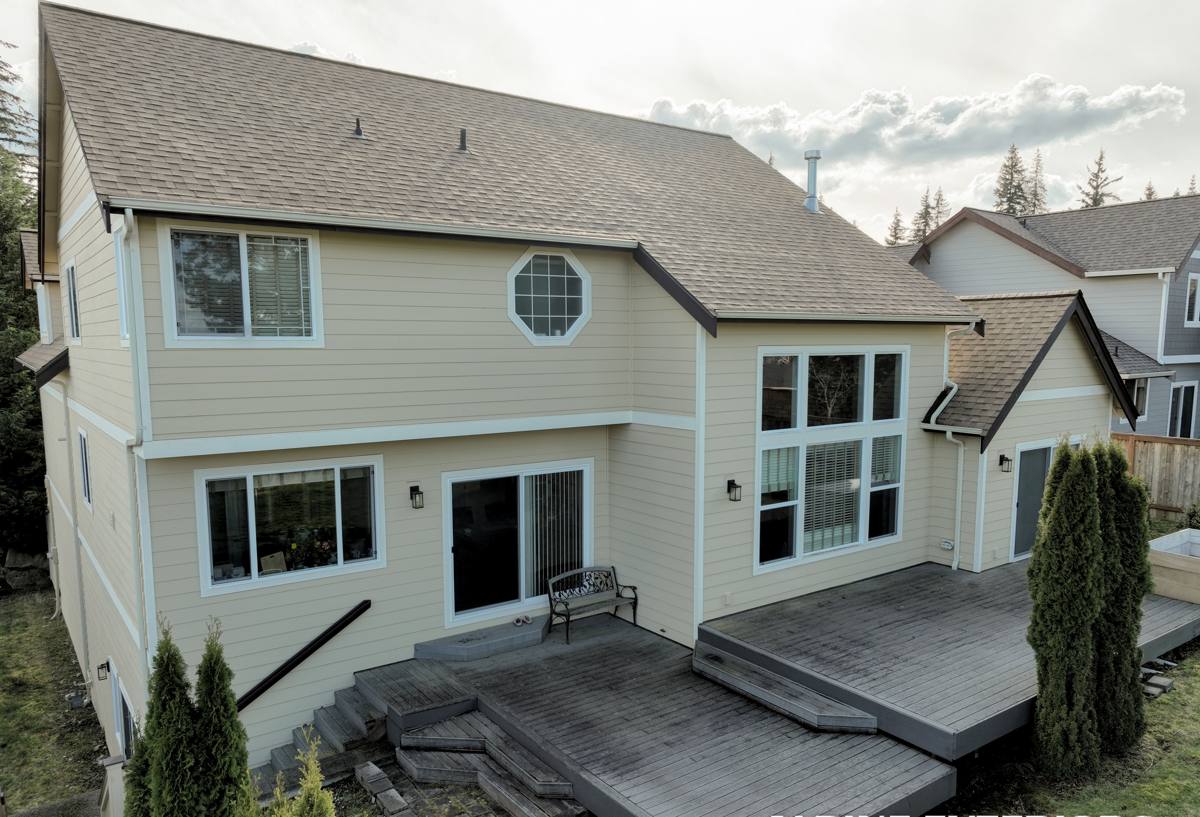
Signs Your Deck Needs Repair, Not Just a Cleaning
A lot of Cordata homeowners call us thinking they need a pressure wash when the deck actually needs structural attention. Here's how to tell the difference before you spend money on the wrong fix.
- Boards that feel spongy or flex noticeably when you walk on them, especially near the house or stair landings
- Fasteners that have backed out, rusted, or left dark staining streaks down the board
- Gaps opening up between boards, or boards cupping (edges higher than the center)
- Railings or stair stringers that wiggle more than they used to
- Green or black growth that comes back within weeks of cleaning
- Soft or discolored wood where the deck meets the house — a common spot for hidden ledger rot
- Standing water that doesn't drain within an hour or two after rain stops
Any one of these on its own might be minor. Two or three together usually means the moisture problem has moved past the surface and into the framing.
What a Correct Deck Repair Actually Involves
Starting Underneath, Not on Top
The visible decking boards are the easy part. A repair that only replaces what you can see, without checking the joists, ledger board, and posts underneath, is a repair that will need to happen again in a couple of years. We pull boards in the affected area and check the framing directly — probing for soft wood, checking flashing at the ledger, and confirming the posts and footings are still sound.
Fixing the Cause, Not Just the Symptom
If a section of deck is rotting because water is pooling against the house due to missing or failed flashing, replacing the boards without fixing the flashing just buys you a year or two before the same spot fails again. Correct repair work traces the water path — where it's landing, where it's not draining, where it's getting trapped against wood — and addresses that first.
Matching Fasteners and Hardware to the Job
In a climate this wet, the wrong fastener is a slow-motion failure. Structural connections need to use hardware rated for exterior, ground-contact, or treated-lumber contact as appropriate — mismatched metals or interior-grade screws corrode and lose holding strength well before the wood around them fails.
Repair vs. Replace: How We Help You Decide
Not every deck problem calls for a full rebuild, and not every deck is worth patching. Here's the general framework we use when walking a Cordata property.
| Factor | Leans Toward Repair | Leans Toward Replacement |
|---|---|---|
| Framing condition | Joists, ledger, and posts are structurally sound | Rot found in multiple framing members |
| Extent of damage | Limited to a few boards or one section | Damage spread across most of the deck surface |
| Age of the deck | Under 12-15 years old, built to current standards | Older deck with outdated fastening or spacing |
| Cause of the problem | Isolated moisture issue, now correctable | Design flaw causing ongoing water trapping |
| Budget goal | Extend usable life a few more years | Want a longer-term, lower-maintenance solution |
We'll tell you honestly which side of that table your deck falls on. A repair that's really a stopgap on a failing structure isn't a good use of your money, and we won't sell it to you as more than it is.
Our Deck Repair Process
- Assessment — We inspect the full deck, not just the area you called about, including the framing underneath where accessible.
- Written scope — You get a clear explanation of what's failing, why, and what the repair will and won't fix.
- Repair or replacement of framing — Any compromised joists, ledger sections, or posts get addressed before new decking goes down.
- Decking and fastening — Boards are replaced or re-secured with fasteners appropriate to the material and exposure.
- Flashing and drainage check — We confirm water is actually shedding away from the house and framing, not pooling against it.
- Final walkthrough — We check the repair with you and point out any maintenance items worth watching.
Materials: What We Use and Why
Cordata's wet stretches mean the material choice matters as much as the workmanship. For wood repairs, we use pressure-treated or naturally rot-resistant lumber rated for ground contact where the application calls for it — not interior-grade material that happens to be the same dimension. For composite or capped composite decking repairs, we match board profiles and follow manufacturer fastening specs closely, since composite decking is less forgiving of improvised fastening than solid wood.
We're upfront about trade-offs rather than pushing one material as a cure-all. Wood costs less upfront and is easier to spot-repair later, but needs periodic sealing or staining to keep performing in this climate. Composite costs more upfront and resists moss and rot better, but a damaged board typically means a full board swap rather than a sand-and-reseal fix. Neither is wrong — it depends on how much ongoing maintenance you want to take on.
Moss, Mildew, and Keeping a Repaired Deck From Failing Again
A repair is only worth doing if it lasts. Given how long moss season runs here, a few maintenance habits make a real difference in how soon you're calling us again:
- Sweep debris off the deck regularly, especially in shaded areas — trapped leaves hold moisture against the boards
- Keep gutters and downspouts clear so runoff isn't dumping directly onto or against the deck
- Address moss growth early with an appropriate cleaner rather than letting it establish
- Reseal or restain wood decking on the schedule the product calls for, not just when it looks faded
- Check fastener heads once a year for backing-out or rust staining
- Keep planters and furniture legs off direct wood contact where water can pool underneath
Why Hiring a Crew That Already Works in Cordata Matters
Deck repair done by someone unfamiliar with this specific stretch of Whatcom County often misses the local pattern: which sides of a house typically hold moisture longest, how aggressive moss growth gets under mature tree cover here, and how quickly an unaddressed flashing gap turns into hidden joist rot given our rain totals. A crew that's repaired decks around Cordata and the surrounding Sudden Valley area has already seen how these homes age in this specific climate, which means less guesswork and fewer repairs that come back to bite you in two years.
It also means practical things: knowing which lumber suppliers stock the right treated grades locally, understanding typical permit requirements for structural deck work in the county, and being able to schedule around our actual weather windows instead of assuming a dry stretch that doesn't exist here.
Questions to Ask Before You Hire Anyone for Deck Repair
- Will you inspect the framing underneath, not just the surface boards?
- What's your plan for the actual cause of the moisture problem, not just the symptom?
- What fastener and hardware grade will you use for this specific repair?
- Are you licensed and insured for this type of work in Washington?
- Will I get a written scope before work starts, including what's excluded?
- Do you have experience with decks specifically in this climate, not just decks in general?
If a contractor can't answer these clearly, that's worth noticing before you sign anything.
If your deck in Cordata has soft spots, loosening boards, or moss that keeps coming back no matter how often you clean it, we're happy to take a look and give you a straightforward assessment. A free, no-pressure estimate through the form below gets you a real answer on what's going on and what it would take to fix it right.