 Sudden Valley Siding
 Building Decks That Actually Hold Up in Cordata
A deck in the Cordata area has a harder job than most homeowners realize. It's not just a place to put a grill and a couple of chairs — it's an exterior structure that sits directly under the same weather that's hard on your siding, your roof, and your fences: months of driving rain, damp marine air drifting in off the water, and a moss season that seems to start earlier every year. A deck built to a generic national spec, with generic fasteners and generic drainage details, will show it within a few winters. One built for this specific climate won't.
We build and repair custom decks for homes throughout Whatcom County, and Cordata comes with its own set of conditions worth planning around: mixed sun and shade from mature trees and neighboring rooflines, lots that hold moisture longer than they should, and the same relentless wet season that defines exterior work across this whole region. Getting a deck right here isn't about following a catalog plan — it's about designing and building for the ground and the weather that deck will actually sit in.
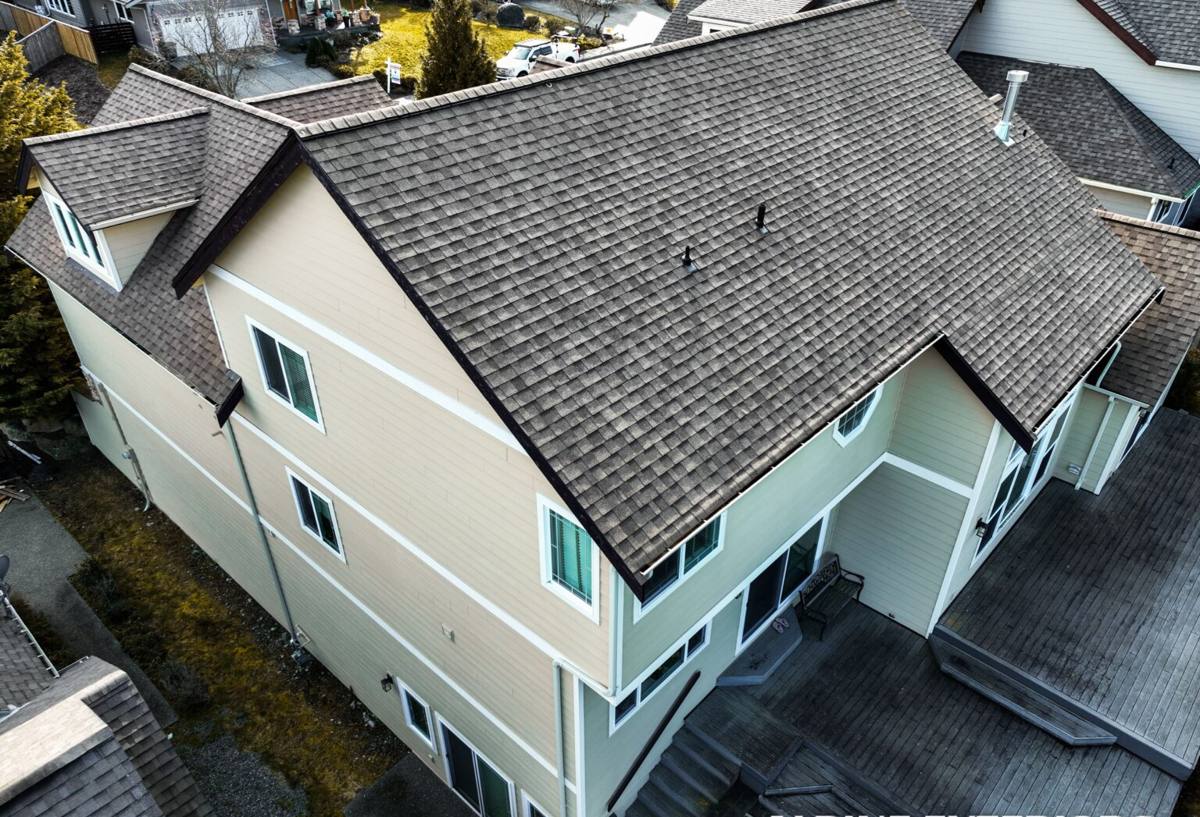
What Local Weather Demands From a Deck
Three things do most of the damage to decks in this part of Washington, and all three need to be designed around from day one, not patched after the fact.
Constant Moisture
Rain that falls sideways for days at a time finds every gap in flashing, every unsealed cut end, and every spot where two boards meet without a drainage path. A deck that isn't detailed for that kind of exposure traps water where it can't dry out between storms.
Salt-Laced Marine Air
Being this close to the water means a steady dose of salt-bearing air moving through the region. That air accelerates corrosion in cheap fasteners and hardware, which is one of the most common — and most preventable — causes of premature deck failure. Rust streaks bleeding out of a screw head or a joist hanger are a sign the wrong hardware went into the ground.
A Long Moss Season
Shade, moisture, and mild temperatures are exactly what moss wants, and a lot of Cordata lots have all three. Moss on a deck surface isn't just unattractive — it holds water against the wood or composite surface and turns a walkway slick within a single wet week.
The Details That Separate a Correct Deck From a Problem Deck
Most deck failures we get called out for don't start with the decking boards — they start below and behind them, in details that are invisible once the project is finished.
- Ledger board flashing: Where the deck attaches to the house is the single most common failure point in this climate. It needs proper flashing and a drainage gap, not just lag bolts and caulk.
- Joist protection: Butyl tape or an equivalent membrane over the top of every joist keeps rainwater from soaking into end grain through fastener holes — the number one cause of joists rotting from the inside out.
- Corrosion-resistant fasteners and hardware: Stainless steel or heavy hot-dip galvanized hardware, rated for ground contact and treated lumber, is not optional this close to marine air.
- Footings set below frost and bearing depth: Undersized or shallow footings shift over time in saturated soil, which is how you end up with a deck that develops a lean or a bounce.
- Drainage and airflow underneath: A deck with no way for air to move underneath it stays damp for days after every storm, which shortens the life of everything above it.
Choosing a Decking Material for This Climate
There's no single "best" decking material — there's a best material for your budget, your maintenance appetite, and how much sun or shade your particular lot gets. Here's how the common options actually perform under Whatcom County conditions.
| Material | Moisture & Moss Behavior | Maintenance | Relative Cost |
|---|---|---|---|
| Pressure-Treated Lumber | Resists rot with proper sealing; moss and algae will grow on the surface if not cleaned and re-sealed regularly | Annual cleaning, re-sealing every 1–2 years | Lowest upfront |
| Cedar | Naturally rot- and insect-resistant, but the surface still needs sealing to shed water and resist moss | Sealing every 1–2 years, periodic cleaning | Mid-range |
| Capped Composite | Won't rot or absorb water into the core; surface still needs periodic washing to keep moss and mildew from taking hold | Low — occasional washing, no sealing | Higher upfront |
| PVC Decking | Fully moisture-resistant, most consistent performance in constant-wet conditions | Lowest — occasional washing only | Highest upfront |
We install all of these depending on what a homeowner wants and what the site calls for. Our standard for any material is the same: proper spacing, proper fastening, and proper sealing at every cut end, because the type of board matters less than how correctly it's installed.
Why We're Selective About What We Recommend
Some lower-grade composite products and thin cap-stock boards don't hold up well to years of standing water and shaded moss growth — not because of one bad batch, but because thinner capping and lower-density cores are more sensitive to constant moisture exposure than premium versions of the same product category. On a shaded or low-airflow Cordata lot, that difference shows up faster than it would somewhere drier. We'll tell you honestly which grade of material makes sense for your specific site rather than defaulting to whatever's cheapest.
Dealing With Moss Before It Becomes a Safety Problem
Moss on a deck is more than cosmetic — a moss-covered board is a slip hazard, especially on stairs and landings. A few design choices make a real difference in how much moss a deck collects and how easy it is to keep clean.
- Board spacing and orientation that lets water shed quickly instead of pooling
- Under-deck airflow so the underside dries between storms instead of staying damp
- Material selection that matches the amount of shade the specific area gets — a heavily shaded corner is a poor spot for a low-cost wood surface that needs frequent sealing
- Grooved or textured board profiles in high-moss areas for better footing even when the surface is damp
None of this eliminates moss entirely — nothing does in a climate this wet — but it turns "constant problem" into "occasional cleaning."
Designing Around Your Specific Lot
Cordata properties vary a lot in tree cover, slope, and how much direct sun the yard actually gets, and that variation should drive the design, not just the size and shape of the deck. A few things we walk through with every homeowner:
Sun and Shade Pattern
A deck under heavy tree cover needs different material choices and more attention to airflow than one that gets full afternoon sun. We look at how light actually moves across your yard through the seasons, not just how it looks on the day we visit.
Grade and Drainage
Where the ground slopes toward the house, or where water already pools after a storm, that has to be solved before framing starts — not worked around afterward with the deck sitting on top of a wet spot.
How You'll Actually Use It
A deck built for occasional summer use looks different from one meant to handle year-round entertaining, a hot tub, or multiple levels tied into a sloped backyard. Load requirements and footing sizes change accordingly.
Permits and Code Compliance
Most raised decks in Whatcom County require a building permit, and inspections typically check footings, ledger attachment, guard rail height, and stair geometry before the project is signed off. Skipping this step is one of the most common ways homeowners end up with a deck that can't legally be sold with the house, or one that an inspector flags during a future home sale. We handle the permitting and inspection process as a standard part of the job, not an upsell.
Our Process, Start to Finish
- Site walk and assessment — we look at drainage, sun exposure, existing structure (if replacing a deck), and how the space connects to the house.
- Design and material selection — sized and detailed for your lot, with honest trade-offs explained for each material option.
- Permit and engineering — we pull the permit and handle any structural calculations the design requires.
- Footings and framing — footings set to proper depth, joists protected with membrane tape, hardware rated for ground contact and marine air.
- Ledger and flashing — the single most important connection on the whole structure, done correctly the first time.
- Decking and railing installation — proper spacing, fastening, and sealing at every cut.
- Final inspection and walkthrough — we don't consider the job finished until it passes inspection and you've walked it with us.
Maintaining Your Deck Through Whatcom County Winters
Even a well-built deck needs some seasonal attention to get the most life out of it in this climate. A little upkeep goes a long way toward preventing the kind of moisture and moss damage that leads to early rebuilds.
- Sweep leaves and debris off the surface regularly through fall — trapped organic matter holds moisture and feeds moss growth
- Wash the deck surface at least once a year, and more often on shaded sections
- Check and re-seal wood decking on the manufacturer's recommended schedule — don't wait until it's visibly gray or cracking
- Keep gutters and downspouts near the deck clear so runoff isn't dumping directly onto or under it
- Inspect railings, stairs, and ledger flashing once a year for movement, rust staining, or soft spots
Why Local Deck-Building Experience Matters
Any crew can build a deck that looks good the day it's finished. Fewer crews build one that still looks good and functions correctly five winters into Whatcom County weather. Working regularly in and around Cordata means we already know which details matter most here — the flashing, the fastener grade, the drainage under the frame — because we've seen what happens when those details get skipped. That's not something you can shortcut with a generic plan pulled off the internet.
Some questions worth asking any contractor before you hire them for a deck project:
- What fastener and hardware grade do you use, and is it rated for this climate?
- How do you detail the ledger board connection?
- Who pulls the permit, and is inspection included in the price?
- What's your plan for under-deck drainage and airflow?
- Can you walk me through material trade-offs for my specific lot's sun and shade?
If a contractor can't answer those clearly, that's worth knowing before the framing goes in, not after.
If you're planning a new deck or need an honest opinion on whether an existing one is worth repairing or replacing, we're happy to come take a look. Reach out for a free, no-pressure estimate using the form below.