 Sudden Valley Siding
 Roof Repair Built for the Columbia Area's Weather
Homes in the Columbia area of Sudden Valley sit under heavy tree cover, close to water, and squarely in the path of the wet weather that moves through Whatcom County most of the year. That combination is hard on a roof in ways that inland, open-sky neighborhoods never deal with. Driving rain finds its way under lifted shingles and worn flashing. Salt-laden air off the sound speeds up corrosion on fasteners, flashing, and metal roofing components. And the long, damp moss season here does more than make a roof look neglected — moss holds moisture against the roofing material for months at a time, which is exactly the condition that turns a small leak into a rotted deck.
A roof repair in this area has to account for all three of those factors, not just patch the one spot that's currently dripping into the attic. That's the difference between a repair that lasts a few seasons and one that lasts as long as the rest of the roof.
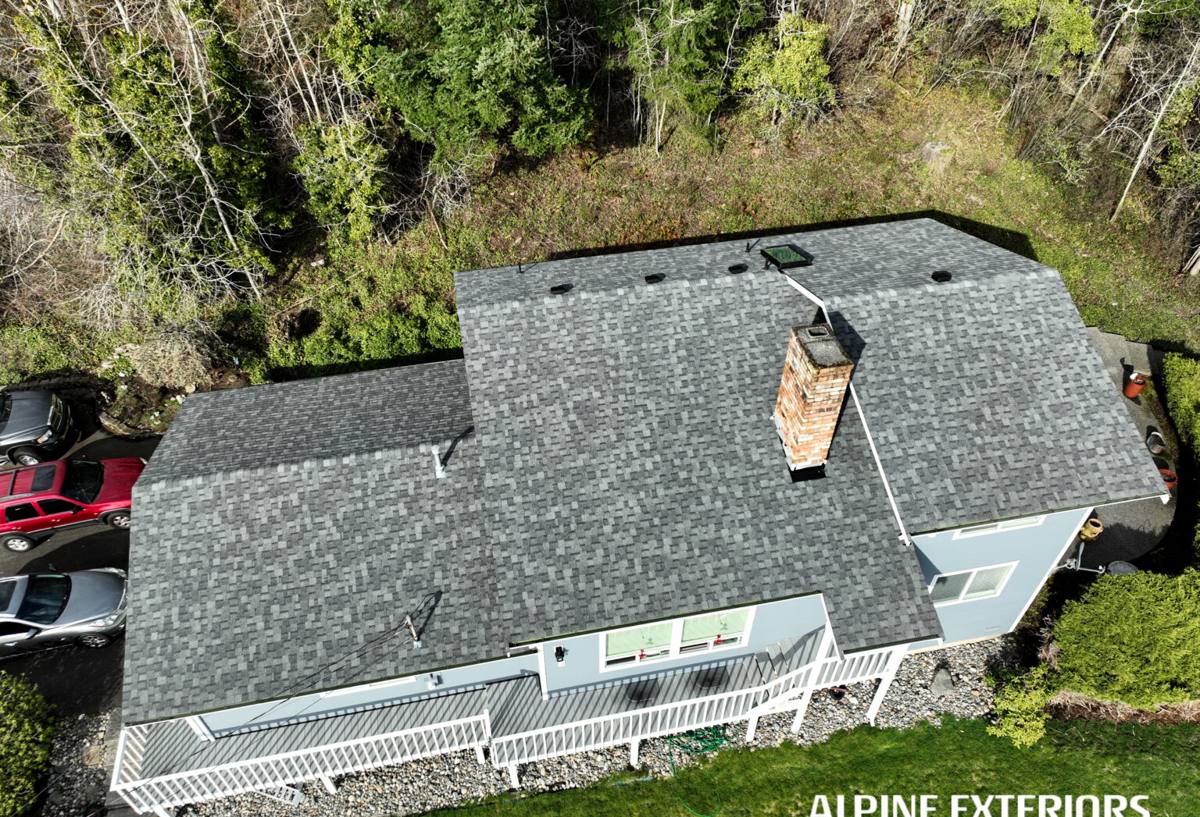
Signs a Columbia Roof Needs Repair
What You Can See From the Ground or Attic
Most roof problems show themselves before they become emergencies, if you know what to look for. Common warning signs on homes in this area include:
- Shingles that are curling, cracked, or missing granules, especially on north-facing slopes that stay shaded and damp longer
- Dark streaking or thick moss growth concentrated along ridges, valleys, and the lower edge of the roof
- Rust staining or lifted seams around metal flashing, vent boots, and chimney counterflashing
- Sagging or soft spots visible when walking the roof, which usually mean the decking underneath has taken on moisture
- Water stains, musty smells, or visible daylight in the attic near roof penetrations
What It Means Inside the House
Not every leak announces itself with a stain on the ceiling. In our experience, moisture problems on roofs in this climate often show up first as a musty attic smell, condensation on nail tips visible from below, or insulation that's damp and matted in one spot. Catching those signs early is usually what keeps a repair a repair, instead of turning it into a deck replacement.
What a Correct Roof Repair Actually Involves
Finding the Real Source, Not Just the Wet Spot
Water rarely enters a roof at the exact spot it shows up inside. It travels along the underlayment, follows a rafter, and drips somewhere downhill of the actual failure. A repair that only addresses the visible stain without tracing the leak back to its source tends to come back within a year or two — which is one of the most common complaints we hear about work done by contractors from outside the area who don't take the time to fully diagnose the problem.
Matching Materials and Technique
A repair also has to match the existing roofing system, not just cover the hole. That means using compatible shingle profiles and colors where possible, tying new flashing into the existing drainage path correctly, and using fasteners and sealants rated for this climate's moisture exposure. Mismatched materials or shortcuts at this stage are a common reason repairs fail early, especially around flashing details.
Flashing, Underlayment, and Ventilation
A large share of the leaks we repair in this area trace back to flashing — around chimneys, skylights, vent pipes, and roof-to-wall transitions — rather than the field of the roof itself. Underlayment condition and attic ventilation matter just as much: a roof with poor airflow traps moisture underneath the shingles even after a leak is fixed, which shortens the life of the repair and the roof around it.
Common Roof Repair Issues We See in This Area
| Issue | Typical Cause Around Sudden Valley | What the Repair Involves |
|---|---|---|
| Moss buildup and shingle damage | Heavy tree cover, shaded slopes, long damp season | Careful moss removal, damaged shingle replacement, treatment to slow regrowth |
| Flashing leaks | Salt air corrosion, sealant breakdown, wind-driven rain | Removal and reinstallation of flashing with correct laps and fresh sealant |
| Soft or sagging decking | Long-term hidden moisture from a slow leak | Localized decking replacement before re-roofing the affected section |
| Granule loss / bald spots | Age combined with driving rain and wind exposure | Spot shingle replacement matched to existing roof where material is available |
| Ridge or valley leaks | High water volume concentration during storms | Reinforced flashing and underlayment at high-flow areas |
Moss, Algae, and Moisture Management
Moss is not just cosmetic on roofs in this part of Whatcom County. As it spreads, it lifts shingle edges, holds water against the roofing surface, and creates a growing medium that keeps drying time long even after the rain stops. A repair that doesn't address the moss around it is treating a symptom, not the cause. As part of a proper roof repair, we remove moss by hand rather than pressure washing it, since aggressive pressure washing strips granules and shortens the life of the shingles it's meant to protect. Depending on the roof and the extent of growth, we may also recommend zinc or copper strips near the ridge, which release trace metals that slow future moss growth as rain washes over them — a preventive step, not a substitute for removal.
Our Roof Repair Process
- Inspection. We walk the roof and the attic where accessible, tracing suspected leaks back to their actual source rather than just the visible damage point.
- Written estimate. You get a clear explanation of what's failing, what the repair involves, and an honest range for cost before any work starts.
- Repair. We remove and replace only what's actually damaged, matching materials and flashing details to the rest of the roof.
- Cleanup and debris removal. Old material, moss, and fasteners are cleared from the roof, gutters, and ground around the house.
- Follow-up. We explain what we found, what we did, and flag anything else worth watching so there are no surprises later.
Repair vs. Replacement: How We Help You Decide
Not every roof problem in Columbia calls for a full replacement, and not every repair is worth doing if the roof is near the end of its service life. We walk homeowners through the honest tradeoffs rather than defaulting to whichever job is bigger.
| Factor | Points Toward Repair | Points Toward Replacement |
|---|---|---|
| Roof age | Under roughly two-thirds of expected lifespan | Near or past expected lifespan for the material |
| Extent of damage | Isolated to one area or system (flashing, one slope) | Widespread across multiple slopes or the deck |
| Decking condition | Solid, dry decking under the damaged area | Soft, rotted, or repeatedly wet decking |
| Moss/algae history | First occurrence or well-maintained roof | Chronic, recurring growth despite past treatment |
| Cost over time | Repair cost is a small fraction of replacement cost | Repeated repairs are approaching replacement cost |
When a roof falls in the middle of that table, we'll say so directly and lay out the reasoning, rather than pushing toward the more expensive option.
Why Hire a Crew That Already Works This Area
Roofing in Columbia and the rest of Sudden Valley comes with a learning curve that isn't obvious from a truck driving through once. Knowing which slopes hold moss the longest because of tree shade, which flashing details tend to fail first under wind-driven rain off the water, and how salt air affects fastener choice over time all comes from repeated work in this specific setting — not from general roofing experience elsewhere in the county. If your property is part of a homeowners association or community with exterior standards, we're also used to working within those requirements without it slowing the job down. A crew that already knows the local conditions catches problems faster during the inspection and avoids the trial-and-error that drives up cost on an unfamiliar roof.
What to Check Before Your Roof Repair Estimate
A little preparation helps us give you a more accurate estimate on the first visit and helps you get more life out of the roof between now and any future work.
- Note which rooms or areas show staining, smells, or drafts, and roughly when you first noticed them
- Check gutters and downspouts for granules, moss debris, or standing water, which point to drainage problems feeding roof damage
- Look at attic insulation for damp or matted spots if you can safely access it
- Have any past roofing or repair paperwork handy, including the roof's approximate age and material
- Point out any known trouble spots — skylights, chimneys, past leak locations — so we inspect those closely
If your roof in the Columbia area is showing moss buildup, staining, or a leak that's been ignored through one too many wet seasons, we're glad to take a look. Reach out for a free, no-pressure estimate using the form below, and we'll give you a straight answer on what it actually needs.