 Sudden Valley Siding
 Deck Replacement Built for Columbia's Conditions
Columbia is one of the older established pockets of Sudden Valley, and a lot of the decks out here are original to the homes or were rebuilt decades ago with whatever lumber was standard at the time. If yours is starting to feel soft underfoot, showing gray weathered wood no amount of staining fixes, or you've noticed the ledger board pulling away from the house, you're not looking at a cosmetic problem anymore — you're looking at a structural one. Deck replacement in this part of Whatcom County isn't just about picking new boards. It's about building something that can actually stand up to the specific way this climate attacks wood and fasteners year after year.
We work Columbia and the surrounding Sudden Valley streets regularly, which matters more than it sounds like. A deck built to a generic spec sheet and a deck built by a crew that knows how moss colonizes north-facing joists here, how long surfaces stay damp under the tree canopy, and how lake-proximity humidity behaves are two different projects — even if they look identical the day they're finished.
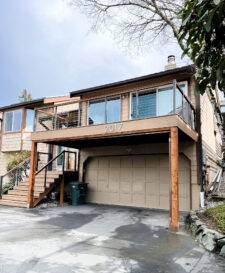
Why Decks Fail Faster Here Than the Manufacturer's Warranty Assumes
Whatcom County's climate is rough on outdoor structures in ways that are easy to underestimate until you're the one pulling up rotted deck boards. A few things stack up against a deck in Columbia specifically:
- Extended wet season: Long stretches of driving rain mean wood framing and decking spend more days damp than dry for much of the year, which accelerates rot at every joint, fastener hole, and end-cut.
- Moss and algae growth: A long moss season isn't just an appearance issue — moss holds moisture against the wood surface and in board gaps, which is exactly the environment rot fungi need. Left unaddressed, it eats into structural life expectancy.
- Tree cover and shade: Many Columbia lots have mature trees close to the house, which is great for privacy but keeps decks shaded and slow to dry after rain, and adds constant leaf and needle debris into board gaps and drainage paths.
- Salt-influenced air: Proximity to the lake and the broader Puget Sound air pattern means fasteners, brackets, and any exposed metal hardware corrode faster than they would inland, which is a big factor in ledger board and joist hanger failure.
- Freeze-thaw cycling: Whatcom County gets enough cold snaps that water trapped in wood fibers or concrete footings can freeze, expand, and accelerate cracking — especially on older decks without proper drainage detailing.
None of this means a deck can't last decades here — it means it has to be built with those conditions in mind from the framing up, not just refinished on the surface every couple of years.
Signs Your Columbia Deck Needs Replacement, Not Repair
Not every tired-looking deck needs a full teardown. But there's a point where patching individual boards is just delaying an inevitable, more expensive failure. Here's how we tell the difference on a site visit:
Repair may be enough if:
- The framing (joists, beams, posts) probes solid with no soft spots or visible rot
- Only a handful of surface boards are cupping, splintering, or graying
- Railings are loose but not rotted at the post base
- The ledger board connection to the house is still sound and properly flashed
Replacement is the right call if:
- A screwdriver sinks into joists or the ledger board with light pressure
- You see consistent moss or algae staining across the deck surface, not just isolated shaded corners
- Multiple support posts show base rot where they meet concrete footings
- The deck bounces or feels spongy when you walk across it
- Fasteners are visibly rust-streaked or backing out of the wood
- The structure predates current local building code for guardrail height and baluster spacing
If you're not sure which category your deck falls into, that's exactly what a free estimate visit is for — we'll tell you honestly if repair will hold up or if you'd be throwing money at a structure that's already past the point of return.
What a Correct Deck Replacement Involves
A deck replacement done right in this climate isn't just swapping old boards for new ones on the same frame. Here's what we actually do:
1. Full structural teardown and assessment
We remove decking down to the framing and inspect every joist, beam, post, and footing. Any wood with rot, insect damage, or moisture compromise gets replaced — not patched around.
2. Ledger board and flashing correction
The ledger board — where the deck attaches to the house — is the single most common failure point we find on older Columbia decks. It's also the point where water intrusion into the house structure itself becomes a risk if flashing was ever installed incorrectly or has failed over time. We re-flash this connection properly with materials suited to sustained wet exposure.
3. Framing built for drainage, not just support
Joists and beams get spaced and treated with drainage in mind — proper gapping, correct fastener choice for corrosion resistance, and in some cases a drainage membrane under the decking to keep water moving off the structure instead of pooling against it.
4. Decking material selection matched to how the deck is actually used
Shaded, tree-covered, moss-prone lots need different material considerations than a sun-exposed deck on an open lot. We walk through the honest trade-offs of wood versus composite decking for your specific spot rather than pushing one product regardless of site conditions.
5. Code-compliant railings and stairs
Guardrail height, baluster spacing, and stair geometry all get brought current, which matters both for safety and for resale — an out-of-code deck can be a red flag in a home inspection.
Decking Material Options: Honest Trade-Offs for This Climate
There's no single "best" decking material — there's the right material for how much maintenance you're willing to do and what you want the deck to look like in ten years. Here's how the common options actually perform in Columbia's wet, mossy, shaded conditions:
| Material | Moss/Algae Resistance | Maintenance Needed | Typical Lifespan Here |
|---|---|---|---|
| Pressure-treated wood | Low — needs regular cleaning and sealing to resist moss buildup | Annual cleaning, re-sealing every 2-3 years | 15-20 years with upkeep |
| Cedar | Moderate — natural oils help but fade over time | Regular cleaning, periodic oiling/staining | 15-25 years with upkeep |
| Composite decking | Higher — capped composites resist moisture absorption better | Periodic washing, no staining/sealing | 25-30+ years, manufacturer-warrantied |
| PVC decking | Highest — non-organic surface doesn't feed moss growth | Occasional washing | 25-30+ years, manufacturer-warrantied |
We're straightforward about this: wood costs less upfront but asks more of you every single year in a climate like this, and skipped maintenance is exactly how a five-year-old wood deck ends up looking fifteen years old. Composite and PVC cost more upfront but largely remove the moss-and-moisture maintenance cycle that wood decks in shaded Columbia lots deal with constantly. We'll walk through real numbers for your project rather than a generic sales pitch either direction.
Our Deck Replacement Process
- Free on-site estimate — we inspect the existing deck, probe the framing, check the ledger connection, and give you a straight answer on repair versus replacement.
- Written scope and pricing — you get a clear breakdown of what's being removed, what's being rebuilt, and what materials are involved before any work starts.
- Permitting — deck replacements of most sizes require a permit through Whatcom County; we handle that process so you don't have to chase it down.
- Demolition and disposal — old decking, framing, and any damaged posts or footings are removed and hauled off site.
- Structural rebuild — framing, ledger flashing, and footings are brought up to current code and built for local drainage conditions.
- Decking, railing, and stair installation — finished to the material and layout you selected.
- Final walkthrough — we go over the finished deck with you, including basic maintenance guidance specific to whatever material you chose.
Why Hire a Crew That Already Works Columbia
A deck replacement isn't a product you buy off a shelf — it's a structure that has to be engineered around your specific lot's sun exposure, tree cover, and drainage path. Crews that don't work this area regularly tend to build to a generic standard that doesn't account for how much longer surfaces stay wet under Sudden Valley's tree canopy, or how aggressively moss establishes itself on north- and east-facing sections of a deck here.
Working Columbia and the broader Sudden Valley community regularly also means we're familiar with the county permitting process for this area, common lot layouts and setback considerations, and the realistic timeline for weather windows — scheduling a teardown-and-rebuild around the wettest months here is a real planning factor, not an afterthought.
Deck Replacement Cost Factors
We don't publish blanket pricing because every deck is different, but these are the factors that actually move the number on a Columbia project:
| Factor | Why It Matters |
|---|---|
| Deck size and height off grade | Larger and taller decks need more framing material and more labor for structural support |
| Extent of existing rot | Damage found in posts, beams, or the ledger board adds framing repair beyond simple decking replacement |
| Decking material chosen | Composite and PVC cost more per square foot than wood but reduce long-term maintenance spend |
| Railing and stair complexity | Multi-level decks or custom railing designs add labor and material |
| Permit and inspection requirements | Larger decks or those attached at greater heights may require engineering review |
| Site access | Tree-covered or tight-access Columbia lots can add time for material staging and debris removal |
Maintaining Your New Deck in This Climate
Whatever material you choose, a few habits go a long way toward getting the full lifespan out of a Columbia deck:
- Sweep debris out of board gaps regularly, especially through fall when leaf litter builds up fast under tree cover
- Wash the surface at least once a year to interrupt moss and algae establishment before it takes hold
- Keep gutters and downspouts near the deck clear so runoff isn't dumping extra water onto or under the structure
- For wood decks, stay on top of the re-sealing schedule — skipped years compound quickly in this rainfall pattern
- Check railings and stair connections annually for movement, which is often the first sign of fastener corrosion
If you're in Columbia or elsewhere in Sudden Valley and your deck is showing its age, we're happy to come take a look and give you a straight assessment — no pressure, no obligation. Reach out for a free estimate and we'll walk the deck with you in person.