 Sudden Valley Siding
 Decks in Columbia Take a Different Kind of Beating
A deck in Columbia doesn't fail the same way a deck fails in a dry climate. Out here, the damage is slow and mostly hidden — moisture works into joints, fastener heads, and the underside of boards long before anything looks wrong from the top. By the time a board feels spongy underfoot or a railing post wiggles, the framing underneath it has usually been losing strength for a couple of seasons already. We work on decks throughout Sudden Valley and the surrounding Whatcom County area, and the pattern repeats itself on house after house: driving rain gets pushed sideways by wind and lands where it isn't supposed to, moss and algae hold moisture against wood surfaces for months at a time, and the long wet season gives everything plenty of time to soak in and stay soaked.
None of that means a deck is doomed — it means deck repair here has to account for moisture first and cosmetics second. A repair that only replaces what looks bad on the surface, without checking what's happening underneath, tends to fail again within a few years.
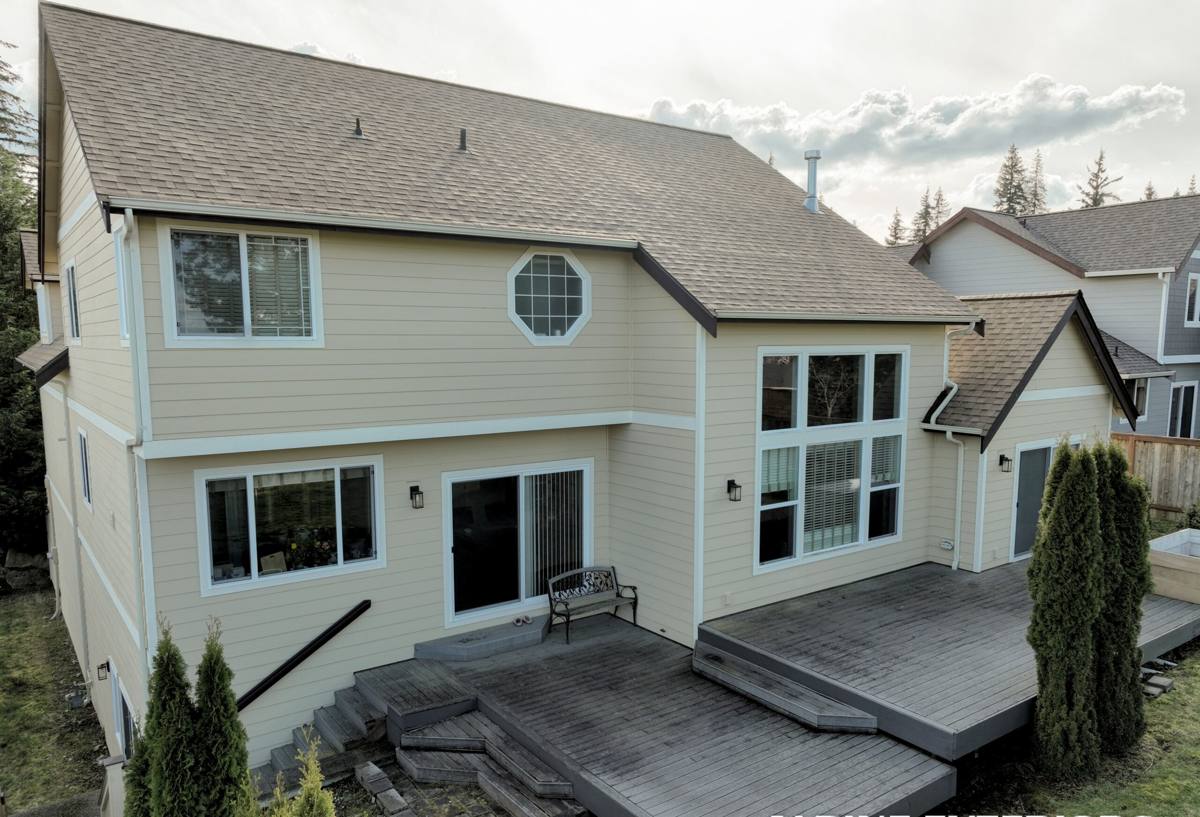
What the Local Climate Does to a Deck Over Time
Moisture and Rot
Wood decking and framing are rated for exposure, but "rated for exposure" isn't the same as "immune to it." Areas that stay damp the longest — ledger boards against the house, the tops of joists under decking, post bases at or near grade — are where rot starts. It's usually invisible until you probe it with a screwdriver or an awl.
Moss and Algae
A long moss season means organic growth gets a real foothold on horizontal surfaces, especially in shaded areas or spots that don't dry out between rains. Moss doesn't just look bad; it holds water against the wood surface far longer than bare decking would, which accelerates surface decay and makes boards slicker and more slippery underfoot.
Fastener and Hardware Corrosion
Nails, screws, and joist hangers that aren't rated for the moisture levels here will corrode, streak the wood, and eventually lose their grip. Corroded fasteners are one of the most common reasons a deck that "looks fine" is actually a safety concern — the connection holding a joist or a railing post is quietly failing even though the wood around it looks okay.
Freeze-Thaw and Seasonal Movement
Whatcom County gets enough cold snaps that trapped moisture in wood or in gaps between boards can freeze, expand, and widen cracks that started as something minor. Over several winters, small splits become real structural gaps.
Common Deck Problems We Find in Columbia
- Ledger board rot where the deck attaches to the house — often from missing or failed flashing
- Post bases rotting at or below grade, especially where posts sit directly on or near soil
- Rusted or corroded joist hangers and fasteners that no longer hold their rated strength
- Soft, spongy, or delaminating decking boards, including some composite products that have started separating at the surface
- Loose or wobbly guardrail posts — a safety issue, not just a cosmetic one
- Water staining or rot on the siding directly above or around the deck ledger connection
That last one is worth calling out specifically: because we work in siding as much as decks, we often catch water damage at the house-to-deck connection that a deck-only crew might miss, or that a siding-only crew might not know how to correct at the structural level.
What a Correct Deck Repair Actually Involves
A repair that holds up here starts with a structural check, not a materials order. That means:
- Probing the ledger board, rim joists, and post bases for soft wood before deciding what actually needs replacing
- Checking that ledger flashing exists and is doing its job — this is the single most common failure point where a deck meets a house
- Replacing corroded hardware with fasteners and joist hangers rated for the moisture exposure here, not whatever was on the shelf when the deck was first built
- Isolating post bases from direct soil or standing water contact rather than just resetting the same post in the same spot
- Matching replacement decking to the existing material where reasonable, or discussing trade-offs honestly if a full swap makes more sense
Skipping the structural check and just swapping bad-looking boards is the most common shortcut we see from past work — and it's usually why a "repaired" deck needs repairing again within a couple of years.
Repair Approaches: What Fits Your Situation
| Repair Type | What's Involved | Best For |
|---|---|---|
| Spot repair | Replacing individual boards, a section of railing, or isolated hardware | Decks with sound framing and one or two visible problem areas |
| Section rebuild | Removing and rebuilding a portion of framing, ledger, or posts along with decking above it | Decks with localized rot at the ledger, a post base, or a corner |
| Full deck rebuild | New framing and decking throughout, keeping footings if they're sound | Older decks where rot or corrosion shows up in multiple structural areas |
Cost on any of these depends on the same handful of factors: how much of the framing is affected versus just the surface, whether the ledger connection needs to be redone, what decking material you're matching or upgrading to, and access to the site. We'll walk you through which category your deck actually falls into before we quote anything — guessing from the surface alone isn't reliable.
Repair or Replace? What We Actually Look At
Homeowners often ask us this before we've even seen the deck, and the honest answer is that it depends on where the damage is, not how much of it there is. A deck with rot in a lot of individual boards but sound framing is usually a repair. A deck with rot at the ledger board or at multiple post bases is a different conversation, because those are the connections holding the whole structure to the house and the ground.
- Framing and ledger condition — this matters more than the decking on top of it
- Age of the deck — older decks are more likely to have multiple issues developing at once, even if only one is visible
- Extent of hardware corrosion — widespread corrosion often means it's more efficient to redo connections throughout than piecemeal
- What you want out of it going forward — a straightforward repair to extend its life, or an opportunity to upgrade materials while the structure is already open
Our Process for Columbia Deck Repairs
- Inspection — we probe the ledger, framing, and post bases directly rather than eyeballing the surface. This is where we find out what's actually going on, not just what's visible.
- Written assessment — you get a clear explanation of what's structural, what's cosmetic, and what your real options are, in plain language.
- Repair plan and estimate — scoped to what the deck actually needs, with honest ranges and no pressure to upsell into a full rebuild if a repair will genuinely hold.
- The work itself — proper flashing at the ledger, correctly rated hardware, and framing repairs done to hold up under the moisture load this area sees every winter.
- Cleanup and walkthrough — site cleared, debris hauled, and we walk you through what was done and what to watch for going forward.
Why a Crew That Already Works Sudden Valley Matters
Deck repair isn't a one-size-fits-all trade, and a contractor who mostly works somewhere drier will make different assumptions than one who works Whatcom County every week. A crew that's already familiar with Columbia and the broader Sudden Valley area knows what moisture exposure actually looks like on a deck a few years in, knows which hardware holds up and which corrodes fast in this climate, and isn't guessing at how much moss and rain-driven staining is normal wear versus an active problem.
There's also a practical side: being established in the area means straightforward scheduling, familiarity with how sites in this community are typically laid out and accessed, and a working knowledge of what Whatcom County expects when a repair crosses into permit territory — so you're not the one figuring that out alone.
Maintenance Checklist Between Repairs
A repaired deck lasts a lot longer with a little regular attention. This won't stop moisture and moss entirely — nothing does in this climate — but it slows the damage down considerably:
- Sweep or blow off leaves, needles, and debris regularly, especially in shaded corners
- Remove moss and algae buildup before it has months to sit against the wood
- Reseal or restain wood decking on a regular schedule rather than waiting until it looks obviously worn
- Check the ledger flashing and the deck-to-house connection once a year for gaps or staining
- Make sure gutters and downspouts near the deck are actually directing water away from it, not onto it
- Trim back vegetation that's shading the deck or blocking airflow underneath it
- Give post bases and railing connections a physical check — a wiggle test tells you more than a visual one
Get a Straight Answer on Your Deck
If a deck in Columbia is showing soft spots, corroded hardware, staining near the ledger, or just isn't holding up the way it used to, it's worth getting an actual inspection rather than guessing at what's needed. We'll tell you plainly what's structural and what isn't, and what a repair versus a rebuild would realistically involve. Use the form below for a free, no-pressure estimate.