 Sudden Valley Siding
 The Sudden Valley Climate: What Columbia Homes Are Up Against
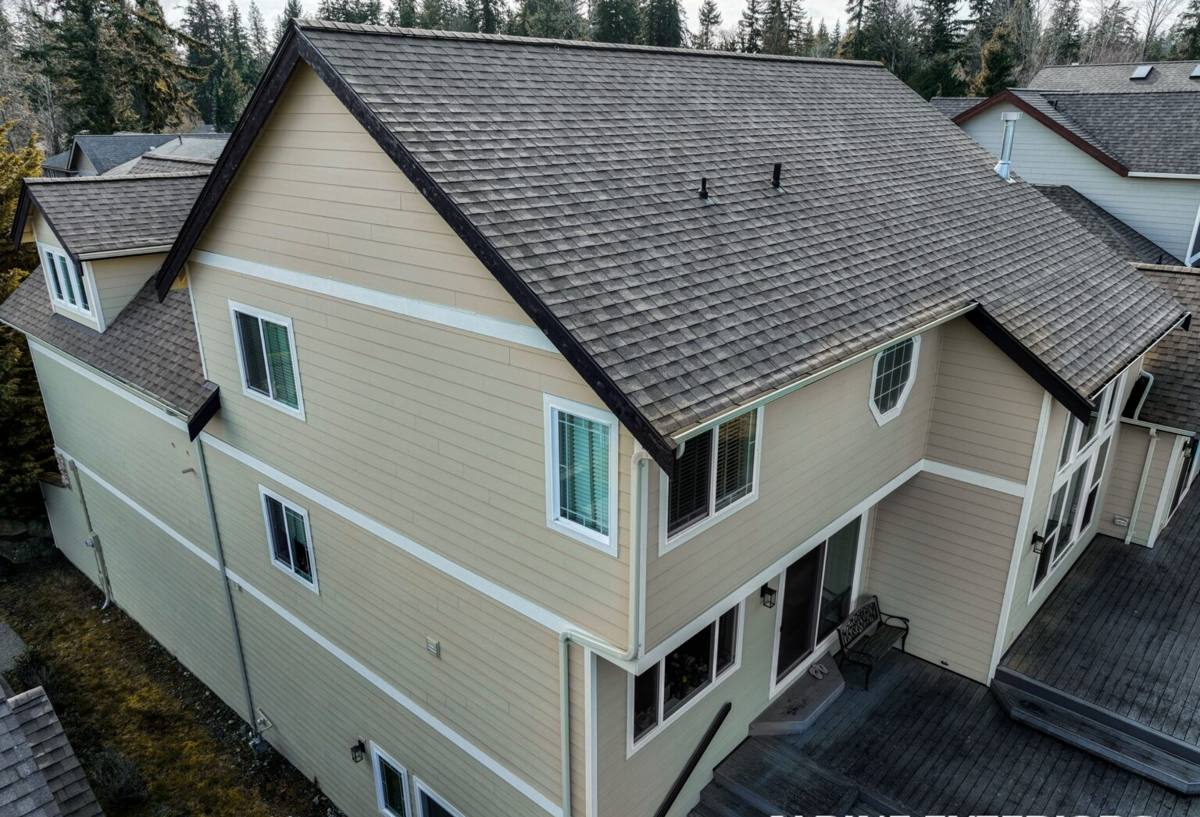
Homes in the Columbia area of Sudden Valley sit in one of the wetter, greener pockets of Whatcom County, tucked among mature trees along the south shore of Lake Whatcom. That setting is a big part of why people live here, but it is also hard on exterior siding. Tree cover keeps walls shaded and damp longer after a storm, driving rain off the lake pushes moisture sideways into joints and seams, and marine air moving inland from Bellingham Bay and the Salish Sea adds a steady dose of salt-laden humidity to the mix. Add a moss season that can run from early fall through late spring, and you have a climate that punishes any siding product or installation detail that cannot shed and dry water quickly.
Board and batten siding, done right, holds up well in exactly this kind of environment, but "done right" is doing a lot of work in that sentence. The material, the fastening method, and the moisture-management details underneath the boards matter as much as how the finished wall looks.
What Board and Batten Siding Is, and Why It's Having a Moment
Board and batten is a vertical siding pattern: wide flat boards installed with gaps between them, then narrower strips called battens are fastened over those gaps to cover the seams and shed water. It's a look that's been around for well over a century on barns, farmhouses, and Pacific Northwest cabins, and it has come back strong in the last decade on everything from craftsman remodels to modern builds. Homeowners like it because the vertical lines read as clean and current, and because it pairs well as an accent alongside horizontal lap siding on gables, entries, or dormers.
What a lot of homeowners don't realize is that board and batten describes a pattern, not a material. You can build it out of solid wood, engineered wood, vinyl, or fiber cement, and the product you choose changes almost everything about how the siding performs over the next twenty or thirty years, especially in a climate like this one.
Why We Only Install Board and Batten in Fiber Cement
We install James Hardie fiber cement exclusively, in board and batten as in every other profile we offer, and it's worth explaining why rather than just stating it.
Solid wood board and batten has real appeal, with genuine grain, a warm look, and a long history in this region. But wood moves with moisture, and in a shaded, damp pocket like Columbia it stays wet longer between rain events than it does in drier parts of the county. That extends the window for rot at end grain, fastener holes, and butt joints, and it means repainting and caulking on a tighter cycle than most owners plan for. Vinyl board and batten is low-maintenance and inexpensive, but it's a thin material that expands and contracts with temperature, relies on the wall behind it to look straight, and can crack or become brittle over time, none of which improves in a climate with big seasonal swings in moisture. We don't install either one, not because they can't be installed competently, but because we've standardized on a single product line we can stand behind for the long term rather than juggling several with very different failure modes.
James Hardie fiber cement is cement, sand, and cellulose fiber, pressed and cured into a board that does not rot, does not feed insects, and does not burn. It's dimensionally stable, so it holds paint lines and caulk joints far longer than wood, and it's engineered specifically for wet, marine-influenced climates like this one under Hardie's HZ10 product designation for the Pacific Northwest. The factory-applied ColorPlus finish also matters more here than in a dry climate, since a baked-on finish resists the streaking and fading that a damp, shaded, moss-prone site is quick to expose on field-applied paint.
What a Correct Board and Batten Installation Involves
Board and batten fails less often because of the material and more often because of what's under it. The pattern creates more vertical seams and more fastener penetrations than lap siding, so the installation details carry extra weight.
A correct installation includes a drainable water-resistive barrier behind the siding, a vertical furring strip or rain-screen gap so water that gets past the cladding can drain and the wall can dry, and properly flashed openings at every window, door, and horizontal transition before the first board goes up. Battens are fastened through the boards into framing or furring, not just nailed to the board face, and every butt joint and inside corner gets treated as a place water will try to get in, because it will. Fastener spacing and type follow Hardie's published specs for the panel width and exposure, and caulk is used at transitions, not as a substitute for flashing.
Skip any one of these steps and the siding can still look right for a year or two. The problems that show up later, such as staining at seams, soft spots at the base, and paint failure around fasteners, almost always trace back to a shortcut taken during installation, not a flaw in the boards themselves.
Climate Details That Change the Job in This Neighborhood
A few things about this particular setting change how we approach a board and batten job here compared with a drier, more open site.
North- and east-facing walls under tree cover stay damp the longest and are where moss and algae take hold first; those elevations get extra attention to drainage detailing and, where it makes sense, a wider rain-screen gap. Lake-facing walls catch more wind-driven rain than sheltered ones, which pushes us to be stricter about flashing at every horizontal batten-to-trim transition on that side of the house. And because salt-tinged marine air and heavy moss growth both accelerate the breakdown of caulk and field-applied paint faster than they would in a drier inland town, we lean on Hardie's factory finish and minimize the amount of job-site painting the long-term performance of the siding depends on.
None of this is exotic, it's the same physics that applies anywhere wet and shaded, but it's the difference between a spec that works on paper and one that holds up on a specific lot with specific tree cover and exposure.
Our Process, Start to Finish
The process for a Columbia board and batten project runs the same whether it's a full re-side or an accent application on gables and entries:
- On-site walk-through to assess the existing wall, moisture history, and exposure on each elevation.
- Written estimate that spells out board width, batten spacing, trim details, and color, with the water-resistive barrier and drainage plan called out specifically, not left as an assumption.
- Removal of old siding where needed, with the sheathing inspected and any rot or soft spots repaired before anything new goes up.
- Installation of the water-resistive barrier, flashing, and rain-screen furring, followed by the boards and battens per Hardie's fastening specs.
- Final walk-through where we go over the finished work with the homeowner before calling the job done.
We don't start cutting boards until the moisture-management layer underneath is right, because that layer is what determines whether the siding still looks good in year fifteen.
What Board and Batten Costs, and What Moves the Number
Board and batten in fiber cement generally costs somewhat more than standard lap siding in the same material, mainly because of the extra battens and the labor of a tighter fastening pattern. Where your project actually lands depends on a handful of factors:
| Cost Factor | Why It Matters |
|---|---|
| Board width and batten spacing | Narrower boards and tighter batten spacing mean more material and more labor per square foot. |
| Existing siding removal | Tear-off and disposal of old siding adds time; some jobs can go over existing sheathing, others can't. |
| Sheathing or framing repair | Rot or moisture damage found once old siding comes off has to be fixed before new siding goes on. |
| Trim and corner complexity | Dormers, gables, and multiple roof transitions add cutting, flashing, and fitting time. |
| Full re-side vs. accent use | Board and batten used only on a gable or entry costs far less than siding an entire home. |
| Color and finish | Factory ColorPlus finishes cost more up front than primed boards but remove the job-site painting cost and cycle. |
We give a firm, written number after the site walk-through, not a phone estimate, because on a wooded, moisture-exposed lot the condition of what's under the old siding often matters more to the final price than the siding itself.
Keeping Board and Batten Looking Right for the Long Haul
Fiber cement board and batten needs far less upkeep than wood or vinyl, but far less isn't none, especially in a shaded, damp setting where moss and algae have a long growing season. A short annual routine goes a long way:
- Rinse siding gently once or twice a year to keep moss, algae, and pollen from building up, especially on shaded north and east walls.
- Keep gutters clear and downspouts directed away from the foundation so runoff isn't hitting the base of the siding.
- Trim back branches and shrubs that keep any wall damp and shaded longer than the rest of the house.
- Check caulk lines at trim, corners, and penetrations once a year and have any cracked or missing caulk redone before wet season.
- Walk the exterior after major windstorms and look for any boards or battens that have come loose.
None of this requires a contractor visit, it's the kind of maintenance any homeowner can do in an afternoon, which is part of why fiber cement holds up so well here compared with materials that demand a repaint or resealing cycle.
Why Hire a Crew That Already Works This Neighborhood
Board and batten installation isn't complicated in theory, but getting it right on a specific lot means understanding how that lot behaves: which walls stay wet, where the wind-driven rain hits hardest, how much moss pressure a given elevation is really under. A crew that has already worked in Sudden Valley and the surrounding Whatcom County communities has seen how this particular climate treats siding over years, not just on installation day, and builds that knowledge into the flashing details, drainage gap, and fastening pattern before the first board goes up. That's the difference between siding that looks good at the final walk-through and siding that still looks good after a decade of Pacific Northwest winters.
If you're considering board and batten for a home in Columbia or elsewhere in Sudden Valley, we're happy to walk the property, look at what your walls are dealing with, and put together a straightforward, no-pressure estimate. There's no obligation, just a clear look at what the job actually involves.