 Sudden Valley Siding
 Bellingham Roofs Work Harder Than Most
A roof in Bellingham isn't dealing with one climate problem — it's dealing with three at once. Marine air off Bellingham Bay carries salt that slowly breaks down exposed metal fasteners, flashing, and vent caps. Long stretches of driving rain push water sideways under shingles and shakes that would stay dry in a calmer climate. And the mild, damp winters that make Whatcom County pleasant to live in are exactly what moss needs to take hold on a north-facing slope and never let go. None of these are dramatic, one-time events. They're slow, steady wear, and that's what makes roof repair here different from roof repair somewhere dry and inland — the failures tend to start small, hidden, and easy to miss until they aren't.
For homes around Sudden Valley and the surrounding Bellingham area, that means a repair has to solve the actual cause, not just patch the symptom. A leak that shows up in a ceiling in January was very likely caused by something that started months earlier — a lifted shingle tab, a cracked pipe boot, or a moss mat holding water against the deck through the wet season.
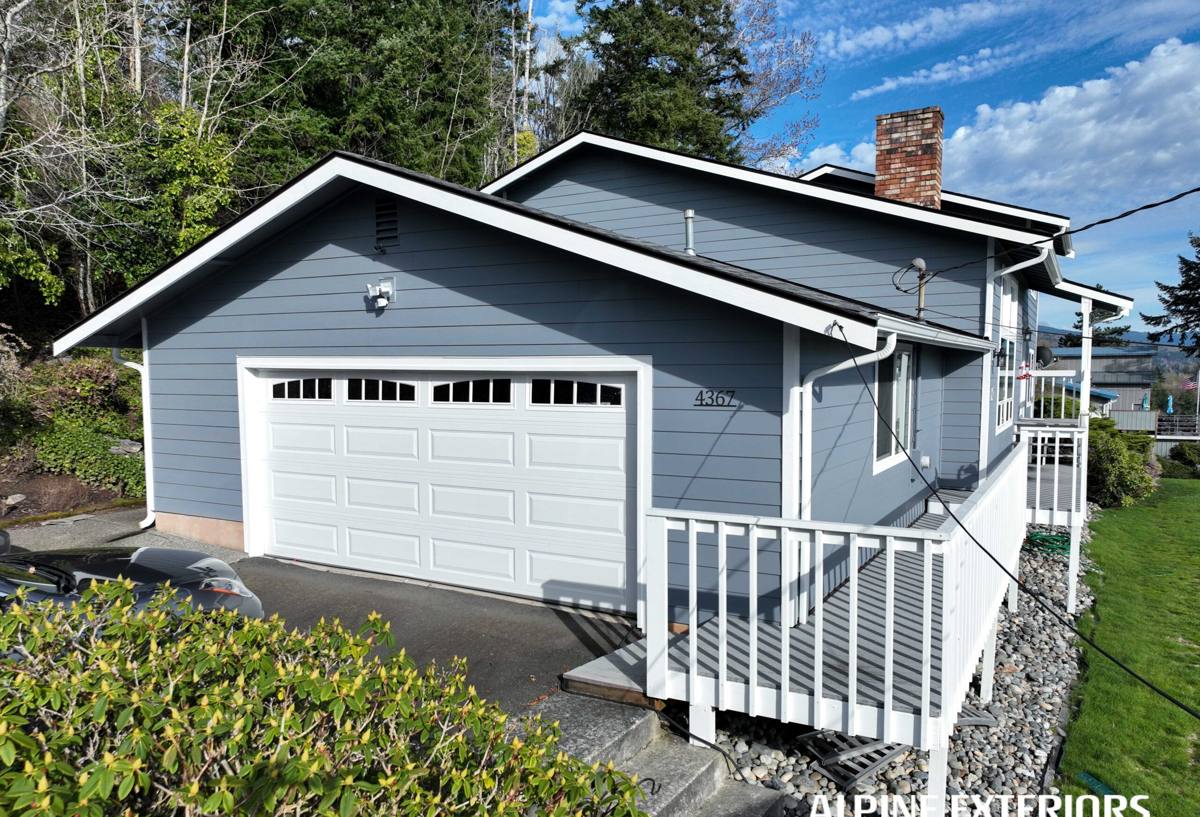
What a Real Repair Involves
"Roof repair" covers a wide range of work, and part of doing it right is being honest about which end of that range a given roof actually needs.
Signs a Repair Will Solve the Problem
- A handful of missing, cracked, or lifted shingles in an otherwise sound field
- A single active leak traced to flashing around a chimney, skylight, or vent
- Moss or debris buildup that's holding moisture but hasn't yet damaged the decking underneath
- Damaged pipe boots or vent flashing — a common source of small, chronic leaks
- Isolated storm damage on a roof that's otherwise within its useful life
Signs the "Repair" Should Really Be a Replacement Conversation
- Multiple leaks in different areas of the roof, not just one spot
- Soft or spongy decking found once shingles are pulled back
- A roof already near or past its expected service life with widespread granule loss or curling
- Repeated repairs to the same area over multiple seasons
We'll tell you honestly which category a roof falls into before any work starts. A repair that's papering over a roof that needs replacing isn't a favor to the homeowner — it just delays the real cost and lets water find a way in during the next wet season.
Why Moss Season Deserves Its Own Plan
Moss doesn't just sit on top of a roof looking unsightly — it holds water against the roofing material and, over time, against the deck underneath, well past the point where a dry roof would have shed the rain. On shaded, north-facing slopes common in wooded areas around Sudden Valley, moss can establish itself within a season or two if it isn't kept in check. A proper repair addresses moss in two parts: removing what's there without damaging the roofing material underneath, and reducing the conditions that let it come back.
How We Handle Moss During a Repair
- Soft-washing or hand-clearing rather than aggressive scraping or pressure-washing, which can strip granules and shorten the life of asphalt shingles
- Checking the decking underneath heavy moss growth for soft spots or rot before closing the roof back up
- Discussing zinc or copper control strips at the ridge where appropriate, which let rain carry trace metal down the slope and slow regrowth
- Clearing overhanging branches and debris that keep a section of roof shaded and damp longer than the rest
Flashing, Fasteners, and Salt Air
Most roof leaks don't start in the field of the shingles — they start at the transitions: chimneys, skylights, valleys, and anywhere a pipe or vent penetrates the roof. In a salt-air environment, the fasteners and flashing at those transitions age faster than the shingles around them. A repair that only replaces shingles and ignores worn flashing or corroding fasteners is treating half the problem.
| Component | Common Bellingham-area issue | What a correct repair does |
|---|---|---|
| Pipe boots / vent flashing | Rubber collar cracks and shrinks with age; a common chronic leak source | Replace the boot itself, not just caulk around it |
| Step and counter-flashing | Corrosion or gaps from salt exposure near the coast | Re-seat or replace flashing, not just seal the seam |
| Valleys | Debris and moss trap water where two slopes meet | Clear the valley and confirm underlayment is intact before resealing |
| Fasteners | Corroded or backed-out nails under shingle tabs | Re-fasten with corrosion-resistant hardware, not just re-glue the tab |
Our Process for a Bellingham-Area Repair
- Inspection first. We walk the roof (or the accessible areas) and check the attic side where possible, since interior staining often points to a different spot than where water is actually entering.
- Honest diagnosis. We explain what's actually failing, why, and whether repair or replacement is the right call — in plain terms, not upsell language.
- Written scope and estimate. You know what's being done and roughly what it costs before anything is touched.
- The repair itself. Matching materials as closely as possible, addressing the root cause (flashing, decking, ventilation) rather than just the visible symptom.
- Cleanup and a final check. Debris cleared, and a look at neighboring areas of the roof so a second issue doesn't surface a month later.
What Drives the Cost of a Roof Repair
Every roof repair estimate should reflect a few real variables rather than a flat number — a small, straightforward flashing fix and a moss-damaged section with soft decking are not the same job.
| Factor | Why it matters |
|---|---|
| Roof pitch and access | Steeper slopes and multi-story homes take longer and require more safety setup |
| Extent of decking damage | Rotten plywood found under shingles or shakes adds material and labor |
| Roofing material | Composition shingle, cedar shake, and metal each require different repair techniques and materials |
| Number and location of trouble spots | One leak near a chimney is a different job than several spread across the roof |
| Moss and debris load | Heavy buildup adds cleanup time before the actual repair can even start |
We give a broad range on the phone once we understand the general problem, then firm it up after an on-site look. We won't guess a number just to get a job on the books.
Before You Call: A Quick Homeowner Checklist
- Note where interior staining or drips appear, and whether it changes with heavy rain versus light rain
- Check the attic (if accessible) for daylight, staining, or damp insulation
- Look at north-facing and shaded slopes for visible moss or dark streaking
- Note any recent wind or storm event before the leak started
- Avoid pressure-washing the roof yourself — it can strip granules and shorten the roof's remaining life
Why Working With a Crew That Already Knows Bellingham Matters
A roof repaired by someone unfamiliar with Whatcom County conditions can look fine on the day it's finished and still fail early — because the flashing choice, the moss control approach, or the fastener grade didn't account for what this climate actually does to a roof year-round. A crew that regularly works the Bellingham area, including neighborhoods around Sudden Valley, has already seen which failure patterns repeat on which roof types and orientations locally, and builds the repair to hold up through another wet season, not just pass a quick look.
That local familiarity also shows up in smaller, practical ways: knowing which valleys and slopes in this area tend to hold moss longest, understanding how coastal salt air ages fasteners faster than it would inland, and not treating every repair as a generic checklist job.
Keeping a Repaired Roof in Good Shape
A repair holds up longer with a little basic upkeep, especially given how long moss season runs here.
- Clear gutters and valleys of debris at least once before the heavy fall rains and again mid-winter
- Watch previously repaired areas for a season to confirm the fix is holding
- Trim back branches that keep a section of roof shaded and slow to dry
- Schedule a visual check every year or two, even without an active leak — catching moss or flashing wear early is cheaper than repairing water damage later
If you're dealing with a leak, visible moss, or storm damage on a roof in the Bellingham or Sudden Valley area, we're happy to take a look and give you a straight answer — no pressure, no obligation. Use the form below to request a free estimate.