 Sudden Valley Siding
 Why Bellingham Homes Need Siding Built for This Climate
Bellingham sits in a tough spot for exterior materials. You've got marine air rolling in off Bellingham Bay and the Salish Sea, long stretches of driving rain that come in sideways off the water, and a shoulder-season climate that stays cool and damp long enough for moss and algae to get a real foothold on anything that holds moisture. Add in the tree cover common through Sudden Valley and the surrounding neighborhoods, and you have shade, humidity, and organic debris working against your siding almost year-round.
Siding in this environment isn't just about looks. It's the barrier between your framing and a climate that rarely lets a wall dry out completely between rain events. Products that handle moisture poorly, or finishes that break down under UV and salt exposure, show their weaknesses here faster than they would in a drier inland climate. That's the lens we use on every Bellingham James Hardie installation: not "does it look good going up," but "does it hold up through fifteen Whatcom County winters."
Why We Install Only James Hardie Fiber Cement
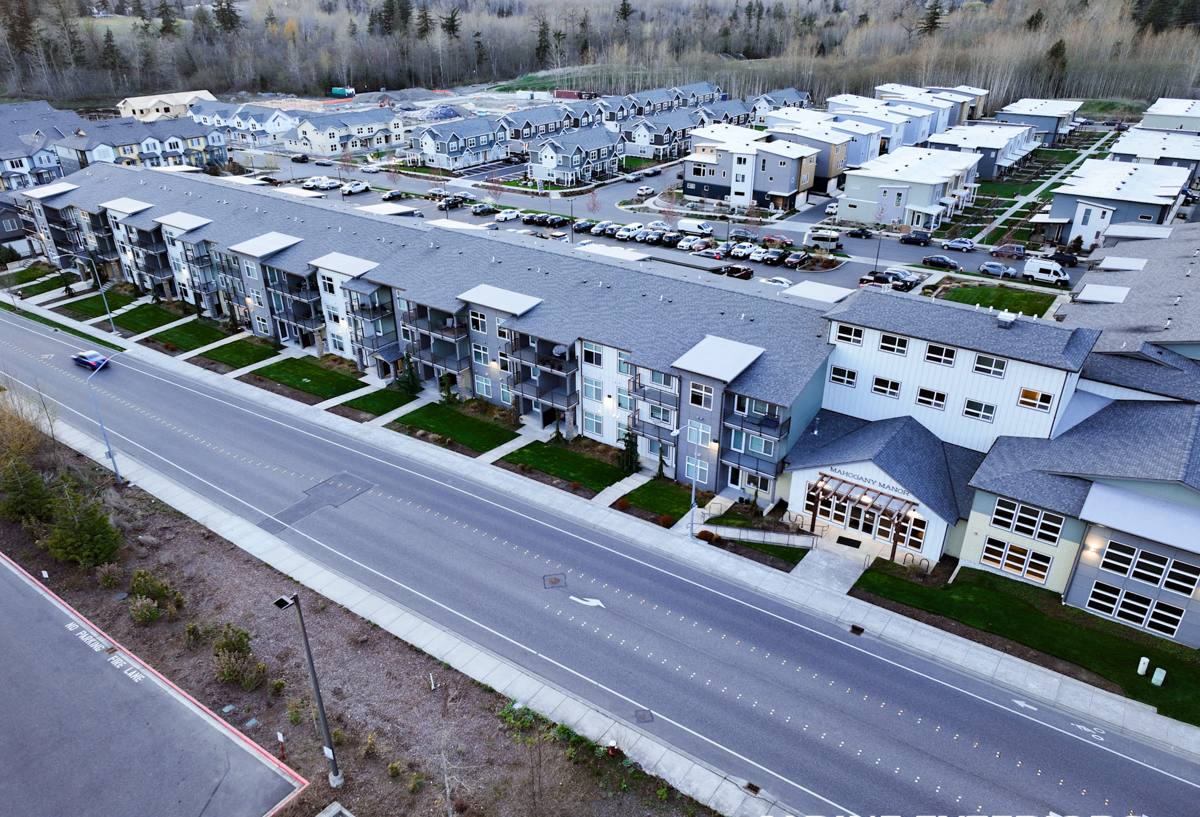
We don't install vinyl, LP SmartSide, primed spruce, cedar, or other fiber cement brands. That's a deliberate standard, not a sales pitch. James Hardie fiber cement is non-combustible, dimensionally stable, and holds its factory-applied ColorPlus finish far longer than field-painted wood products under constant damp exposure. It doesn't feed mold and algae the way wood-based products can when moisture sits against the surface, and it doesn't warp, buckle, or gap the way vinyl and engineered wood siding can once seams start working loose from repeated wet-dry cycling.
None of that means other products are junk — they have real uses and real price advantages. But for a house in Bellingham or Sudden Valley that's going to sit under tree cover, take on-shore weather, and go years between homeowner maintenance, we've made the call that Hardie's combination of moisture resistance, factory finish durability, and manufacturer-backed warranty is the right standard to put our name behind.
The HZ5 Climate Engineering Advantage
James Hardie engineers its siding in region-specific formulations called HZ (HardieZone) products. Western Washington, including Whatcom County, falls into the HZ5 zone, which is formulated for higher moisture exposure and freeze-thaw cycling compared to the HZ10 formulation used in hot, dry climates. That distinction matters: a fiber cement product engineered for Arizona humidity levels is not the product you want on a Sudden Valley home facing salt-laden rain nine months a year.
When we quote a Bellingham job, we're speccing HZ5 product lines by default. It's a small detail most homeowners never hear about from siding installers who move between climates without adjusting their material orders — but it's part of why "James Hardie" alone isn't a full answer. The right James Hardie product for this region is the piece that actually protects the house.
What This Means Day to Day
- Better resistance to moisture absorption during Bellingham's extended wet season
- Reduced risk of freeze-thaw damage during winter cold snaps
- A factory finish engineered to hold color and integrity under UV and marine air exposure
- Consistent performance whether the wall faces prevailing weather or sits in shaded, slow-drying areas of the lot
What a Correct Installation Involves
The performance numbers on a James Hardie product only mean something if the installation matches Hardie's published specifications. This is where a lot of siding jobs — on any brand — quietly go wrong, and it's usually invisible until moisture problems show up years later.
The Fundamentals We Don't Skip
- Weather-resistive barrier and rainscreen detailing — a drainage plane behind the siding so incidental moisture has somewhere to go instead of sitting against the wall sheathing
- Correct fastener pattern and depth — over- or under-driven fasteners are one of the most common causes of premature Hardie board failure
- Manufacturer-specified clearances — proper gaps at grade, roof lines, decks, and other siding-to-hardscape transitions so water doesn't wick into the board ends
- Caulked and flashed penetrations — every fixture, vent, and trim intersection sealed to spec, not just caulked over as an afterthought
- Factory-cut edges kept factory-sealed, field cuts back-primed — exposed raw fiber cement edges are a moisture entry point if left untreated
None of this is exotic. It's discipline — following Hardie's installation manual line by line instead of treating it as a suggestion. Skipping steps doesn't usually show up on installation day. It shows up two or three wet seasons later, in the form of streaking, board edge swelling, or paint failure at the joints.
Moss, Algae, and North-Facing Walls
Bellingham's tree cover and cool, damp climate create ideal conditions for moss and algae growth on exterior surfaces, especially on north-facing walls and anywhere siding sits in consistent shade. This is less about the siding material itself and more about how the whole wall assembly is built and how the house is landscaped around it.
A few things reduce the moss and algae burden on a Bellingham home over time:
- Proper rainscreen gap so the siding face can actually dry between rain events instead of staying damp
- Trimming back vegetation and tree limbs that keep specific wall sections in permanent shade and moisture
- ColorPlus factory finish, which resists staining and holds up to occasional gentle cleaning better than field-applied paint
- Keeping gutters and downspouts clear so overflow isn't running down the wall face during heavy rain
We can't change Bellingham's weather, but a correctly installed, correctly ventilated wall assembly goes a long way toward keeping moss from taking hold in the first place — and toward making it easier to clean off when it does.
Cost Factors for a Bellingham James Hardie Project
Every home is different, and we don't publish blanket pricing because siding cost depends heavily on the specifics of your house. The factors below are the ones that actually move the number on a Sudden Valley or Bellingham quote.
| Factor | Why It Matters Locally |
|---|---|
| Home size and wall complexity | More corners, dormers, and transitions mean more cutting, flashing, and labor time |
| Current siding removal | Tear-off and disposal of existing material adds time, especially with older wood siding that may need sheathing repair underneath |
| Rainscreen system | A proper drainage gap is an added material and labor step, but it's the single biggest factor in long-term moisture performance here |
| Product line selected | HardiePlank lap siding, HardiePanel, and HardieShingle carry different material and install costs |
| Trim and accessory work | Window and door trim, corner boards, and fascia detailing add scope beyond the flat wall area |
| Site access | Sloped lots and tree-lined properties common around Sudden Valley can add setup and staging time |
We walk through each of these on-site during your estimate so you know exactly what's driving your number — not a generic square-footage guess.
Our Process on a Bellingham Job
- On-site assessment — we look at your current siding, wall condition, drainage, sun and shade exposure, and any moisture or moss issues already present
- Written estimate — scope, product line, and cost factors laid out clearly, no pressure to sign on the spot
- Prep and tear-off — removal of existing siding, inspection and repair of sheathing where needed before anything new goes up
- Weather barrier and rainscreen installation — the drainage layer that does the real long-term work
- Hardie installation to spec — correct fastening, clearances, and flashing at every penetration and transition
- Final walkthrough — we go over the finished job with you before calling it done
Why Hire a Crew That Already Works Bellingham
A siding crew that works this area regularly already knows what Bellingham and Sudden Valley homes are up against — the shaded lots, the wet fall and winter stretch, the salt air off the water. That's not something you learn from a manual; it's something you learn from doing the work here repeatedly and seeing how installations hold up over years, not just on install day.
It also means straightforward logistics: local material sourcing, familiarity with the area's permitting and typical home construction, and a crew that isn't learning the region's quirks on your project. When we quote a job in Bellingham, we're speccing for the climate your house actually sits in.
Signs Your Current Siding May Be Failing
Whatcom County's wet climate tends to expose siding problems earlier than drier regions. Watch for these signs, particularly if your home has wood, vinyl, or older fiber cement siding:
- Soft or spongy spots when you press on the siding, especially near the bottom courses
- Paint that's peeling or bubbling rather than fading evenly
- Visible gaps, warping, or buckling between boards or panels
- Persistent moss or algae growth that returns quickly after cleaning
- Rising utility bills that may point to compromised insulation behind failing siding
If you're seeing any of these on a Bellingham or Sudden Valley home, it's worth having someone take a real look rather than waiting for a small problem to become a sheathing repair.
If you'd like an honest, no-pressure look at what your home actually needs, we're happy to walk the property and put together a written estimate — just fill out the form below to get started.