 Sudden Valley Siding
 When a Barkley Home Needs Full Replacement, Not a Patch
Siding replacement is a different project than siding repair, and homeowners in Barkley often start by asking about one when what their house actually needs is the other. A repair fixes a localized problem — a cracked board, a section of trim, a spot where a fastener let go. A full replacement means the entire cladding system comes off the house, the sheathing underneath gets inspected and addressed, and new siding goes up correctly from the weather barrier out. In Whatcom County's climate, where salt air off the bay, wind-driven rain, and a long moss season all work on a house year-round, the line between "repair will hold" and "it's time to replace" usually comes down to whether the moisture problem is still on the surface or has already gotten behind it.
This page covers what a full siding replacement actually involves for a Barkley-area home, how to tell which side of that line your house is on, and what to expect from the process if you move forward.
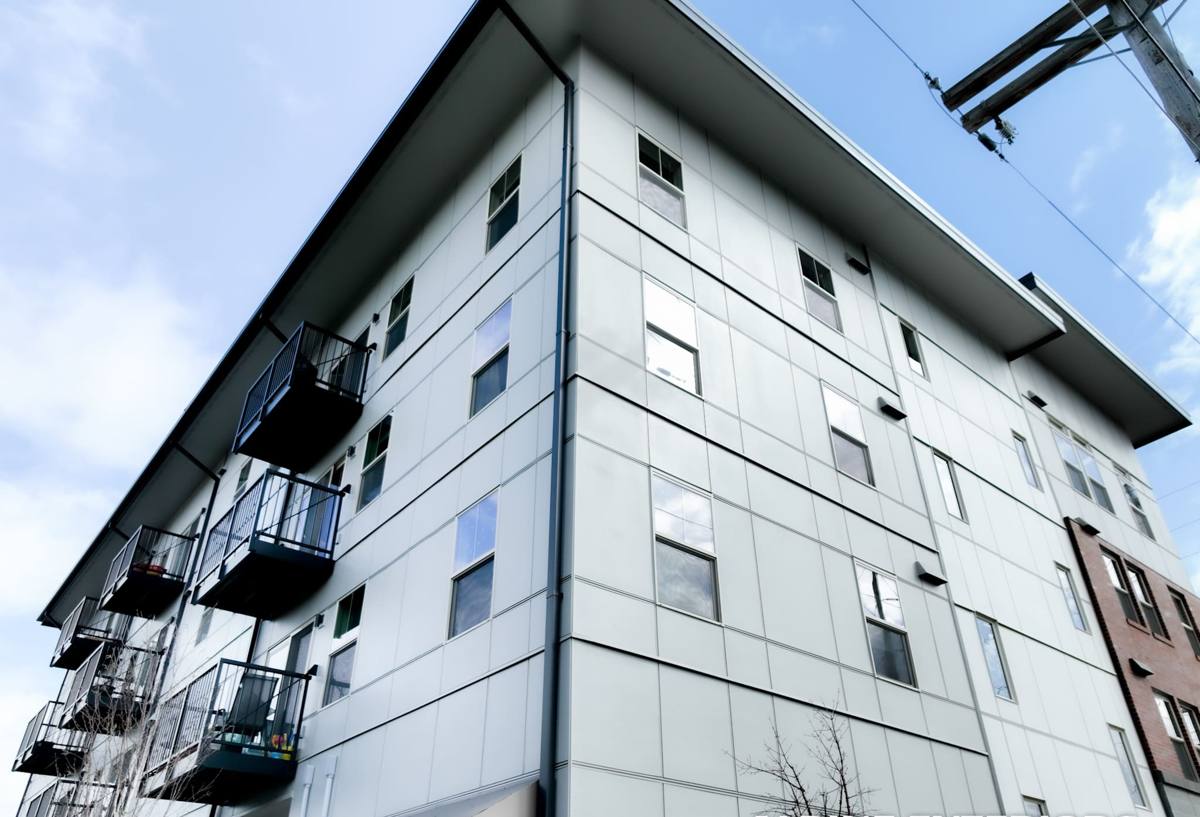
Repair or Replace: How to Tell the Difference
A siding replacement usually makes more financial and practical sense than ongoing repair once any of the following is true:
- Moisture has reached the sheathing in more than one location, not just a single isolated spot
- The siding is an older wood-based or engineered-wood product that's now past the point where spot repairs and repainting keep up with new damage
- Repair costs over the past few years have added up to a meaningful fraction of what full replacement would cost
- The house has multiple, unrelated problem areas — a soft spot near one window, rot at a corner board, cupping on a shaded wall — rather than one contained issue
- You're already planning other exterior work, like a roof replacement or window upgrade, where doing siding at the same time avoids redoing scaffolding, permits, and disruption twice
If none of that applies and the issue really is isolated — a few damaged boards, a section that took storm damage, trim that needs replacing — a repair is the honest recommendation, and we'll say so. We don't have a reason to push a full replacement on a house that doesn't need one; a professional estimate should tell you which situation you're actually in, not just quote the bigger job by default.
What Full Replacement Involves, Step by Step
Tear-Off and Disposal
The existing siding comes off the house entirely, along with any trim, flashing, and house wrap that's being replaced along with it. Old material gets hauled and disposed of as part of the project rather than left for the homeowner to deal with. This is also the point where problems that were hidden behind the old siding — soft sheathing, old water staining, gaps in the original weather barrier — become visible for the first time.
Sheathing Inspection and Repair
Every section of exposed sheathing gets checked for rot, soft spots, or water damage before anything new goes up. In a climate this consistently wet, it's common to find some degree of hidden moisture damage on an older home, particularly around window openings, at wall penetrations, or on north-facing walls that stay damp longest. We price sheathing repair honestly as part of the estimate rather than as a surprise change order once the wall is already open — though the exact extent isn't always knowable until the old siding is off.
New Weather-Resistive Barrier
A full replacement is the opportunity to install a proper, correctly lapped and sealed weather barrier underneath the new siding — something a repair can rarely touch, since it only involves opening a small section of wall. Getting this layer right is arguably more important to how the house performs than the siding material itself, because it's the layer that actually keeps wind-driven rain from reaching the sheathing if any water does get past the cladding.
Flashing at Every Penetration
Windows, doors, vents, hose bibs, light fixtures, and any other wall penetration each need flashing detailed correctly so water sheds outward instead of tracking behind the new siding. This is the step most likely to get rushed on a lower-quality job, and it's also the step that determines whether the replacement actually solves the moisture problem or just buries it under new material for a few years.
James Hardie Installation to Spec
New siding goes up following James Hardie's published fastening pattern, clearance requirements, and joint detailing. That includes keeping the bottom edge clear of grade, hardscape, and roof lines; proper nail spacing and depth; and correctly gapped butt joints with sealant only where Hardie's spec calls for it. Installing to spec is what keeps the manufacturer's warranty valid and what determines whether the siding actually performs the way it's engineered to over the following decades.
Trim, Touch-Up, and Final Walkthrough
Corner boards, window and door trim, and any cut-edge touch-up get finished using Hardie's matched touch-up products rather than field-mixed paint, so the factory-cured ColorPlus finish stays consistent across the whole house. A final walkthrough covers the completed work before the project is considered done.
Why We Replace With James Hardie Fiber Cement Only
When a homeowner is already committing to the cost and disruption of a full siding replacement, the material decision matters more than it does for a small repair — it's the material the whole house will wear for the next several decades. We install James Hardie fiber cement exclusively, and we don't offer vinyl, LP SmartSide, primed spruce, cedar, or other fiber cement brands as replacement alternatives.
| Alternative material | Trade-off in a replacement decision |
|---|---|
| Vinyl siding | Lower upfront cost, but panels can warp or crack under sustained wind-driven rain and temperature swings, and seams give water an entry point |
| LP SmartSide / engineered wood | Wood-strand core is more sensitive to moisture at cut edges and fastener points, which matters over the full life of a new install |
| Primed spruce or cedar | Natural wood needs ongoing paint and moisture maintenance; replacing old siding with another wood product often means repeating the same failure pattern |
| Other fiber cement brands | May not offer a climate-specific HZ-style formulation or the same factory-finish warranty depth James Hardie backs its product with |
James Hardie's HZ5 formulation is engineered for regions with sustained moisture exposure and freeze-thaw cycling rather than desert heat, and that profile fits Whatcom County's weather closely. Its ColorPlus finish is factory-applied and cured under controlled conditions, which holds up to UV and moisture cycling in a way field-applied paint doesn't match. Because a full replacement is a once-in-a-generation decision for most homeowners, we'd rather install the one product we fully trust to hold up here than offer a menu of options with uneven long-term performance.
What Drives the Cost of a Barkley Siding Replacement
| Cost factor | Why it matters |
|---|---|
| Total square footage and number of stories | More wall area and taller walls both mean more material and more labor, including scaffolding for multi-story sections |
| Condition of the sheathing underneath | Hidden rot or water damage found during tear-off adds repair scope that couldn't be priced sight-unseen |
| Old siding removal and disposal | Some materials, like certain older wood or cement products, take more labor and disposal cost to remove than others |
| Home's architectural complexity | Multiple gables, dormers, and wall transitions mean more cuts, more flashing detail, and more labor time than a simple rectangular footprint |
| Product line and profile chosen | HardiePlank, HardieShingle, and HardiePanel carry different material costs, and trim scope adds to the total |
| Window and trim work bundled in | Replacing trim or flashing at window openings while the wall is already open is usually more efficient than doing it as a separate project later |
Every one of these varies enough from house to house that a real number only comes from an in-person estimate. What we can say honestly is that sheathing condition is the factor most likely to move a price after the project starts, which is exactly why we walk homeowners through what we find during tear-off before doing any repair work beyond what was quoted.
Timeline: What a Replacement Project Looks Like Week to Week
Most single-family homes in the Barkley area run one to two weeks from tear-off to finished trim, though the exact schedule depends on the home's size, how much sheathing repair turns up, and the weather window available during the project. A rough sequence looks like this:
- Estimate and material selection, including product line, profile, and color
- Permitting, where required, and scheduling around expected weather
- Tear-off of old siding and trim, section by section rather than exposing the whole house at once
- Sheathing inspection and any needed repair, reviewed with the homeowner before proceeding
- Weather barrier installation and flashing at every window, door, and penetration
- New James Hardie siding and trim installation to manufacturer spec
- Touch-up, cleanup, and a final walkthrough
Working section by section rather than stripping an entire house down to bare sheathing at once matters in a climate that sees rain much of the year — it limits how much of the house is exposed to weather at any given point in the project.
Checklist: Is It Time to Replace Your Barkley Home's Siding?
- Soft or spongy siding when pressed, in more than one location
- Persistent moss or dark staining that returns shortly after cleaning
- Paint that keeps peeling or bubbling no matter how often it's redone
- Visible warping, cupping, or separation at multiple seams or corners
- Rust streaking below fasteners across several areas of the house
- Repair costs that have added up over the past few years without solving the underlying problem
- Siding material that's more than a couple decades old and wasn't designed for this climate to begin with
One or two items on this list might still point to a repair. Several at once, especially spread across different walls of the house, usually means the underlying moisture problem has moved past what spot repair can fix.
Why a Crew That Already Works in Barkley Matters for This Job
A full siding replacement is largely one-shot work — once the new weather barrier and siding are up, revisiting a mistake means opening the wall again. That makes experience with this specific climate more valuable on a replacement than on almost any other exterior project. A crew that already works Whatcom County homes knows how much wind-driven rain a given wall orientation actually takes, how far up a wall moss tends to climb on a shaded north side, and how much clearance siding needs above grade given how consistently damp the ground stays here. Those aren't judgment calls that show up in a generic installation manual; they're patterns that come from doing this work, on homes like these, season after season.
That local familiarity also shows up in smaller, practical ways during a Barkley project specifically — knowing which wall orientations on a given lot get the worst of the driving rain, planning tear-off around the weather rather than the calendar, and having already worked through the kind of sheathing damage this area's older homes commonly turn up once the old siding comes off.
If your Barkley-area home's siding is showing more than isolated wear, we're happy to take a straightforward look and tell you honestly whether replacement or repair is the right call. Reach out using the form below to schedule a free, no-pressure estimate.