 Sudden Valley Siding
 Why Barkley Homes Need Windows Built for This Climate
Homes in the Barkley area sit in a stretch of Whatcom County where weather isn't gentle on a house. You get salt-tinged air drifting in off the water, driving rain that comes in sideways for days at a stretch, and a moss season that seems to run longer every year. Windows here don't just have to look good — they have to hold a seal, shed water correctly, and resist the slow creep of moisture and organic growth that this climate throws at every exterior surface. A window that's perfectly fine in a dry inland climate can start failing in Whatcom County within a few years if it wasn't installed with this specific weather pattern in mind.
We work on homes throughout the Sudden Valley and Barkley area regularly, so we see the same failure patterns come up again and again: fogged double-pane glass from a broken seal, soft or discolored trim around window openings, sashes that swell and stick in wet months, and frames that have taken on moss or algae staining because water isn't draining away from them properly. Custom window work here means designing around those realities from the start, not applying a generic installation and hoping for the best.
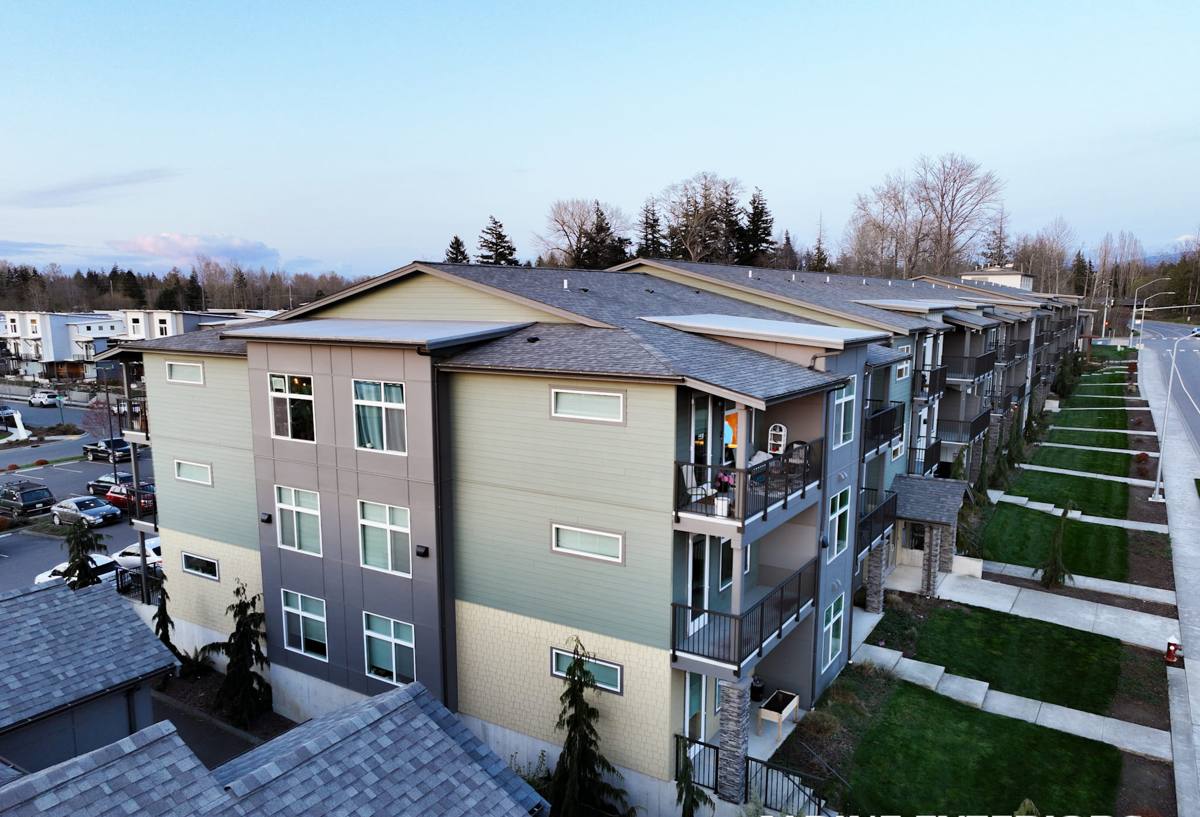
What "Custom" Actually Means for a Barkley Window Project
Custom windows aren't just about size — though that matters, since a lot of homes in this area have older, non-standard rough openings that off-the-shelf sizing doesn't fit cleanly. Custom also covers:
- Matching window style and proportions to the home's existing architecture instead of forcing a generic shape into an older opening
- Selecting frame materials and finishes that hold up to sustained moisture exposure and salt air without excessive upkeep
- Choosing glass packages suited to the Pacific Northwest's grey-sky, low-direct-sun climate rather than a spec built for hot, dry regions
- Designing flashing and drainage details specific to the wall assembly behind the window, not a one-size-fits-all install
On older Barkley-area homes, we frequently find that a previous window replacement was done without addressing the wall assembly behind it — new glass dropped into an opening with outdated or missing flashing. That's how you end up with rot hiding behind trim that looks fine from the outside. Custom work means we look at the whole opening, not just the unit going into it.
Common Window Styles That Work Well Here
Double-hung and casement windows both perform well in this climate when installed correctly, though for different reasons. Casement windows compress against their frame when closed, which generally gives a tighter seal against wind-driven rain — a real consideration given how often storms here come with a strong horizontal component. Double-hung windows offer easier cleaning and a more traditional look that suits a lot of the architecture in the area, and they perform fine as long as the weatherstripping and drainage details are done right. We'll talk through which style fits your home's exposure, especially if one side of the house takes the brunt of the weather.
The Local Threats: Salt Air, Driving Rain, and Moss
Salt Air
Salt-laden air accelerates corrosion on hardware, fasteners, and certain metal frame components. It also breaks down some finishes faster than a standard warranty assumes. For homes with more direct exposure, we pay close attention to hardware grade and frame finish, because the difference between a window that looks good in year twelve and one that's already pitting and streaking often comes down to these details chosen at install.
Driving Rain
Wind-driven rain doesn't just fall on a window — it gets pushed sideways and upward into gaps that vertical rain would never reach. That's why flashing sequence and sill pan details matter as much as the window unit itself. A window can carry a great warranty and still leak if the sill isn't pitched and pan-flashed to carry water back out instead of letting it pool against the framing.
Moss and Sustained Moisture
Long wet seasons mean moss and algae get a real foothold anywhere moisture sits and doesn't dry out — window sills, the tops of trim boards, and shaded north-facing walls in particular. Beyond the cosmetic issue, sustained moss growth holds moisture against wood and painted surfaces far longer than an open, well-drained detail would, which is what eventually invites rot. Good drainage design and the right sill material go a long way toward keeping moss from taking hold in the first place.
What a Correct Custom Window Installation Involves
A good window job is mostly about what you can't see once it's done. Here's what we consider non-negotiable on every custom window installation in this area:
- Opening inspection — checking the framing, sheathing, and existing flashing (or lack of it) around each window before ordering anything, so we know exactly what condition we're building on top of
- Sill pan flashing — a sloped, sealed pan under every window opening so any water that gets past the window sheds outward, not into the wall cavity
- Proper flashing sequence — house wrap, flashing tape, and window flanges layered so water always moves downward and outward, shingle-style, the way it's designed to
- Correct shimming and fastening — units set plumb, level, and square, with fasteners placed per manufacturer spec so the frame doesn't rack or bind over time
- Insulation and air-sealing around the frame — gaps filled with low-expansion foam or backer rod and sealant, not stuffed with fiberglass that does nothing to stop air movement
- Exterior trim and sealant detailing — finished so water is directed away from every joint, with sealant used only where it belongs, not as a substitute for proper flashing
Skip any one of these steps and the window itself becomes almost irrelevant — even a premium unit will eventually leak or fail if the opening around it wasn't prepared correctly.
Frame Material and Glass: What Holds Up Here
| Consideration | What to Know for This Climate |
|---|---|
| Vinyl frames | Low maintenance, resists moisture well, good value; quality varies significantly between manufacturers |
| Fiberglass frames | Very stable dimensionally in temperature and moisture swings, strong long-term performance, higher upfront cost |
| Wood frames (clad exterior) | Attractive interior finish, but exposed wood exterior components need diligent maintenance in a wet climate |
| Aluminum frames | Durable but conducts cold and can promote condensation; less common for residential in this climate for that reason |
| Double-pane glass, low-E coating | Standard baseline for the Pacific Northwest — balances insulation and glare control under mostly overcast skies |
| Argon-filled units | Modest efficiency boost; worth it on larger window packages, less critical on small individual replacements |
We don't push wood-exterior windows on homes in this area unless a homeowner specifically wants that look and understands the maintenance commitment. In a climate with this much sustained moisture, exposed exterior wood trim and sash components need regular inspection and refinishing to avoid the rot and paint failure that shows up faster here than in drier regions. That's a maintenance-and-longevity tradeoff we'll walk you through honestly rather than talk you into a product that will cost more in upkeep down the road.
Our Process for a Barkley Window Project
Every custom window job follows the same basic sequence, whether it's one window or a full-house replacement:
- On-site assessment — we measure every opening individually and check the condition of the framing and existing flashing
- Product selection — we go over frame material, glass package, and style options based on your home's exposure and your priorities (efficiency, maintenance, appearance)
- Written estimate — a clear scope of work and pricing before anything is ordered
- Installation — proper removal of the old unit, inspection and repair of any hidden damage found, full flashing and sealing per the steps above
- Final walkthrough — checking operation, seals, and exterior finish work with you before we call the job done
If we find rot or water damage behind an old window during removal — which does happen, particularly on older Barkley-area homes — we'll stop, show you what we're seeing, and give you options before proceeding. That's not an upsell tactic; it's the only responsible way to handle hidden damage in a climate where it can spread if left alone.
Why Local Experience Matters for This Job
Window installation isn't identical everywhere. A crew used to working in a dry climate will make different assumptions about flashing, drainage, and material selection than a crew that works Whatcom County year-round. We know how driving rain moves across a wall here, which orientations take the worst of it, and where moss and moisture tend to cause problems first. That local pattern recognition is what separates a window that performs for twenty-plus years from one that needs attention again in five.
We also know the practical side of working in this area — permitting expectations, common framing conditions in older Sudden Valley and Barkley homes, and how to schedule around the wetter months so installations aren't fighting the weather while the opening is exposed.
Questions Worth Asking Before You Hire Anyone
Whoever you hire for window work, it's worth asking directly:
- Do you install sill pan flashing on every window, or only when asked?
- What's your flashing sequence, and can you explain it in plain terms?
- What happens if you find rot or damage once the old window is out?
- What warranty covers the installation itself, separate from the manufacturer's product warranty?
- Have you worked on homes in this specific area before, and do you understand its exposure conditions?
A contractor who can answer these clearly and without hesitation is one who's actually thought through the details that matter in this climate.
If you're considering window work for a Barkley-area home, we're glad to come take a look and give you a straightforward, no-pressure estimate. Fill out the form below and we'll get in touch to schedule a time that works.