 Sudden Valley Siding
 Roofing for Deming's Wet, Wooded Climate
Deming sits in the kind of Whatcom County terrain that's hard on a roof: tree cover that keeps shingles shaded and damp longer after every storm, driving rain that comes in sideways off the foothills, and a moss season that can run most of the year if a roof isn't built and maintained to handle it. An asphalt shingle roof that would hold up fine in a drier climate can wear out years early here if it wasn't installed with this specific weather in mind.
This page is about one job done right for this one area: asphalt shingle roofing for homes in and around Deming. Not a generic overview of shingles everywhere, but what actually matters when the roof over your head has to shed constant moisture, resist moss colonization, and survive wind-driven rain season after season.
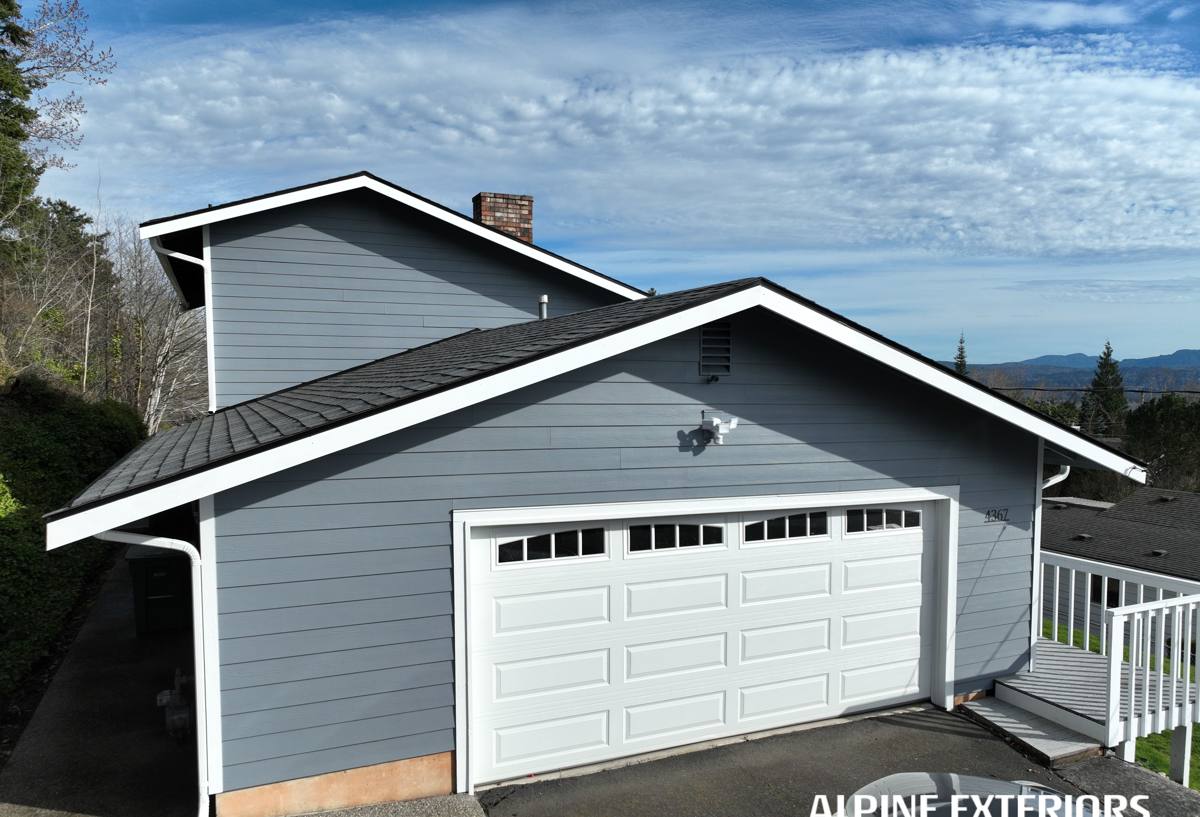
What Constant Moisture and Moss Actually Do to a Shingle Roof
Asphalt shingles are designed to shed water off a sloped surface and dry out between rain events. In a climate like Deming's, that drying-out period is often short or nonexistent for months at a time. A few things happen as a result:
- Moss and algae take hold in shaded, north-facing, and tree-covered sections first, then spread across the roof plane.
- Moss roots and rhizoids work under shingle edges and tabs, lifting them slightly and breaking the seal that keeps water out.
- Trapped moisture under moss growth keeps the shingle mat wet longer, which accelerates granule loss and shortens the shingle's usable life.
- Driving rain finds any weak point in flashing, fasteners, or shingle overlap far faster than a light, straight-down rain would.
- Gutters and valleys clog with needles and debris faster under tree cover, backing water up under the shingle courses above.
None of this means asphalt shingles are a poor choice for Deming. It means the installation details that get skipped on an easier job — proper overlap, correct fastening, ice-and-water membrane in the right places, and ventilation that actually moves air — are not optional here. They're the difference between a roof that lasts its full rated life and one that needs premature repair.
Choosing the Right Shingle for This Climate
Not every asphalt shingle product is built the same way, and for a moss-prone, high-moisture area like Deming, the differences matter more than they would in a mild climate.
| Shingle Type | Typical Lifespan | Moss/Algae Resistance | Best Fit For |
|---|---|---|---|
| Standard 3-tab | 15–20 years | Low unless treated | Budget-conscious projects, less tree-shaded roof planes |
| Architectural (laminate) | 25–30 years | Moderate; better with algae-resistant granules | Most Deming homes — heavier profile sheds water and wind better |
| Algae-resistant (AR) laminate | 25–30+ years | High — copper/zinc granules inhibit growth | Heavily shaded, north-facing, or tree-covered roof sections |
| Premium/designer laminate | 30+ years | High, typically AR-treated | Homeowners prioritizing longevity and appearance over upfront cost |
For most Deming roofs, we recommend an architectural shingle with algae-resistant granules as the baseline, not an upgrade. In a climate where moss and algae are the norm rather than the exception, paying for AR protection up front is cheaper than fighting growth every year or two.
Color and Granule Considerations
Darker shingle colors show streaking and moss growth more visibly than lighter, variegated colors. This is purely cosmetic — it doesn't change how the roof performs — but homeowners choosing a color for a heavily shaded lot should know that a busier granule blend will hide early moss growth longer between cleanings.
What a Correct Installation Actually Involves
The shingle itself is only part of the system. In a wet climate, the layers underneath and around it do most of the real work.
Underlayment and Ice-and-Water Membrane
We use synthetic underlayment as the standard water-resistant layer under the full roof, with self-adhering ice-and-water shield membrane at the vulnerable points: eaves, valleys, around chimneys and skylights, and any roof-to-wall transition. These are the spots where wind-driven rain and backed-up water are most likely to find a way in, and they need a fully sealed membrane, not just felt paper.
Flashing
Step flashing at walls, counter-flashing at chimneys, and properly lapped valley flashing are what actually stop water at roof penetrations and transitions — shingles alone can't do it. Reused or improperly lapped flashing is one of the most common causes of leaks we find on older Deming roofs during tear-off.
Fastening and Nail Placement
Correct nail count and placement, driven flush (not overdriven or underdriven), keeps shingles sealed against wind-driven rain instead of lifting at the edges. This is a detail that's easy to rush and hard to inspect from the ground, which is exactly why it matters who's up on the roof doing it.
Ventilation
A roof deck that can't breathe traps moisture from the inside, which softens sheathing and shortens shingle life from underneath — the reverse of the moss problem, but just as damaging. Balanced intake and exhaust ventilation (soffit vents paired with ridge or roof vents) keeps the attic dry and the roof deck stable, which matters even more under a climate that's already adding moisture from outside.
Our Process for a Deming Roofing Project
- On-site inspection: We look at the existing roof, decking condition, ventilation, and any moss or trapped-moisture problem areas before quoting anything.
- Written estimate: Materials, scope, and price laid out clearly, with the shingle and underlayment system specified — not just "reroof."
- Tear-off and deck inspection: Old roofing comes off down to the deck so we can check for soft spots or water damage that wouldn't show from above.
- Underlayment, membrane, and flashing installed: Ice-and-water shield at eaves and valleys, synthetic underlayment across the field, new flashing at all penetrations and transitions.
- Shingle installation: Correct exposure, overlap, and fastening for the manufacturer's wind and warranty requirements.
- Ventilation check: Intake and exhaust confirmed balanced for the attic space.
- Final walkthrough and cleanup: Site cleared of debris and nails, roof reviewed with the homeowner before we call it done.
Roof Maintenance Checklist for Deming's Rain and Moss Season
A well-installed roof still needs seasonal attention in this climate. This is what we tell every Deming homeowner to stay ahead of:
- Clear gutters and downspouts before the fall rains start, and again mid-winter if the lot has heavy tree cover.
- Remove built-up needles, leaves, and debris from valleys, where they trap moisture against the shingle surface.
- Watch shaded and north-facing roof planes for early moss growth — a light green tint before it's visibly furry.
- Have moss treated and physically removed (not pressure-washed, which damages granules) rather than left to spread.
- Trim back overhanging branches to cut down on shade, debris, and abrasion against the roof surface.
- Schedule a roof check after any major windstorm to catch lifted or missing shingles early.
- Get a professional inspection every few years, even with no visible problems — small flashing or seal issues are easier to see up close than from the ground.
Cost Factors for Asphalt Shingle Roofing in Deming
Every roof is priced on its own specifics, but the same handful of factors drive most of the variation we see on Deming projects.
| Factor | Why It Affects Cost |
|---|---|
| Roof size and number of planes | More square footage and more valleys, hips, and transitions mean more material and labor |
| Existing roof condition | Rotten or soft decking found at tear-off needs repair before new roofing goes on |
| Shingle tier chosen | Standard 3-tab vs. architectural vs. AR-treated premium shingles carry different material costs |
| Roof pitch and access | Steeper roofs and difficult site access (tree cover, driveway limits) affect labor time and equipment needs |
| Ventilation upgrades needed | Adding or correcting intake/exhaust venting is sometimes required to get a system warranty |
| Tear-off vs. layover | Full tear-off costs more up front but is the only way to properly inspect and address the deck underneath |
We don't recommend layovers (installing new shingles over old) for Deming roofs. In a climate this wet, the extra layer traps moisture against the deck and hides problems that need to be caught, not covered up.
Why Hire a Crew That Already Works in Deming
A roofing crew that only occasionally works this side of Whatcom County will size up a Deming roof the same way they'd size up a roof in a drier part of the state — and that's how you end up with a standard-spec install on a climate that needed more. A crew that regularly works Deming and the surrounding Sudden Valley area already knows which roof orientations grow moss first, which valleys clog fastest under the tree cover typical here, and which underlayment and ventilation choices actually hold up through a full wet season, not just on paper.
That local pattern recognition shows up in small decisions during the job — where to add extra ice-and-water membrane, how much ventilation the attic really needs, which flashing details deserve extra attention — that a generic install wouldn't catch until the first leak shows up.
Repair or Replace? Signs to Watch For
Not every roof problem in Deming means a full replacement. Here's a general way to think about it:
- Repair is usually enough when the issue is isolated: a section of moss-lifted shingles, a single damaged flashing point, or storm damage to a limited area on a roof that's otherwise in good shape and within its expected lifespan.
- Replacement makes more sense when granule loss is widespread, shingles are curling or cracking across multiple planes, the roof is past its expected service life, or repeated leaks point to a underlayment or deck problem rather than a single failed spot.
An honest inspection should tell you which situation you're in — and a contractor who suggests full replacement for a problem repair could fix isn't one you want back for anything else.
If you're weighing a repair, a full reroof, or just want a straight answer on where your current roof stands, we're happy to take a look. Use the form below to request a free, no-pressure estimate for your Deming home.