 Sudden Valley Siding
 Why Alger Homes Wear Out Siding Faster Than the Brochures Suggest
Homes in the Alger area of our Whatcom County service territory sit at the intersection of three things that are hard on exterior building materials: salt-laden air moving in off the Salish Sea, driving rain that comes in sideways during fall and winter storms, and a moss season that can run eight or nine months out of the year in shaded, north-facing exposures. Any one of these is manageable on its own. Together, over a decade or two, they expose the weak points in whatever siding is on the wall — especially products that weren't engineered with this specific combination in mind.
This page is about one job: installing fiber cement siding correctly on an Alger home, using a product actually built for this climate, done by a crew that already knows where the trouble spots are on houses like yours.
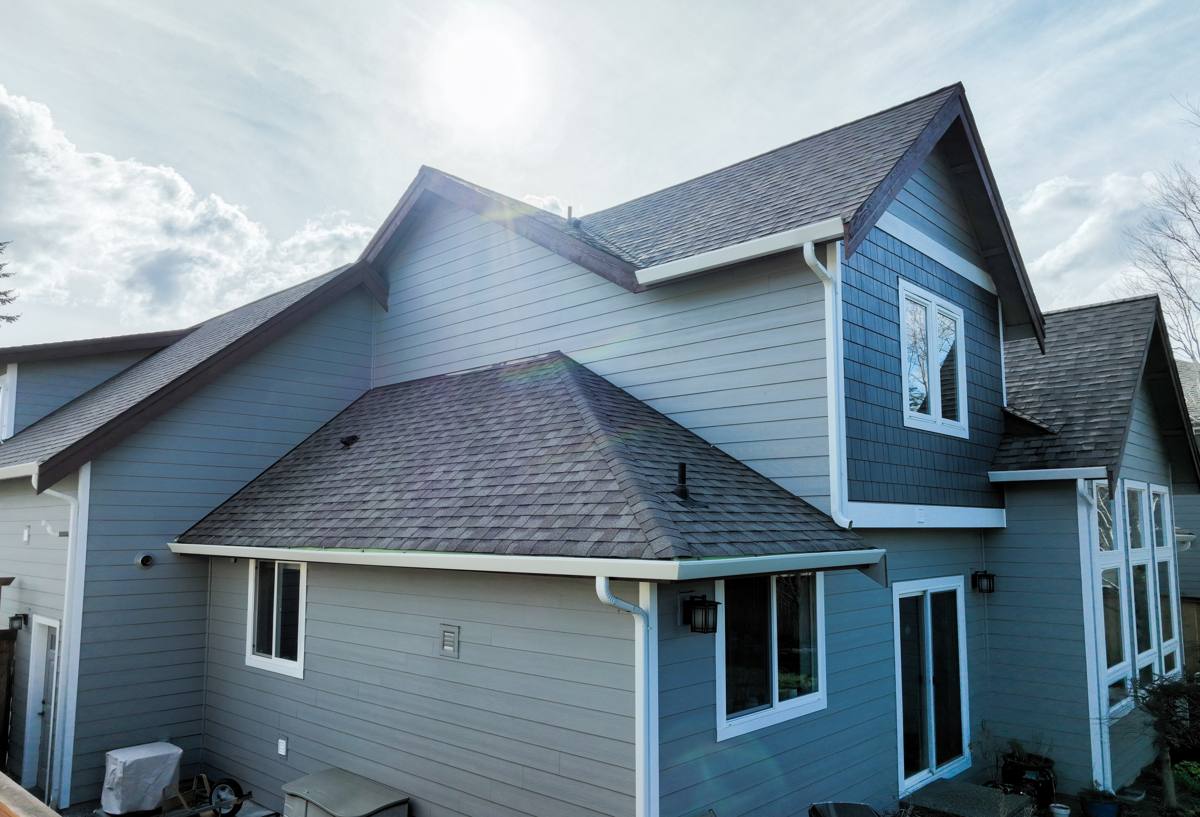
What Salt Air, Rain, and Moss Actually Do to a Wall Over Time
It helps to understand the mechanism, not just the symptom.
Salt air
Airborne salt is corrosive to metal. Fasteners, flashing, and trim hardware that aren't rated for coastal exposure corrode faster near the water, and once a fastener head starts to rust it can telegraph a stain through paint or siding material above it. This is a slow problem — it shows up in year eight or ten, not year one — which is exactly why it gets overlooked during installation.
Driving rain
Wind-driven rain doesn't just hit a wall, it gets pushed into any gap, lap, or penetration that isn't properly flashed and sealed. Siding that relies on face-sealing (caulk and paint alone, with no drainage plane behind it) will eventually let water behind the cladding. Once that happens, the question isn't if there's a problem, it's how long until someone notices the sheathing or framing underneath has been wet for years.
Moss and prolonged dampness
Moss doesn't just look bad — it holds moisture directly against the siding surface for extended periods, which accelerates any decay process already underway and breaks down paint film faster than dry-climate UV exposure would. Shaded elevations, areas under trees, and north-facing walls in the Alger area often need moss treatment or gentle cleaning more than once a year just to keep the surface healthy.
Why We Install Only James Hardie Fiber Cement Here
We made a decision a while back to standardize on one product line rather than offer a menu of vinyl, engineered wood, and fiber cement options. Fiber cement is a mix of cement, sand, and cellulose fiber — it doesn't rot, it doesn't feed moss the way wood-based products can, and it's non-combustible. That's the baseline case for fiber cement generally. The reason we specifically use James Hardie rather than a competing fiber cement brand comes down to three things:
- Climate-engineered product lines. Hardie's HZ5 formulation is engineered for damp, moderate climates like ours, as opposed to the hot, dry HZ10 formulation sold in the Southwest. Installing the wrong regional formulation is a real mistake we see on older re-sides.
- Factory-applied ColorPlus finish. A baked-on finish applied under controlled conditions holds up to UV and moisture cycling better than field-applied paint, and it resists the chalking and fading that shows up first on shaded, moss-prone walls.
- A warranty that's actually transferable. If you sell the house, the coverage on the siding and the factory finish moves with it, which matters in a market where buyers are paying closer attention to exterior condition than they used to.
We don't install vinyl, LP SmartSide, Cemplank, Allura, or unfinished cedar or spruce siding, and we're upfront about why: those products each carry maintenance burdens, moisture sensitivities, or installation tolerances that don't line up with what we're willing to put our name on in a climate this wet. That's our standard, not a knock on every homeowner who has one of those products already on their house.
What a Correct Fiber Cement Installation Actually Involves
Fiber cement is only as good as the details behind it. The material itself resists moss and moisture, but a sloppy install can still trap water behind the panels. A correct job on an Alger home includes:
- A drainage plane and rainscreen gap behind the siding, so any incidental moisture that gets past the cladding can drain and dry instead of sitting against the wall assembly.
- Proper flashing at every window, door, deck ledger, and roof-to-wall intersection — the exact places driving rain finds its way in.
- Corrosion-resistant fasteners rated for coastal exposure, driven at the manufacturer's specified pattern and depth (over-driving fasteners is one of the most common fiber cement mistakes and it voids the warranty).
- Correctly sized joints and gaps at butt seams and trim, sealed with a flexible, paintable sealant rated for the exposure — not caulked tight with no room to move.
- Starter strips, kick-out flashing at roof-to-wall transitions, and proper clearance between the bottom of the siding and grade, decks, or roofing so water and moss-holding debris can't wick up into the panel.
None of this is unusual or proprietary — it's simply what the manufacturer's installation instructions call for. The gap between houses that hold up for thirty years and houses that need trim repairs at year eight is almost always in whether these details were followed, not in the siding material itself.
How We Approach an Alger Siding Project
1. On-site assessment
We walk the exterior, check the condition of the existing siding, sheathing, and trim, and look specifically at the elevations that take the worst of the wind-driven rain and the shaded areas most prone to moss. This tells us whether it's a straightforward re-side or whether there's sheathing repair to plan for.
2. Product and color selection
We help you choose the right Hardie panel or plank profile and ColorPlus color for the home, factoring in HOA or neighborhood expectations where relevant and how a given finish tends to perform on shaded versus sun-exposed walls.
3. Tear-off and prep
Old siding comes off, sheathing gets inspected and repaired where needed, and the weather-resistive barrier and rainscreen are installed before a single piece of new siding goes up.
4. Installation to manufacturer spec
Flashing, fastening, and joint details are done to Hardie's published requirements — not shortcuts, not "close enough."
5. Final walkthrough
We inspect the finished work with you, cover care and cleaning basics for this climate, and make sure you have what you need for warranty registration.
Material Comparison for This Climate
| Material | Moss / moisture resistance | Salt air / corrosion exposure | Typical maintenance |
|---|---|---|---|
| James Hardie fiber cement | High — doesn't feed moss, dimensionally stable when wet | Low risk to the panel itself; fastener choice matters | Occasional gentle wash, repaint only if desired after many years |
| Vinyl siding | Moderate — surface sheds water but can trap moisture behind panels if installed loose | Can become brittle and fade faster near salt air and UV | Low, but repair options are limited if panels crack or fade unevenly |
| LP SmartSide (engineered wood) | Lower — wood-based core is more sensitive to sustained moisture exposure | Fasteners and cut edges need diligent sealing | Regular inspection of seams and cut edges recommended |
| Cedar / primed spruce | Lowest — natural wood feeds moss and is most sensitive to prolonged dampness | Requires attentive finish maintenance in coastal exposure | Frequent refinishing and moss/mildew treatment |
Cost Factors on a Real Alger Project
We don't quote prices without seeing the house, but the variables that actually move the number on a fiber cement project here are consistent:
| Factor | Why it matters |
|---|---|
| Home size and number of stories | More square footage and higher walls mean more material and more scaffolding or lift time |
| Condition of existing sheathing | Rot or moisture damage found during tear-off adds repair scope before new siding goes on |
| Trim and accent complexity | Multiple gables, dormers, and trim details take more labor per square foot than a simple rectangular wall |
| Panel profile and ColorPlus selection | Some plank widths and premium colors carry different material costs |
| Access and site conditions | Slopes, tight setbacks, and landscaping that limits staging area affect labor time |
Living With Fiber Cement Siding in a Moss-Prone Climate
Fiber cement is genuinely low-maintenance compared to wood-based products, but "low-maintenance" in western Washington still means a bit of seasonal attention. A short, honest checklist for an Alger homeowner:
- Rinse the siding gently once or twice a year, focusing on shaded, north-facing walls where moss and mildew tend to establish first.
- Trim back vegetation and tree branches that keep a section of wall in constant shade — airflow and sun exposure are the simplest moss prevention there is.
- Walk the exterior after major windstorms and check trim, flashing, and caulked joints for anything that's come loose.
- Keep gutters clear so overflow doesn't run directly down the face of the siding during heavy rain.
- Avoid pressure-washing at close range or high pressure — it can force water behind properly installed panels or damage the factory finish.
Why Hiring a Crew That Already Works the Alger Area Matters
A lot of siding failures we're called in to look at weren't caused by bad material — they were caused by installation details that work fine in a dry climate and fail in ours. A crew that installs siding across Whatcom County knows which elevations on an Alger-area home typically take the worst wind-driven rain, which framing details tend to need extra attention because of long-term moisture exposure, and how the local moss and mildew cycle actually behaves through the seasons here versus what a national install crew might expect. That local pattern-recognition is what keeps a correct installation correct for decades instead of needing repair work a few years in.
If you're weighing a re-side or planning ahead for one, we're happy to take a look at your home, walk you through what we're seeing, and put together a straightforward, no-pressure estimate — just fill out the form below.