 Sudden Valley Siding
 Siding That Has to Work Harder in Acme
Homes in Acme sit in one of the wetter, greener corners of Whatcom County — tree cover overhead, moisture that lingers in the air for months at a stretch, and a rain pattern that doesn't let up just because summer arrives. Whatcom County as a whole deals with driving rain and marine-influenced air moving in off the Sound, and even in the wooded, rural stretches east of Bellingham that reach toward Acme, that moisture finds its way onto exterior walls and stays there. Add heavy shade from surrounding timber and you get long stretches where siding simply doesn't fully dry out between storms.
That combination — persistent dampness, low sun exposure on shaded elevations, and a moss season that can run eight months or more — is hard on the wrong siding material. It's exactly the kind of climate James Hardie fiber cement siding was engineered for, and it's why we install nothing else on homes in this area.
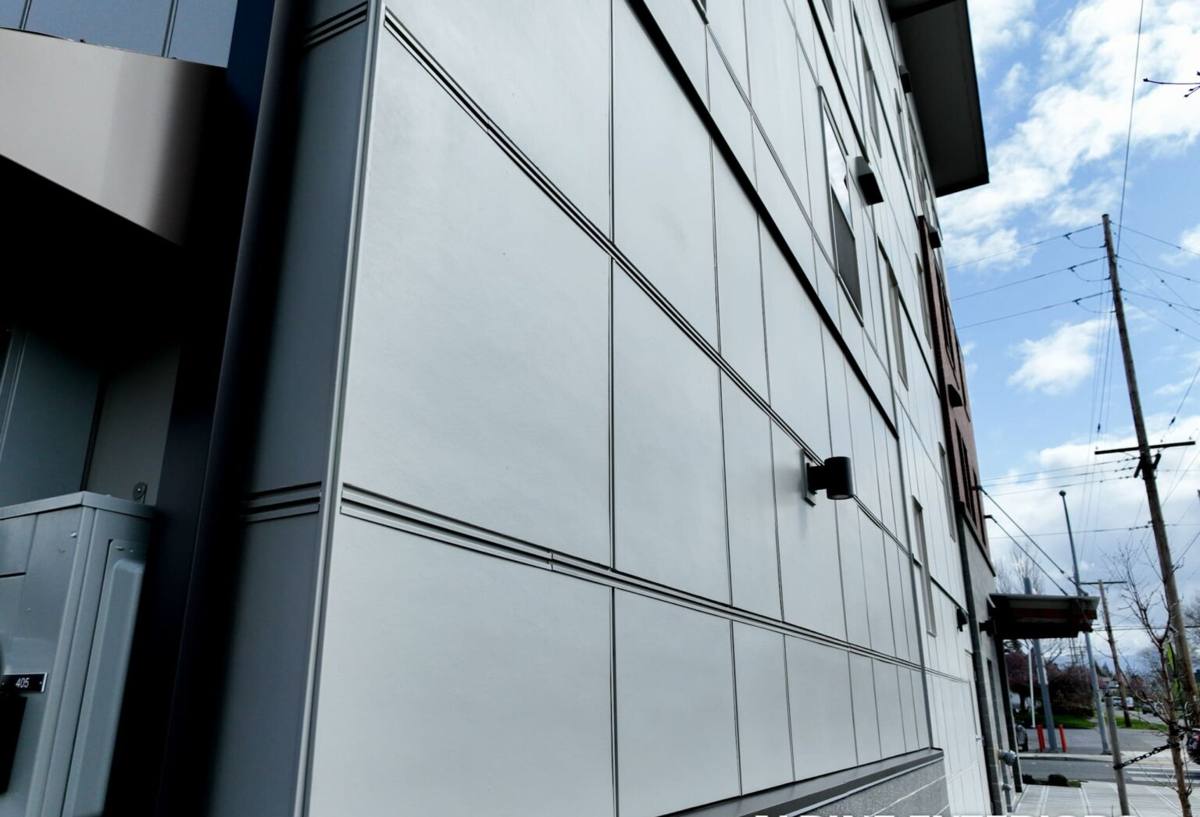
What Acme's Climate Actually Does to Siding
Moisture That Doesn't Quit
Wood-based products — cedar, primed spruce, and engineered wood siding like LP SmartSide — depend on paint film and caulking to keep water out of the wood fiber underneath. In a climate where siding stays damp for days at a time, any gap in that protection becomes an entry point. Once moisture gets into wood fiber, it swells, and swelling is what eventually causes soft spots, delamination at panel edges, and paint failure.
Moss, Algae, and Shade
North-facing walls and anything tucked under mature trees in Acme rarely get a full afternoon of direct sun. That shade keeps surfaces damp longer, which is ideal growing conditions for moss and algae. Moss doesn't just look bad — its root structure holds moisture against the substrate and, on materials that can absorb water, accelerates exactly the kind of damage described above.
Temperature Swings and Expansion
Whatcom County doesn't see extreme heat, but siding still expands and contracts with daily and seasonal temperature changes. Materials that move a lot — vinyl in particular — can develop gaps at seams and fastener points over time, which gives wind-driven rain another way in.
Why James Hardie Fits This Climate
James Hardie siding is fiber cement — sand, cement, and cellulose fiber, engineered and pressed under high pressure, then factory-cured. It doesn't rot, it doesn't feed moss and algae growth the way organic wood fiber does, and it's non-combustible. For a wet, shaded property in Acme, three things matter most:
- Dimensional stability — fiber cement moves far less than wood or vinyl with temperature and humidity swings, so seams and caulk joints stay tighter longer.
- Factory-applied ColorPlus finish — a baked-on finish that resists fading and holds up to repeated wet-dry cycles far better than field-applied paint, which is the first thing to fail on wood siding in a climate like this.
- HZ5 engineered formulation — James Hardie makes climate-specific product lines, and the HZ5 line is built for regions with damp, freeze-prone weather patterns, which describes the Pacific Northwest well.
We don't install LP SmartSide, vinyl, Cemplank, Allura, primed spruce, or cedar. Some of those are reasonable products in the right climate and budget — this isn't about running down a competitor's material. It's that after years of doing exterior work in Whatcom County's wet, mossy conditions, James Hardie is the one product line we've seen consistently hold up without the maintenance treadmill the alternatives require here.
What a Correct Installation Actually Involves
James Hardie siding fails prematurely almost exclusively because of installation mistakes, not the material itself. The product is engineered to handle wet climates — but only when it's put on correctly. That's the part most homeowners can't evaluate themselves, and it's where a lot of exterior siding jobs quietly go wrong.
Weather Barrier and Prep
Before any siding goes up, the wall needs a continuous, properly lapped weather-resistant barrier (house wrap or building paper) with all seams taped and all penetrations — outlets, hose bibs, vents — properly flashed. Skipping or rushing this step is invisible once siding is on, but it's the single biggest predictor of moisture problems five or ten years down the road.
Clearances That Actually Get Followed
James Hardie specifies minimum clearances between the bottom edge of siding and roof lines, decks, patios, and grade — generally at least 1 to 2 inches depending on the surface, more at grade. In a climate where splash-back and standing moisture are common, those clearances aren't a suggestion. Siding installed tight to a deck or patio surface in Acme is siding that stays wet.
Fastening
Fiber cement needs to be fastened per James Hardie's published spec — correct fastener type, correct penetration depth, correct spacing, and blind-nailed or face-nailed according to the specific product and application. Over-driven or under-driven fasteners crack the board or leave it loose, both of which create water paths.
Joints, Caulking, and Trim
Butt joints need to be properly flashed or backed, not just caulked and hoped for. Caulk is a supplement to good flashing detail, not a substitute for it. Trim, corners, and window/door transitions are where the majority of siding leaks originate, so these details get the most attention on every job we do.
Painting and Touch-Up
Even with ColorPlus factory finish, cut edges and any field-touched areas need to be sealed with James Hardie-approved caulk and touch-up paint to maintain the product's moisture protection at those points.
Our Process on an Acme Project
1. On-Site Assessment
We walk the property, check the current siding and sheathing condition, identify shaded and high-moisture elevations, and look at drainage, grade, and roofline details that affect how the new siding needs to be detailed.
2. Scope and Estimate
You get a clear, written estimate — product line, color, trim details, and what's included. No pressure, no inflated scope.
3. Tear-Off and Sheathing Check
Old siding comes off, and we inspect the sheathing underneath. If there's rot or damage from years of moisture intrusion — which we do find, particularly on shaded walls — we address it before anything new goes up. Covering damaged sheathing with new siding just hides the problem.
4. Weather Barrier and Flashing
New house wrap, taped seams, and flashing at every penetration and transition point, done to spec, not shortcuts.
5. Installation
James Hardie siding installed to manufacturer clearances and fastening specs, with attention to the joint and trim details that determine how the job performs in ten or fifteen years, not just how it looks on install day.
6. Final Walkthrough
We go over the finished job with you, point out anything to watch for, and answer questions about maintenance going forward.
Choosing the Right James Hardie Product for Your Home
James Hardie makes several distinct product lines, and the right choice depends on your home's style and how it's currently detailed.
| Product | Look | Best Fit For |
|---|---|---|
| HardiePlank Lap Siding | Traditional horizontal lap, smooth or cedar-textured | Most single-family homes; the most common choice in this area |
| HardiePanel Vertical Siding | Vertical panel, often paired with battens | Modern builds, accent walls, gable ends |
| HardieShingle | Staggered or straight-edge shingle profile | Craftsman or cottage-style homes wanting a shingle look without wood's maintenance |
| HardieTrim | Smooth trim boards | Corners, window/door casing, fascia — paired with any of the above |
For most Acme homes, HardiePlank in the HZ5 formulation, finished with ColorPlus color, covers the vast majority of what a wet, tree-shaded Whatcom County property needs. We'll walk through the options and what fits your home during the estimate.
What a Project Costs — and What Drives the Price
We won't quote a number without seeing the home, but the following factors are what actually move the price on a James Hardie project in this area:
| Factor | Why It Matters |
|---|---|
| Home size and wall complexity | More corners, gables, and dormers mean more cutting, trim, and labor time |
| Existing sheathing condition | Rot repair from prior moisture intrusion adds cost but is not optional to skip |
| Product line and profile | Shingle profiles and vertical panel work generally run more than standard lap siding |
| Trim scope | Full trim replacement vs. reusing sound existing trim changes both material and labor |
| Access and site conditions | Steep grades, tree cover, and tight lot access on wooded Acme properties can affect staging and labor time |
Get a firm number from an on-site visit rather than a rough phone estimate — the variables above matter more than square footage alone.
Maintaining James Hardie Siding in a Wet, Shaded Climate
Fiber cement is low-maintenance compared to wood, but "low-maintenance" isn't "no-maintenance," especially with the moss and shade conditions common around Acme.
- Rinse siding annually, focusing on shaded and north-facing walls where moss and algae take hold first
- Keep gutters clear so overflow doesn't run down and pool against siding
- Trim back vegetation and tree limbs that keep walls in constant shade and hold moisture against the surface
- Inspect caulk joints at trim, windows, and butt joints every couple of years and re-caulk where it's cracked or pulled away
- Touch up any chipped or cut edges with James Hardie-approved paint to keep the moisture barrier intact
- Watch for staining or discoloration near grade, which can signal a clearance or drainage issue worth addressing early
Why a Crew That Already Works in Acme Matters
Whatcom County's building conditions aren't uniform — a coastal-adjacent property near open water deals with different exposure than a shaded, wooded lot further inland toward Acme, and siding details that work fine on one can underperform on the other. A crew that regularly works this part of the county already knows which elevations need extra flashing attention, how local moss and moisture patterns behave through the seasons, and what permitting and inspection expectations look like for the jurisdiction. That local pattern recognition is hard to replicate on a one-off job from a crew that doesn't normally work this territory, and it's the difference between siding that's installed correctly on paper and siding that's actually detailed for how this specific area behaves.
If you're planning a siding project in Acme, we're happy to come take a look, walk you through what your home actually needs, and give you a straightforward, no-pressure estimate using the form below.